Editor: Porcia Akua Holmes
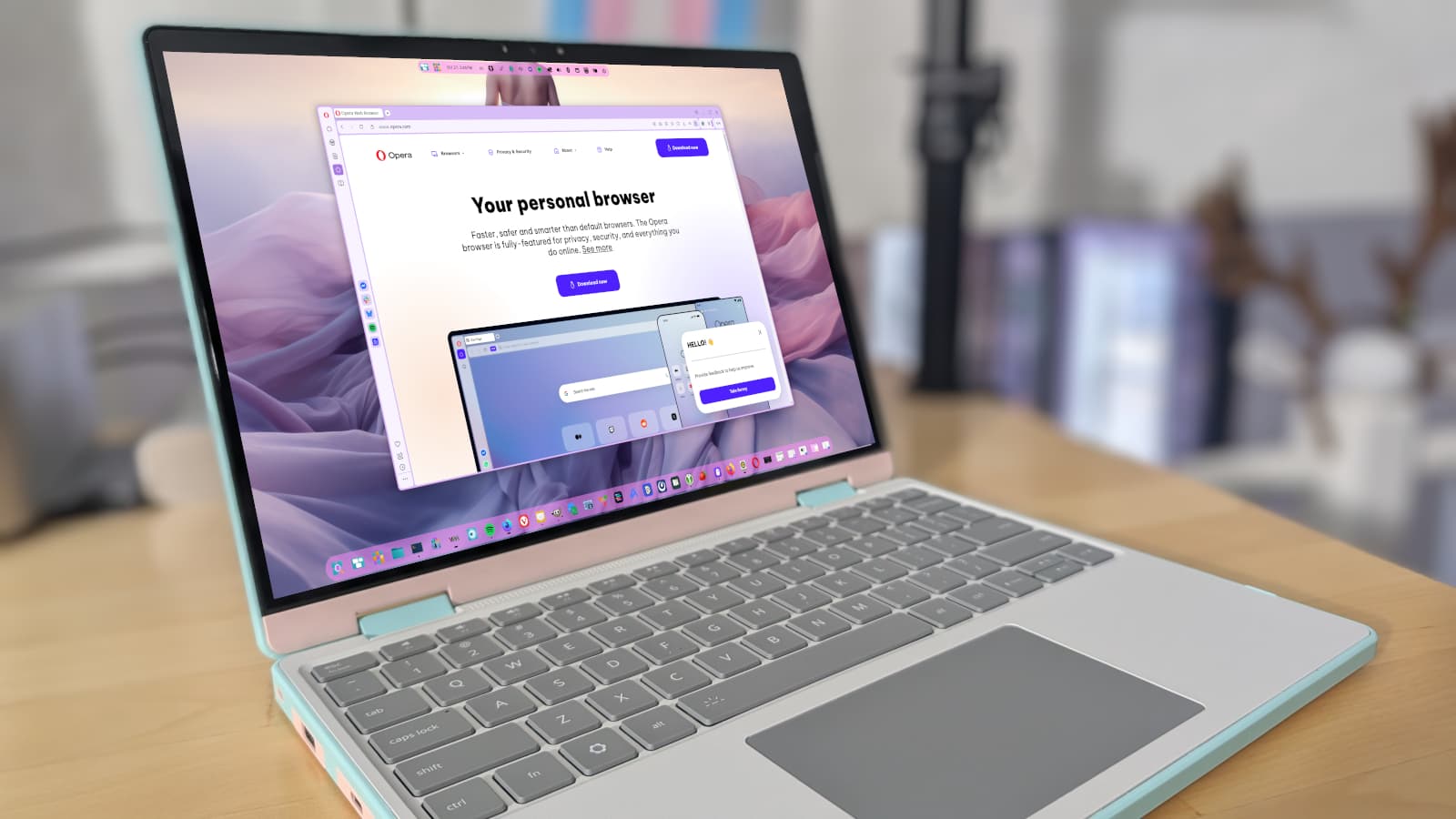
Opera is moving a slice of its artificial intelligence stack off remote servers and onto the machine in front of you. The browser maker has begun running an AI model locally inside its desktop browser, so queries and prompts are processed on the user's own hardware rather than in a data center.
Why Opera Is Betting on Local Inference
The appeal for Opera is straightforward. Cloud-based AI carries a per-query bill, and that bill scales with every user who types into a sidebar. Running a model on the device removes that marginal cost entirely once the model is downloaded.
Privacy is the other lever. A local model cannot leak a prompt to a third-party server because the prompt never travels. For users who handle contracts, medical notes or internal documents in a browser tab, that distinction matters more than raw model quality.
Opera has positioned itself as an AI-forward browser for several years, integrating assistant features and chatbot access into its sidebar. Local execution extends that strategy in a direction rivals have mostly avoided at consumer scale.
How On-Device Models Actually Work
A local model is a compressed file, often several gigabytes, that the browser downloads once and stores on disk. Inference then runs on the CPU or GPU of the user's machine, using the same kind of quantized weights that power mobile assistants.
The trade-off is capability. Smaller models that fit comfortably on a laptop cannot match the largest cloud systems on complex reasoning, long documents or coding tasks. Opera's local model is best understood as a fast, private assistant for everyday queries rather than a replacement for frontier cloud models.
Hardware also sets the ceiling. Machines with limited memory or older processors will see slower responses, and low-end devices may struggle to run the model at all.
What Changes for Users and Rivals
The practical effects split along two lines. Users gain a private mode of AI interaction, while browser vendors face pressure to offer something similar without absorbing unlimited server costs.
For competitors, the message is that AI in the browser is becoming a baseline expectation rather than a differentiator. Vendors that rely entirely on cloud inference will need to justify the cost and the data flow.
Enterprise buyers, in particular, may find local inference easier to approve under data-handling policies that restrict sending text to external services.
Why This Matters
The browser is where most knowledge work happens, and whoever controls the AI layer inside it controls a valuable choke point. Opera's local model turns that layer into something users can audit and trust in a way cloud assistants cannot easily match.
The competitive pressure now falls on larger rivals. If local inference becomes standard, cloud-only assistants will look expensive and less private by comparison, and vendors will need hybrid designs that route sensitive queries to the device and heavy tasks to the cloud.
For users, the change is quieter but real. The default assumption that AI queries travel to a server is starting to break, and Opera is one of the companies pushing that shift into the mainstream.