Editor: Porcia Akua Holmes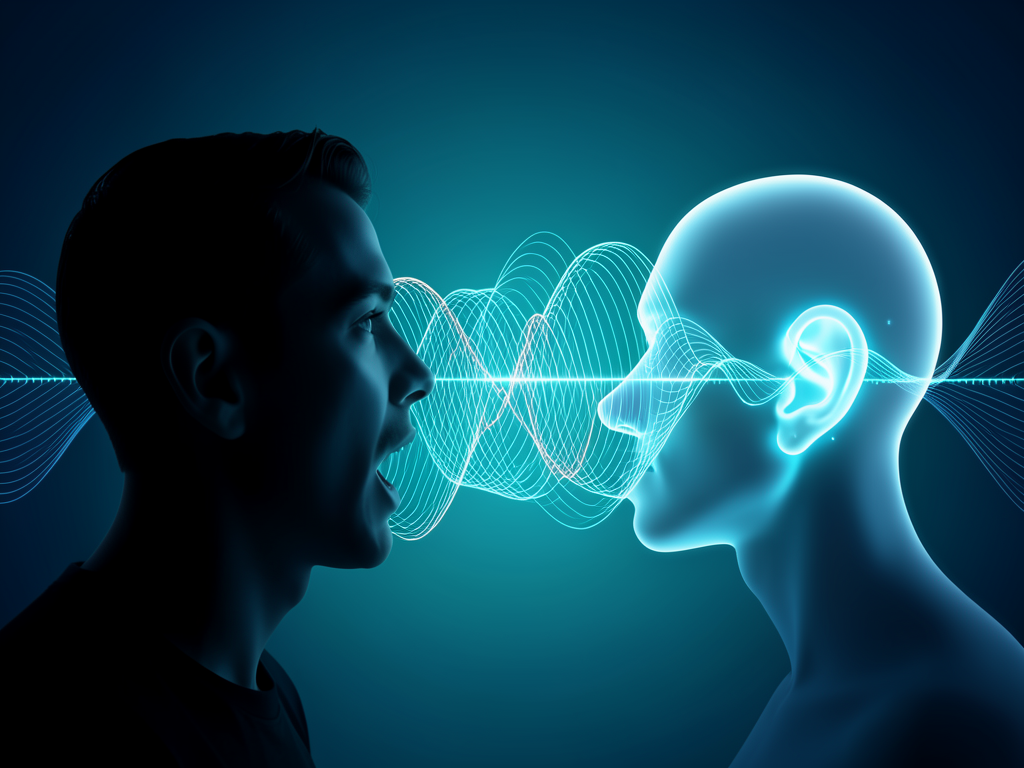
OpenAI has released GPT-Live, a pair of voice models that fundamentally change how people interact with ChatGPT. The new system uses a full-duplex architecture that lets the AI listen and speak at the same time, creating conversations that feel more natural and human. The rollout begins today on iOS, Android and ChatGPT.com, with GPT-Live-1 becoming the default voice for paid users while GPT-Live-1 mini serves free-tier accounts.
Full-Duplex Voice: The Core Innovation
The defining technical advance in GPT-Live is what OpenAI calls a full-duplex architecture. In traditional voice assistants, the system waits for a silence gap to determine when a user has finished speaking. That approach often leads to awkward interruptions or missed cues. GPT-Live instead processes audio continuously, making interaction decisions many times per second. That means it can interject with acknowledgments such as "mhmm" or "yeah" while the user is still talking, recognize natural pauses and handle interruptions without derailing the exchange.
OpenAI's previous Advanced Voice Mode, launched in September 2024, operated on turn-by-turn exchanges that relied on silence detection. As OpenAI acknowledged in its announcement, even a brief pause or background noise could trigger an unwanted response. The new architecture solves that problem by constantly evaluating whether to speak, listen or pause. Users no longer need to wait for a clean silence gap to complete a thought.
How OpenAI Separated Voice From Reasoning
GPT-Live introduces a modular design that separates the voice interaction layer from the intelligence layer. When a user asks a straightforward question, GPT-Live handles it directly. But when the query requires deeper reasoning, web search or multi-step tasks, the voice model delegates the work to a frontier model running in the background. At launch, that model is GPT-5.5, the large language model OpenAI released in April. While the reasoning engine processes the request, GPT-Live continues talking with the user, maintaining the conversational flow.
That delegation model is a meaningful architectural bet. Rather than building a single monolithic voice model that must be both fluid and intelligent, OpenAI split the problem in two. The voice model optimizes for real-time interaction while the reasoning engine can be upgraded independently. As OpenAI releases new frontier models, it can update the intelligence behind GPT-Live without retraining the voice system itself. For developers and enterprises, that means a voice agent could maintain a natural conversation while simultaneously querying databases or performing complex computations.
Why This Matters
GPT-Live represents OpenAI's clearest effort to make ChatGPT feel less like a search bar and more like a colleague. The shift from turn-taking to continuous conversation has direct implications for customer service, virtual assistants and any application where voice interaction is primary. Users will experience fewer interruptions and more fluid exchanges, which could drive adoption among those who found earlier voice modes frustrating. The modular architecture also positions OpenAI to scale intelligence without redesigning the voice pipeline each time. Competitors building voice assistants will need to match this level of conversational fluidity or risk falling behind. The days of walkie-talkie style AI conversations are ending.