Senior Editor: Alan Agbele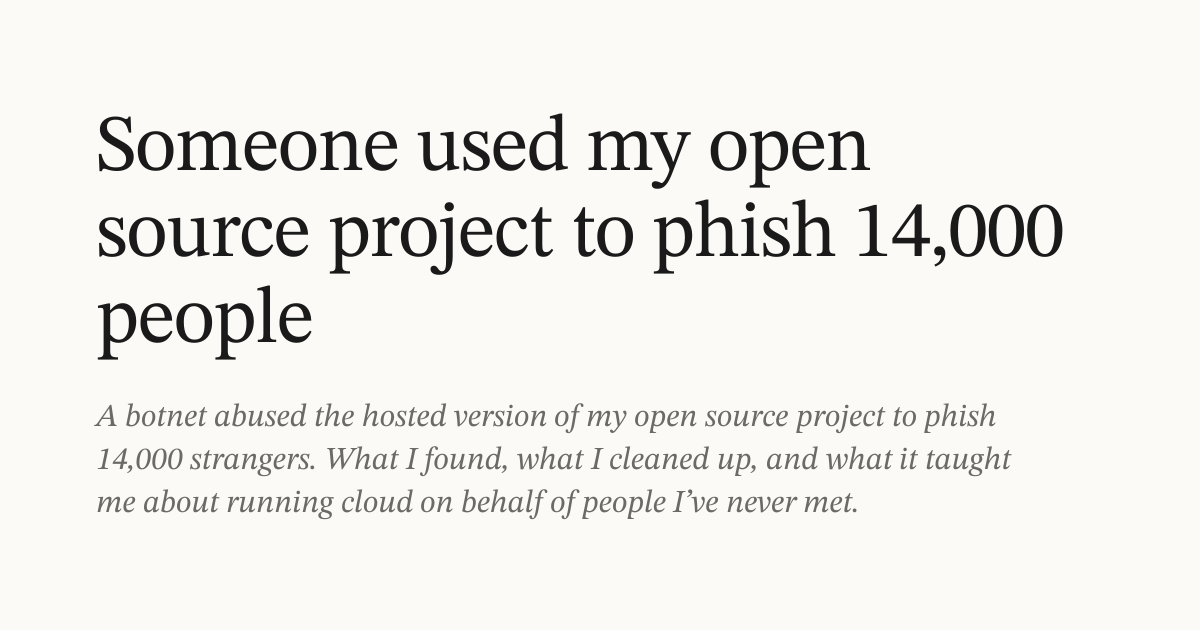
A software developer discovered that their open source project had been used as the foundation for a phishing campaign that targeted roughly 14,000 people. The incident, which surfaced on Hacker News, highlights the growing risk of open source tools being repurposed for malicious activity.
How the Attack Unfolded
The developer, who asked not to be named, created a legitimate tool designed for internal testing. Someone else took the code, modified it and deployed it as part of a phishing scheme. The modified version sent fraudulent emails to thousands of recipients, stealing credentials and personal data.
According to posts on the Hacker News thread, the campaign was active for several days before being identified. The developer discovered the abuse after noticing unusual traffic and login attempts tied to their project's domain.
The Broader Implications for Open Source
This case is not isolated. Open source code is often reused without strong vetting. Attackers increasingly scan public repositories for projects that can be twisted into phishing kits, credential harvesters or malware droppers.
The incident also raises questions about responsibility. Developers who release code for free are not liable for misuse, but the reputational damage can be severe. Some in the security community argue that repository maintainers should embed basic safeguards, such as clear licensing restrictions and usage warnings.
Why This Matters
Anyone who builds or uses open source software is affected. A single unguarded project can become a weapon against thousands. For users, this means remaining vigilant about the origins of emails and links, even when they appear to come from legitimate software tools. For developers, it underscores the need to monitor for signs of project abuse and to consider adding anti-abuse features during development.
Security researchers note that the open source model thrives on trust and transparency. Yet that same transparency makes it easier for bad actors to study, copy and weaponize code. The challenge is to preserve openness while reducing the attack surface.
In the aftermath, the affected developer is working with law enforcement and has published a warning for other maintainers. No arrests have been announced. The phishing campaign is no longer active, but the code used in the attack remains available in some corners of the internet.
The incident serves as a reminder that open source security is a shared responsibility. Users, developers and platform operators all have a role in preventing tools meant for good from being turned into weapons.