Senior Editor: Alan Agbele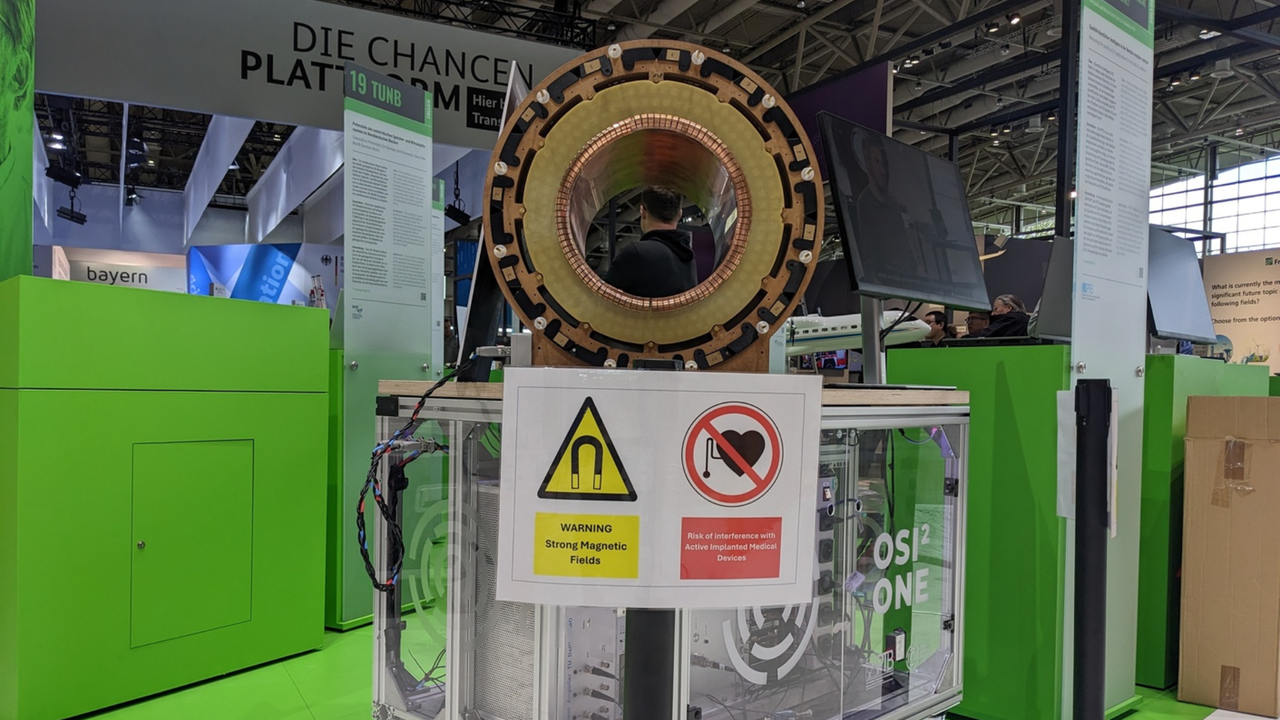
Scientists and engineers have built an open-source MRI machine with a 3D-printed core that costs under $70,000, a fraction of the $1.1 million starting price of conventional full-sized scanners. The device, called the OSI2 ONE MRI, relies on artificial intelligence to overcome the image quality limitations imposed by its low 50mT magnetic field strength.
How the Machine Works
The OSI2 ONE MRI uses a 50mT magnet, which is about 30 to 60 times weaker than the 1.5T to 3T magnets found in standard hospital machines. This drastically reduces the machine's cost and size but also cuts its signal-to-noise ratio and spatial resolution. To compensate, the system relies on deep learning algorithms that denoise images, correct for field inhomogeneity and sharpen details far beyond what the raw hardware can produce.
AI’s Role in Image Reconstruction
Tech analyst Roemmele noted that low-field MRI is a regime where AI excels. “Image reconstruction becomes dramatically better when deep networks trained on high-field data or physics-informed models denoise, correct for inhomogeneity, and push resolution beyond the raw acquisition limits,” he wrote on X. The AI can also adapt scanning parameters in real time, adjusting gradients and radio-frequency pulses as it monitors signal quality.
Since the OSI2 ONE MRI is open source, researchers can build their own physics-based models if they lack access to large datasets of anonymized patient scans. Synthetic data generation becomes possible because every component of the machine is publicly documented. This flexibility lets teams in low-resource settings tailor the AI to their specific hardware.
Regulatory Hurdles and Global Access
Some observers have pointed out that regulators in the United States and Europe may be reluctant to approve a 3D-printed, AI-driven MRI for clinical use. Nevertheless, Roemmele responded, “No one can stop us from building in garages.” The target audience for the OSI2 ONE is not first-world hospitals with million-dollar budgets but clinics and facilities in underserved regions. Even a refurbished full-size MRI costs at least $100,000 and requires a shielded room. The open-source scanner removes both financial and infrastructure barriers.
Why This Matters
The development signals a shift toward democratized medical imaging. If the AI proves effective in real-world diagnoses, hospitals and clinics with limited budgets could gain access to a tool that was previously out of reach. The OSI2 ONE MRI also represents a broader trend: open-source hardware combined with advanced software is lowering the entry cost for life-saving technology. The biggest unanswered question is whether regulatory bodies will eventually accept AI-enhanced low-field images as sufficient for clinical decisions, but for regions without alternatives, even a modestly capable diagnostic tool can save lives.