Editor: Porcia Akua Holmes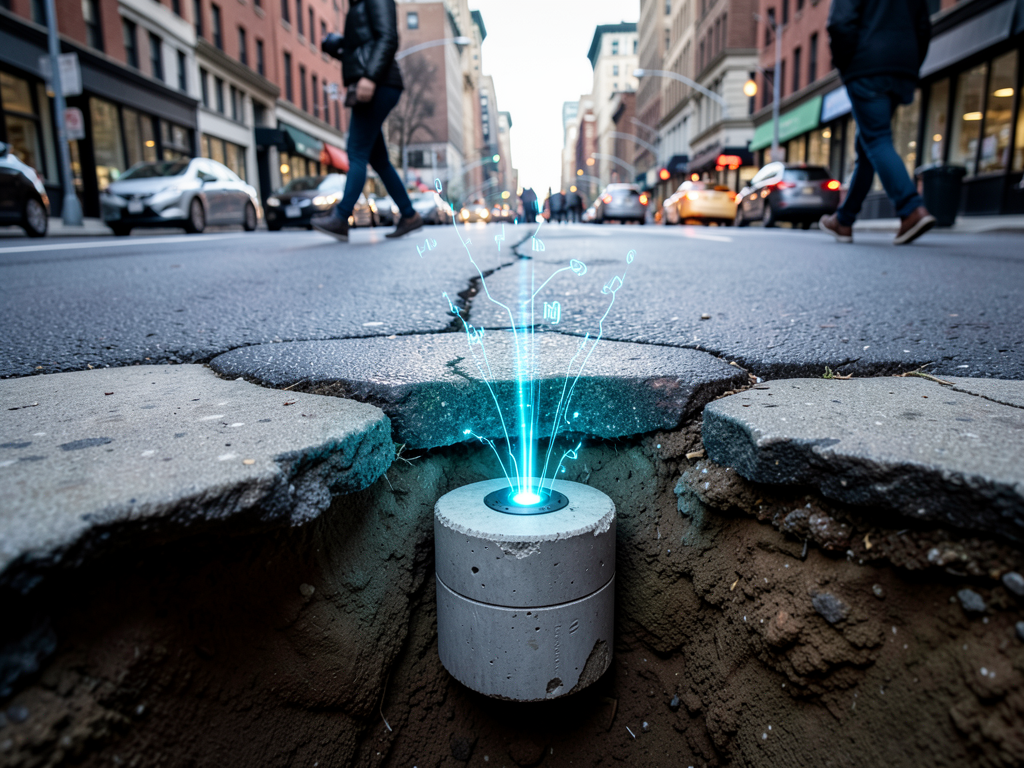
New York City has begun embedding a network of sensors beneath its sidewalks and streets, a project called Under Your Feet that promises real-time data on infrastructure stability, air quality and pedestrian traffic patterns. The first phase covers a five-block stretch of Lower Manhattan, with plans to expand citywide by 2027.
How the Sensors Work
The system relies on ruggedized environmental sensors encased in concrete and placed up to three feet below street level. Each unit is powered by a small battery designed to last five years without replacement. The sensors communicate using LoRaWAN, a protocol built for long-range, low-bandwidth IoT applications.
Broader Trends in Urban Infrastructure
The Under Your Feet project mirrors a global push to digitize city assets. London, Tokyo and Singapore have deployed similar sensor grids to monitor bridges and tunnels. What sets New York City apart is the density of its subsurface environment, which includes century-old water mains, subway tunnels and fiber-optic cables. The sensor network is designed to coexist with these systems without interfering with existing services.
Why This Matters
For city residents and commuters, the immediate benefit is faster repairs and fewer street closures. The city estimates that early detection of structural issues could reduce emergency repair costs by 30 percent. For urban planners and climate researchers, the long-term data set will offer insights into how aging infrastructure responds to heavier rainfall and rising temperatures. Under Your Feet turns every block into a lab, and that shift could change how cities budget for maintenance.
Challenges Ahead
Privacy advocates have raised concerns about the pedestrian-counting sensors, though the city insists no personal data is collected. Battery life in extreme weather conditions also remains untested at scale. Still, the project is one of the most aggressive municipal IoT deployments in the United States and will serve as a template for other major cities considering similar investments.