Senior Editor: Alan Agbele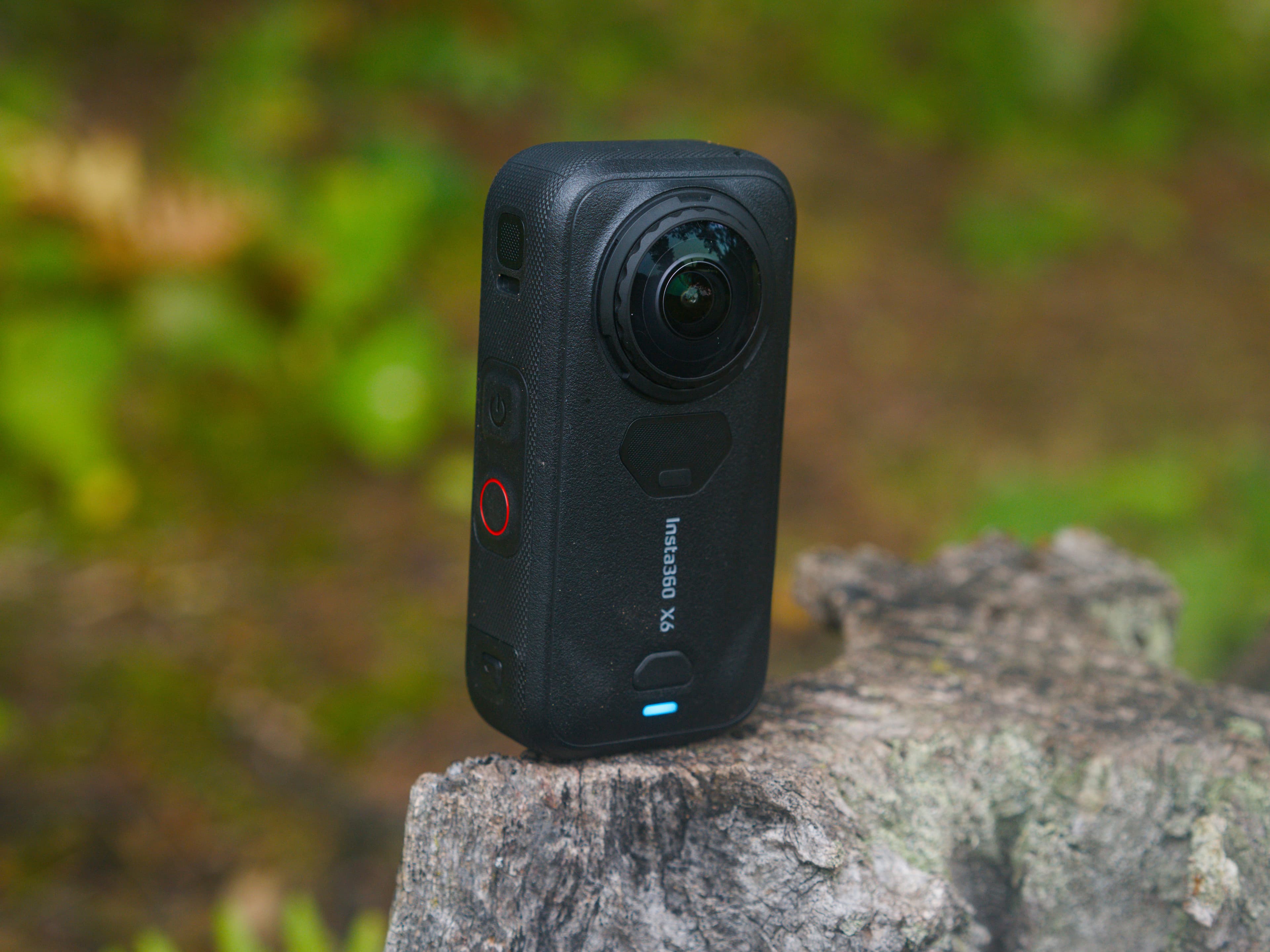
Insta360 has released its latest 360-degree camera, the Insta360 X6, a hybrid device that pairs larger imaging sensors with a significantly smaller chassis. The move represents a notable shift in the action camera segment, where the trade-off between image quality and portability has long defined product design.
Larger Sensors, Sharper Low-Light Video
The Insta360 X6 is the first camera from the company to use upgraded sensor hardware since the X4. Larger individual pixels allow the sensor to collect more photons, reducing noise in dark scenes. For creators who shoot at dusk, indoors, or under overcast skies, this change directly improves usable footage without requiring external lighting.
The company also shrank the overall body dimensions. A more compact shell means the X6 weighs less and fits into smaller gimbal mounts or helmet rigs. The combination of improved sensitivity and reduced bulk gives the X6 an edge over older 360 cameras, which often required larger batteries and housings to achieve similar results.
Why This Matters
The Insta360 X6 challenges the assumption that 360-degree cameras must remain niche tools for specialized creators. By offering a smaller form factor and larger sensors at what is likely a competitive price point, Insta360 pushes the hybrid camera category toward mainstream action sports and vlogging. Rivals such as GoPro and DJI will face pressure to improve spherical video quality without increasing device size. For consumers, the X6 means fewer devices to carry: one camera now covers immersive VR-style footage and standard flat video. The real-world effect is a lower barrier to entry for creators who want both perspectives without a second purchase.
What to Expect From the Hybrid Format
The hybrid format requires careful software integration. Insta360’s app already provides automatic reframing, allowing users to pull standard 16:9 shots from 360 footage after recording. The X6 builds on this workflow with faster stitching and real-time previews. Early users note that the smaller body can lead to quicker heat buildup during extended 5.7K recording, but the trade-off appears manageable for typical use sessions of under 20 minutes. Battery life remains in line with previous models, around 80 minutes of continuous capture.