Senior Editor: Alan Agbele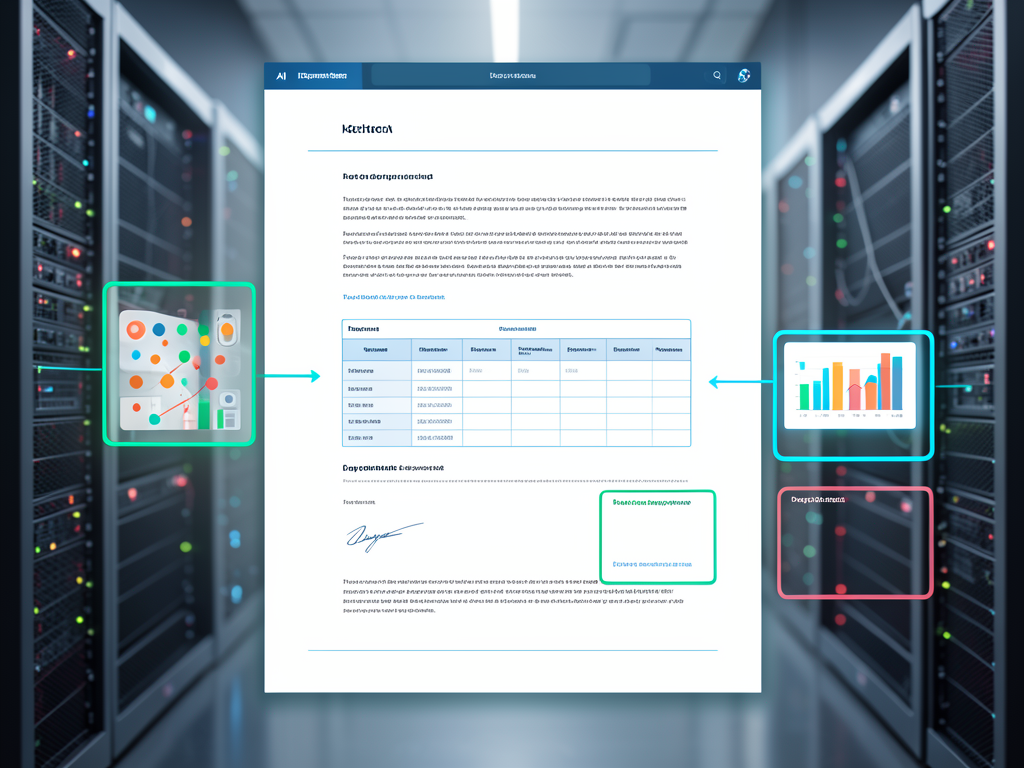
Mistral AI released OCR 4 on Tuesday, a fourth-generation document intelligence model that transforms how enterprises extract and structure information from complex documents. The model moves beyond traditional optical character recognition by returning a layered representation of each document, complete with bounding boxes, block-type classification and per-word confidence scores.
Structured Document Representation Replaces Flat Text Extraction
The central engineering shift in OCR 4 is structural. Rather than outputting a flat stream of extracted text, the model returns a layered representation in which every block is localized with a bounding box, classified by type and scored for confidence at both the page and word level.
Mistral says bounding boxes were its most-requested capability. Without location data, downstream systems cannot trace an extracted fact back to its source on a specific page. That traceability gap has been a persistent friction point for enterprises building retrieval-augmented generation pipelines, compliance workflows or any application requiring auditable answers.
Block classification addresses a related problem. A paragraph tagged as a title can segment a document into hierarchical chunks for semantic search. A block tagged as a table can be routed to a structured-data pipeline rather than a text summarizer. A block tagged as a signature can trigger a redaction workflow in a compliance system.
These capabilities are packaged as first-class outputs of the OCR model itself, removing an integration layer that enterprise teams have historically had to build and maintain separately.
Confidence Scores Enable Automated Human-in-the-Loop Verification
The confidence scores serve a dual purpose. At scale, organizations can programmatically route low-confidence regions to human reviewers and auto-approve high-confidence extractions. This builds human-in-the-loop verification without requiring a person to review every page of every document.
In production systems, OCR is rarely the end goal. It is the first step in a larger pipeline. Developers building RAG systems, agent workflows or document automation often spend more time reconstructing layout and structure than on the downstream AI logic itself. OCR 4 aims to eliminate that reconstruction step.
Benchmark Performance and Transparent Disclosure
Mistral reports that OCR 4 achieved a 72% average win rate in a head-to-head human evaluation against leading competitors, conducted by independent annotators across more than 600 real-world documents in over 12 languages. The model also achieved the top overall score on OlmOCRBench at 85.20 and scored 93.07 on OmniDocBench.
The company, however, took the unusual step of auditing and publicly disclosing the specific types of scoring artifacts it encountered. These included ground-truth errors in the reference annotations, equivalent LaTeX notation scored as mismatches, column-reading-order assumptions and header/footer attribution issues. Mistral said it treats the aggregate score as directional rather than definitive.
Why This Matters
OCR 4 arrives at a moment when Mistral's pitch for European AI sovereignty has never been more commercially relevant. Enterprises in regulated industries such as finance, healthcare and legal services face growing pressure to keep sensitive documents within their own infrastructure rather than routing them through U.S.-jurisdiction cloud APIs.
The model's on-premise deployment capability directly addresses that concern. For organizations that have avoided AI-powered document processing due to data residency requirements, OCR 4 removes a significant barrier to adoption. The pricing model, at $2 to $4 per 1,000 pages, also makes the technology accessible at scale.
The broader implication is that document intelligence is becoming a commodity capability, with differentiation shifting from raw accuracy to structural output, deployment flexibility and integration simplicity. Mistral's transparent approach to benchmark disclosure may also set a new standard for how AI vendors communicate model performance to enterprise buyers.