Editor: Porcia Akua Holmes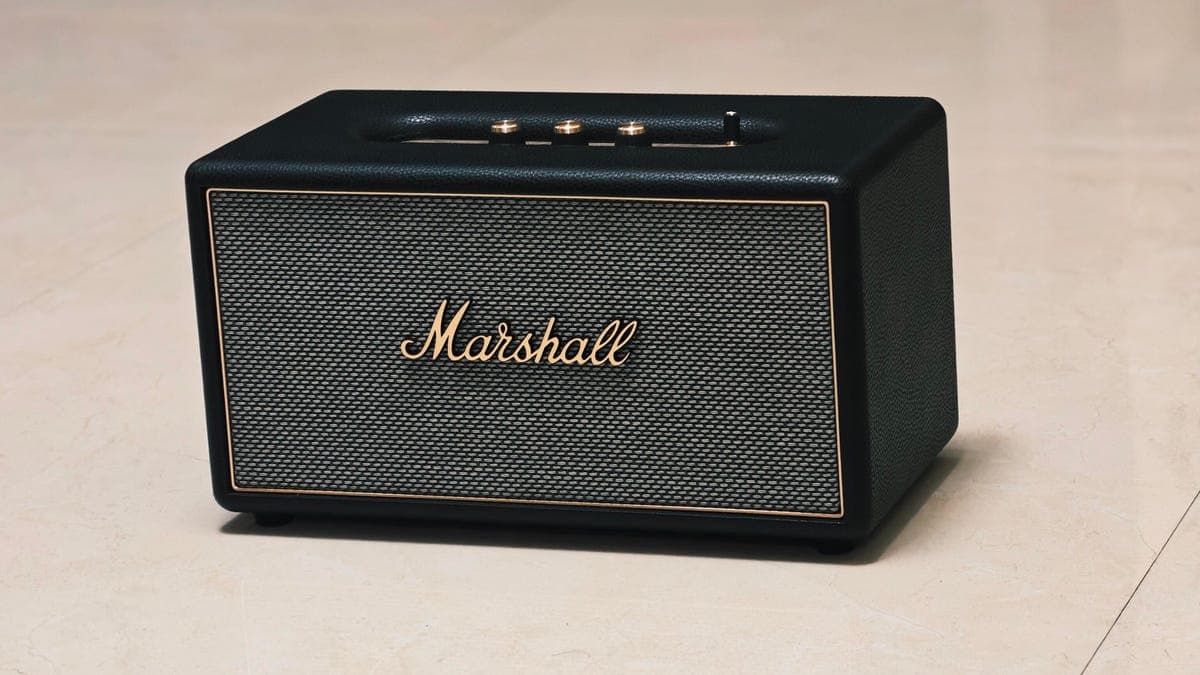
Marshall has released the Stanmore IV, a home speaker that forgoes Wi-Fi connectivity in favor of Bluetooth-only playback. The $430 speaker prioritizes audio quality over smart home integration, a deliberate choice that sets it apart from competitors packing voice assistants and multi-room streaming.
Audio-First Design Philosophy
The Stanmore IV delivers a warm, balanced sound profile that suits a wide range of genres. Marshall tuned the speaker to emphasize clarity and punch, avoiding the overly bass-heavy signature common in many Bluetooth speakers. The result is a listening experience that satisfies casual listeners and audiophiles alike.
Marshall's decision to omit Wi-Fi reduces potential interference and simplifies setup. Users pair the speaker directly from a phone or tablet without navigating a companion app or network credentials. This streamlined approach appeals to those who want a plug-and-play device.
Market Positioning and Trade-Offs
The home speaker market has moved toward Wi-Fi-enabled devices that support AirPlay, Spotify Connect and voice assistants. The Marshall Stanmore IV ignores these trends entirely. Buyers cannot use multi-room audio, stream via a smart speaker group or control playback with a voice command. The speaker, however, does not require a stable home network to function. It works anywhere Bluetooth reaches.
Competitors such as the Sonos Era 100 or the Apple HomePod mini offer broader connectivity at similar or lower prices. They also integrate with smart home ecosystems. The Stanmore IV, by contrast, targets a specific niche: listeners who value sonic performance above all else and who prefer a wired-free, app-free experience.
Why This Matters
Marshall's strategy signals a growing demand for audio-first products in a smart speaker era. Consumers increasingly push back against devices that require constant updates, permissions and data sharing. A Bluetooth-only speaker eliminates those dependencies. For the company, the Stanmore IV strengthens its position in the premium audio segment and differentiates it from tech giants like Amazon and Google. The real impact, however, will be measured by whether buyers accept a $430 speaker that cannot stream from a home network or join a multi-room setup. If it succeeds, other manufacturers may follow with similar stripped-down designs.
What You Get for $430
Beyond sound quality, the Marshall Stanmore IV includes a 3.5mm auxiliary input for wired connections and an HDMI ARC port for use with a TV. The speaker supports Bluetooth multipoint, allowing two devices to connect simultaneously. Battery power is absent, as the speaker requires a wall outlet. Dimensions remain similar to its predecessor, the Stanmore III, with a footprint that fits on a bookshelf or side table.
The lack of Wi-Fi means no firmware updates, which could become a concern over time. Wireless protocols evolve, and a Bluetooth-only speaker may lose compatibility with future devices. Marshall has not announced plans for a Wi-Fi model in the Stanmore line.
For now, the Stanmore IV stands as a focused, high-fidelity home speaker that deliberately ignores smart features. Its success depends on whether the market values audio purity over connectivity.