 Editor: Porcia Akua Holmes
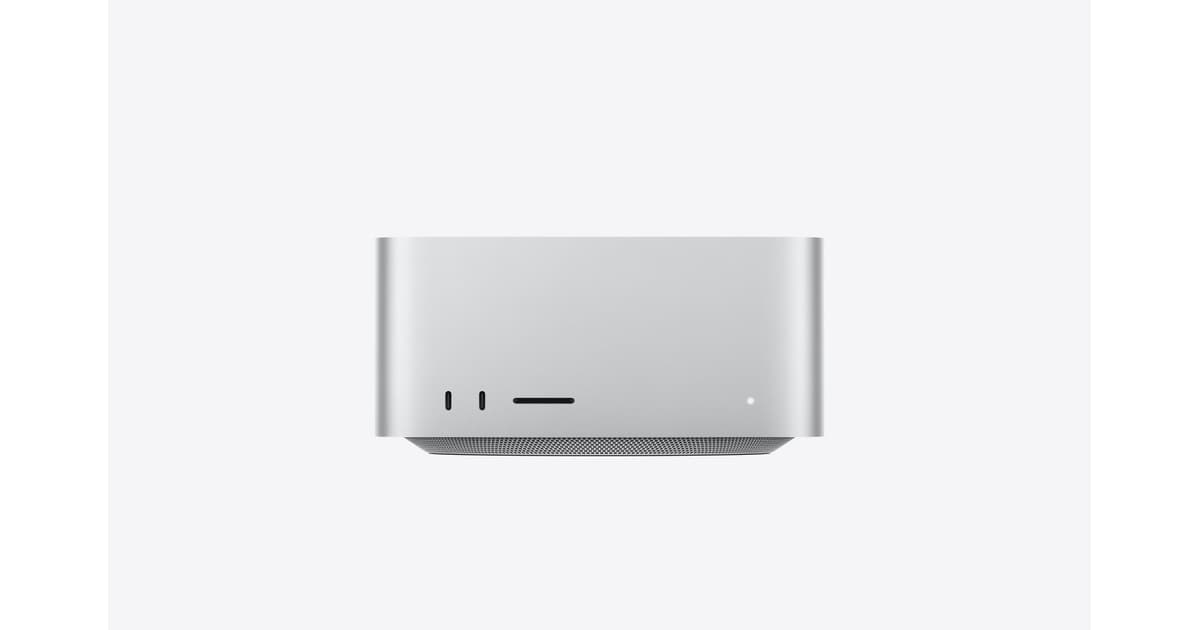
Apple has officially released the Mac Studio M5 Ultra, a desktop workstation configured with 512GB of unified memory. The announcement lands as a direct challenge to the assumption that serious AI model training and inference must live in the cloud.
The Memory Wall That Defined AI Hardware
For years, the limiting factor in local AI work has not been processing power. It has been memory capacity. Most consumer graphics cards top out at 24GB or 48GB, forcing teams to split models across multiple cards or move workloads to cloud providers.
The Mac Studio M5 Ultra sidesteps that constraint through Apple's unified memory architecture. Because the CPU and GPU share a single high-bandwidth pool, a 512GB machine can address far larger models than a comparably priced multi-GPU desktop.
That architectural choice is the real story behind the release. It reframes the desktop workstation as an AI appliance rather than a general-purpose computer.
Who Stands to Gain From 512GB of Unified Memory
The immediate beneficiaries are teams that have been priced out of serious local AI experimentation. Cloud inference bills scale with usage, and for iterative research those costs compound quickly.
Several groups are likely to take a close look at the Mac Studio M5 Ultra:
Each of these groups shares a common need. They want capacity without the operational overhead of managing a server rack.
Why This Matters
The Mac Studio M5 Ultra release changes the competitive map for high-end workstations. Rivals that have leaned on discrete GPU counts now face a machine that competes on memory capacity, a metric that matters more for modern AI workloads.
Buyers in research, media and software development will increasingly ask whether they need a cloud contract at all. That shift could pressure cloud providers that depend on AI inference revenue from small and mid-sized teams.
Apple also gains a stronger foothold in the professional market. The company has spent years positioning its silicon as capable of serious work, and a 512GB configuration gives that claim a concrete flagship.
The longer-term effect is a rethinking of what a desktop computer is for. If a single box can host models that once required a data center, the boundary between local and cloud computing starts to blur.
The Cloud Economics Under Pressure
Cloud providers have built substantial businesses around AI inference. A workstation that reduces dependence on rented compute threatens that model at the low end of the market.
The Mac Studio M5 Ultra will not replace large-scale training clusters. It does, however, make local inference viable for a much wider range of teams.
That distinction matters. Inference is where many organizations spend the most on cloud services, and it is the workload most sensitive to per-token pricing.
Apple's timing also aligns with a broader push toward on-device AI. Regulators in several regions have raised concerns about data leaving local environments, giving privacy-focused hardware a stronger selling point.
What to Watch Next
The release puts pressure on competitors to respond with higher memory configurations. Workstation buyers should watch whether rivals match the 512GB ceiling or argue that raw compute still wins.
Software support will also determine how quickly the Mac Studio M5 Ultra becomes a default choice. Frameworks that optimize for unified memory will shape real-world performance more than spec sheets.
For now, the message is clear. Apple has officially released a desktop that treats memory capacity as the headline feature, and the AI hardware conversation will not be the same.


