Editor: Portia Akua Holmes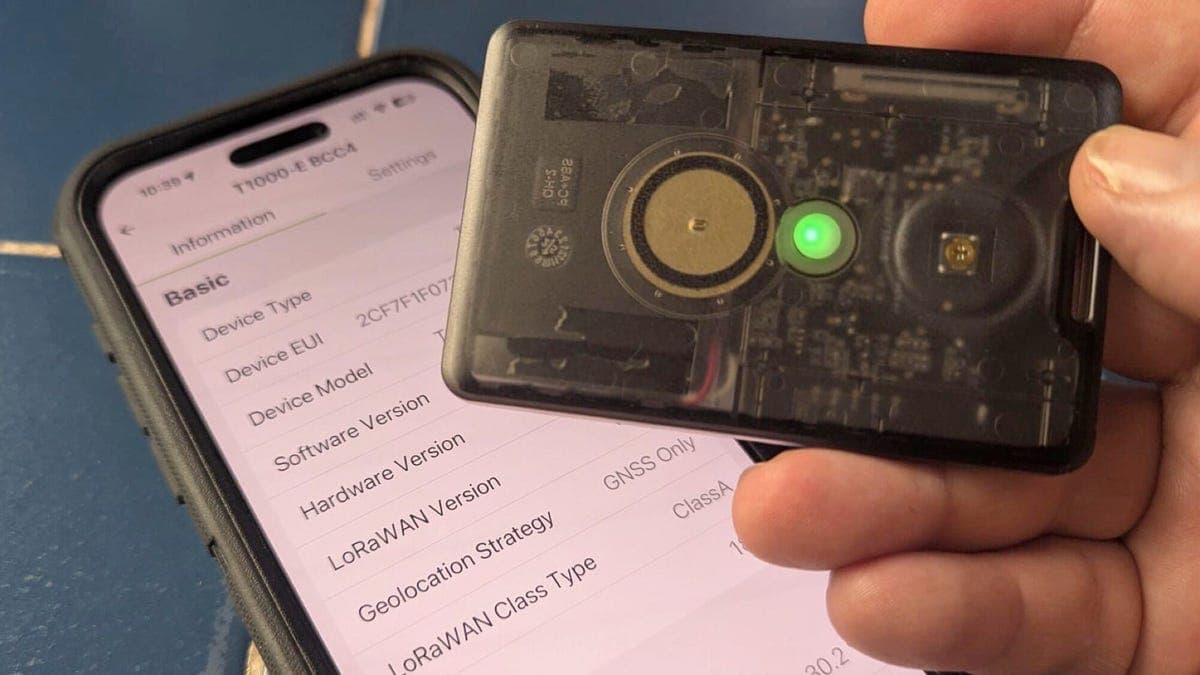
Apple's AirTag and Google's Find My Device network have dominated the personal tracking market. But a new device from Seeed Studio takes a fundamentally different approach. The SenseCAP T1000-E tracker card does not rely on Bluetooth signals or the vast crowdsourced networks of Big Tech companies. Instead, it uses LoRaWAN, a long-range wireless protocol designed for Internet of Things devices.
The tracker card is slim and credit card sized. It fits easily into wallets, bags or luggage. Its key difference is independence from proprietary location networks. Users must have access to a LoRaWAN gateway, either their own or a public one, to track the device. This limits broad consumer appeal but opens up specialized use cases.
The technology behind the shift
LoRaWAN stands for Long Range Wide Area Network. It operates on unlicensed spectrum and can transmit small amounts of data over several kilometers in open areas. Unlike Apple's AirTag, which uses Bluetooth Low Energy and piggybacks on nearby iPhones, the SenseCAP T1000-E sends periodic location updates directly to a LoRaWAN gateway. No smartphone proximity is required for the device to report its position.
Seeed Studio designed the tracker with a built-in GPS and GNSS receiver for outdoor accuracy. Indoors it uses Wi-Fi positioning as a fallback. The battery lasts up to two years under typical use, far exceeding AirTag's one year. The device is IP67 rated, meaning it resists dust and water immersion.
Privacy and independence
For users concerned about sending location data through Apple or Google servers, the LoRaWAN path offers a different privacy model. The tracker communicates directly with the user's own gateway or a community network like The Things Network. Data can be self-hosted or sent to a private server. This removes the large corporate intermediary from the tracking chain.
Businesses that need to track assets across a warehouse, campus or city can deploy their own LoRaWAN infrastructure. They avoid subscription fees and data sharing requirements tied to consumer tracker networks. The open standard model also allows customization of alert thresholds and reporting intervals.
Why This Matters
The tracker represents a broader trend toward decentralized location services. As privacy regulations tighten and public trust in Big Tech wavers, alternative infrastructure becomes more attractive. LoRaWAN networks already exist in many urban areas, installed by cities and companies for smart metering and environmental monitoring. Repurposing those gateways for personal tracking is a logical extension.
Consumer impact is limited today because most individuals do not own a LoRaWAN gateway. But for professional use cases, such as tracking expensive equipment, delivery containers or fleet vehicles, the device provides a reliable option without monthly cellular fees. The card costs around $35, comparable to an AirTag, but without ongoing costs if using a public network.
The market for trackers is expanding beyond lost keys. Insurance companies, logistics firms and event organizers are exploring non cellular tracking for theft prevention and inventory management. Seeed Studio's device could accelerate adoption in those segments.
Limitations and tradeoffs
The main drawback is the requirement for LoRaWAN coverage. Unlike Bluetooth which is everywhere thanks to smartphones, LoRaWAN gateways are less common in residential areas. Users in dense urban cores may find community networks sufficient, but rural users will likely need to install their own gateway, costing $100 or more.
Real time tracking is also different. LoRaWAN is designed for periodic updates, not constant pinging. The T1000-E reports location at set intervals, configurable from seconds to hours. For someone who wants instant location updates, an AirTag remains superior. The tradeoff is battery life and privacy versus immediacy.
Seeed Studio, known for maker hardware and IoT modules, is positioning this tracker for developers and businesses first. Consumer adoption may grow as more public LoRaWAN infrastructure appears. For now, it offers a compelling option for those who want to step outside the Apple and Google ecosystem.