Senior Editor: Alan Agbele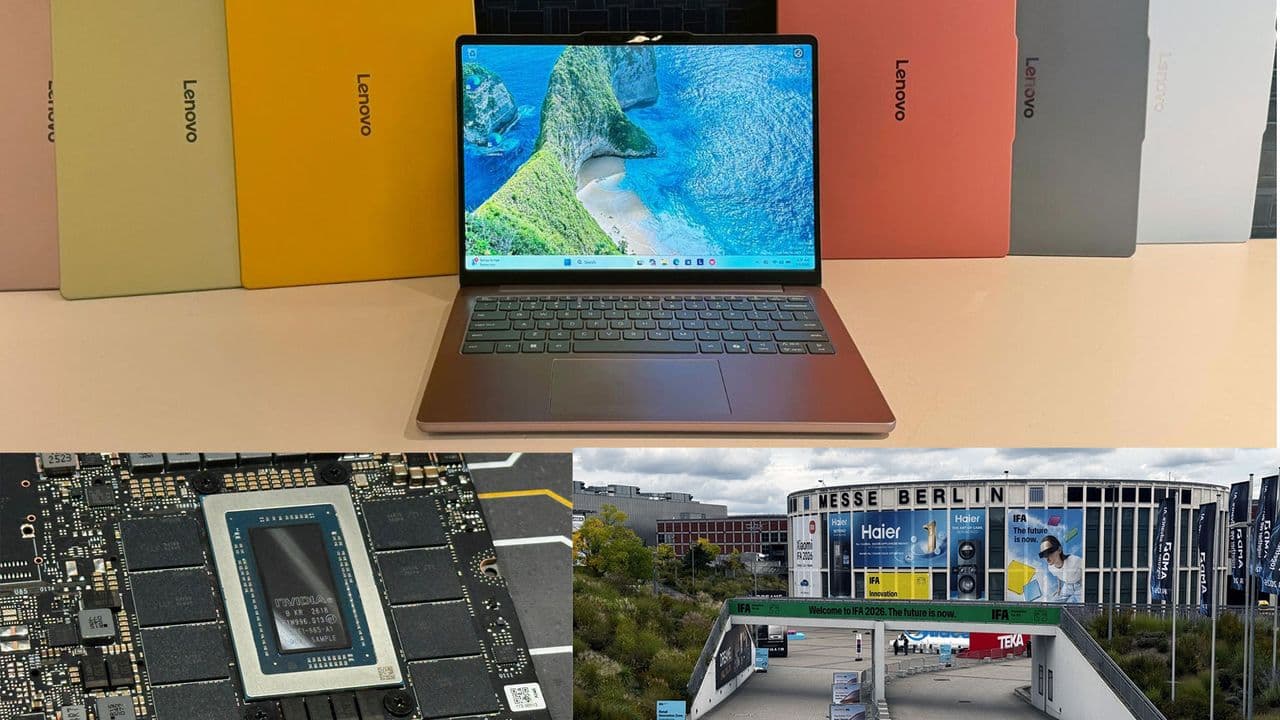
The computing world is splitting into two distinct tiers. At IFA 2026, laptop makers revealed machines that either target the low end to compete with the MacBook Neo or push toward the high end with agentic AI capabilities. There is little room left for the middle.
MacBook Neo Competitors Go Colorful
Apple's March announcement of the MacBook Neo cast a long shadow over the show. Laptop makers responded with colorful alternatives. Lenovo's IdeaPad Vibe series comes in seven colors, outpacing the Neo's four, with optional swappable keyboards. Dell's new 14S offers four colors, including a bold velvet green, and adds ports such as HDMI and a headphone jack, a departure from the sparse Dell XPS 13.
Acer also debuted a 16-inch Swift Air in three colors. These machines use Intel's Wildcat Lake processors and Qualcomm Snapdaron X chips. The push for color and affordability, but, appears lasting. Rumorrs of a follow-up to the MacBook Neo suggest the trend may continue.
Agentic AI Machines Push Prices Into the Stratospher
The second pole of IFA focused on agentic AI. AMD's Ryzen AI Max+ Pro 495 systems, with up to 192GB of unified memory, showed up in machines like the Lenovo ThinkCentre X and models from Minisforum and GMKtec. Pricing ranges up to $7,000.
Nvidia's demos shwed agents like Hermes and OpenClaw. The companies that listed prices have them at several thousand dollars. The market, but, has seen entry-level Strix Halo configuarations under $2,000 with 64GB RAM earlier this year.
Why This Matters
The bifurcation has direct consequences for buyers. Consumers seeking a mid-range laptop with good performance and moderate memory face a barren landscape. Budget systems skimp on RAM due to a global shortage, while high-end machines price out all but enterprise and AI enthusiast users. The chasm means that the next upgrade for many may be a colorfull but underpowered low-end machine or a costly workstation. Laptop makers, chasing Apple's Neo and the AI boom, appear to have abandoned the middle of the market.