Editor: Porcia Akua Holmes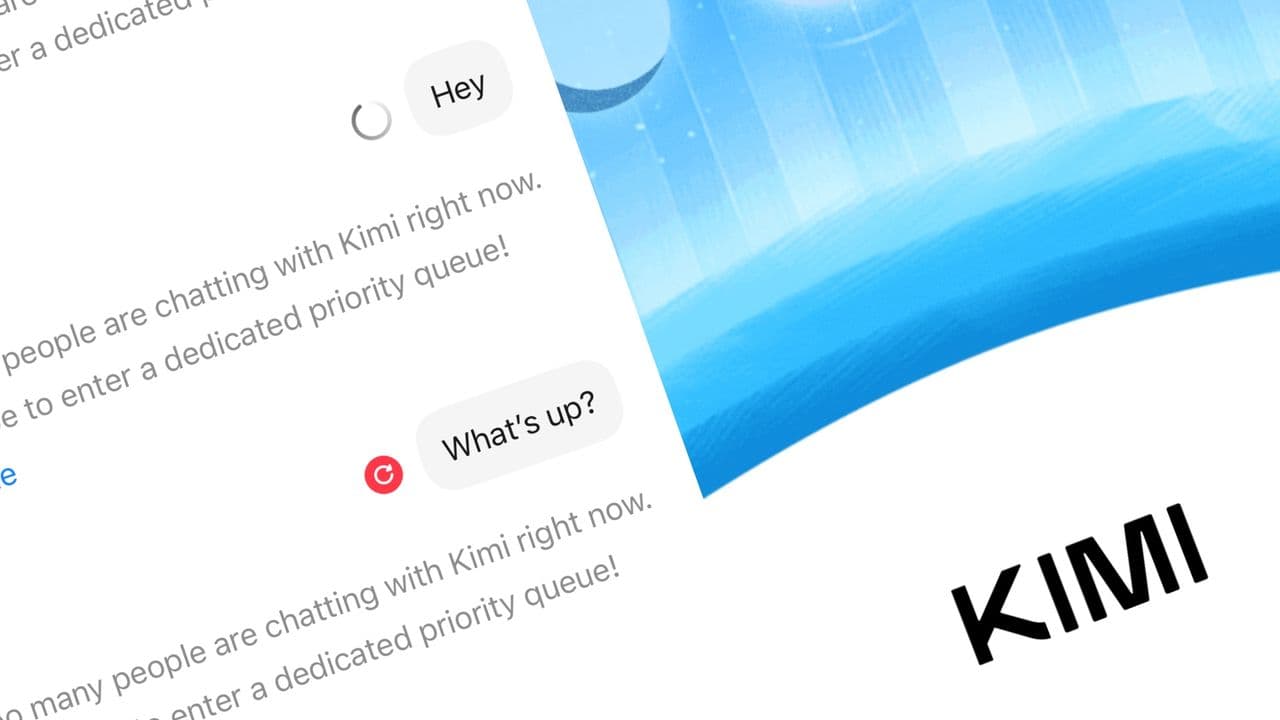
China’s latest ChatGPT rival hit the Apple App Store and immediately ran into a problem that no benchmark score can fix: too many users wanted to talk to it at once. Kimi, an open-weight model from Moonshot AI, generated such heavy traffic that new users encountered capacity errors instead of instant access. The moment captures a central tension in modern artificial intelligence. Raw intelligence matters, but without enough GPUs and servers, the most capable model becomes a theoretical exercise.
The Capacity Challenge Behind Kimi’s Launch
Kimi arrived in 2026 as the latest high-profile Chinese AI model to challenge US dominance. Reviews praised its performance on coding, document analysis and agent-style multi-step tasks. Yet the first experience for many users was a queue rather than a conversation. The error message read plainly: too many people were already trying to talk to it.
That kind of failure is not a software bug. It is a physical infrastructure problem. AI models require enormous clusters of GPUs and dedicated data centers to serve simultaneous requests. When demand spikes past available capacity, access collapses regardless of how intelligent the model is.
This pattern first gained widespread attention during the early ChatGPT surge in late 2022 and again when DeepSeek broke into the mainstream in 2025. Each time, the companies involved scrambled to lease more servers and expand data center footprint. The Kimi launch suggests that Chinese AI is not immune to the same constraints.
Infrastructure as the New Competitive Frontier
Industry dynamics are shifting focus from pure model performance to operational scale. In the past week alone, reports emerged that Nvidia is discussing financing guarantees to help OpenAI secure a proposed 10-gigawatt data center in Ohio. Other tech giants are racing to lock down their own capacity.
The ability to keep a popular model online when millions of people suddenly try to use it may become the defining competitive advantage of 2026. Kimi’s open-weight nature adds complexity. While Open means the finished model can be downloaded and run independently, that does not automatically solve hosting bottlenecks for users who rely on the company’s own servers.
Why This Matters
The Kimi access problem is a warning for the entire AI industry. Companies that invest heavily in model quality but neglect serving capacity risk losing users at the moment of first contact. For consumers and businesses experimenting with new AI tools, reliability becomes as important as capability. The next stage of competition will be shaped by power contracts, server farms and the logistical ability to keep a model online under peak demand. Whoever solves that equation first will lead not just in benchmarks but in real-world adoption.