Editor: Porcia Akua Holmes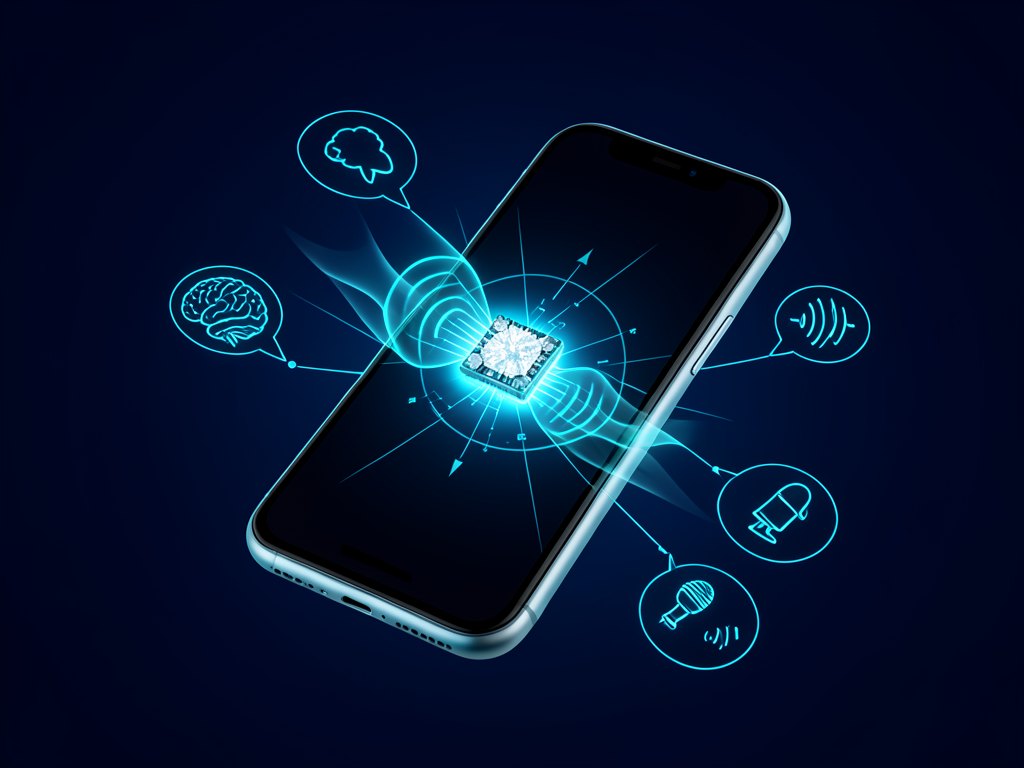
Speech AI has reached a new efficiency milestone. Inflect Micro v2, a model that delivers complete voice processing capabilities using only 9.36 million parameters, demonstrates that powerful speech recognition and synthesis can now run on low-power consumer hardware. This development could reshape how voice interfaces are deployed across smartphones, wearables and IoT devices.
A New Efficiency Standard
Most voice AI models today rely on hundreds of millions or billions of parameters. Inflect Micro v2 achieves a comparable level of accuracy and expressiveness with just 9.36 million parameters, a reduction of more than 95 percent compared to many production systems. This compression is possible through careful architecture design and distillation techniques that preserve the essential aspects of speech while shedding redundant computation.
The model handles the full voice pipeline including wake word detection, speech recognition and text-to-speech generation. Early benchmarks suggest it performs on par with models 10 times its size on standard voice tasks. Developers, however, should verify performance for their specific use cases.
Implications for Edge AI
The practical impact of Inflect Micro v2 extends beyond raw benchmarks. By fitting entirely on a device, it eliminates the latency and privacy concerns associated with cloud-based voice processing. Users can interact with voice commands without sending audio data over the internet. This matters for applications where speed or data sensitivity is critical, such as medical dictation or in-car controls.
Hardware requirements drop accordingly. The model can run on a modern smartphone's neural processing unit or a low-cost microcontroller. Devices that previously lacked the memory or compute for voice AI can now adopt natural voice interfaces. This shifts the competitive landscape for manufacturers of smart speakers, hearing aids and industrial headsets.
Why This Matters
Inflect Micro v2 represents a broader trend toward specialized tiny models that democratize access to AI. Voice interaction has been dominated by large language models and cloud APIs, creating barriers for smaller product teams and users in low-connectivity regions. A capable 9.36M parameter model changes that equation. It allows voice functionality to become a standard feature of everyday devices rather than a premium service.
Going forward, we can expect more task-specific small models to emerge in areas like audio, vision and sensor fusion. The challenge for developers will shift from running AI at all to choosing the right sized model for their hardware constraints. Inflect Micro v2 sets a new reference point for what is possible with minimal resources.