Senior Editor: Alan Agbele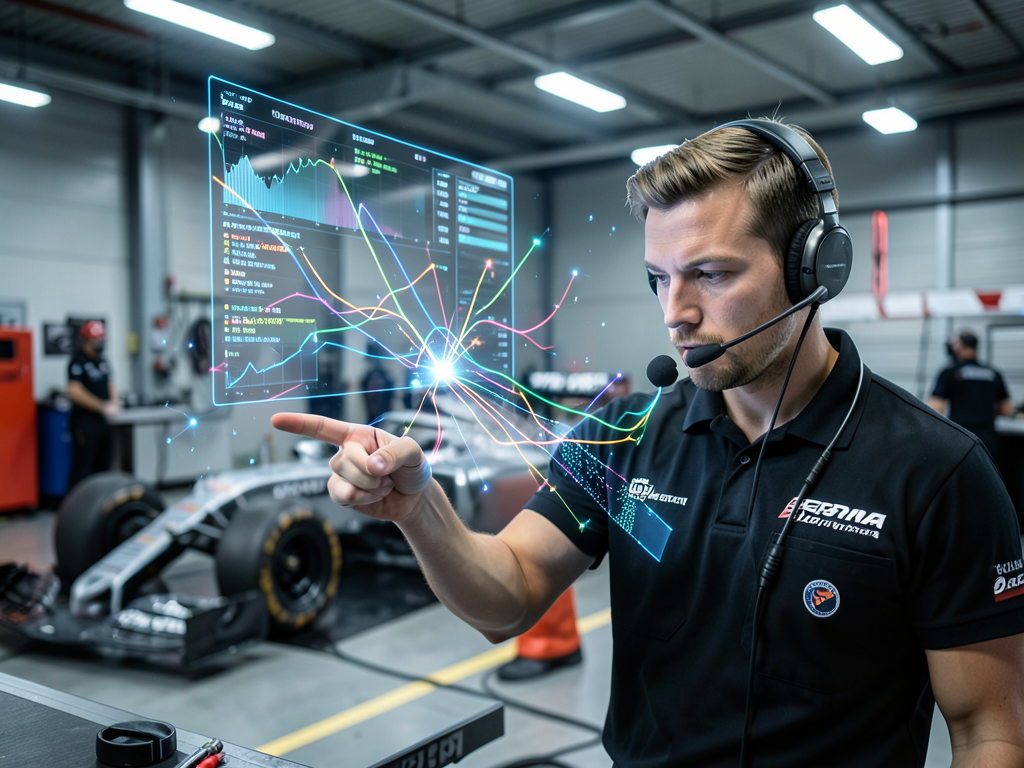
Formula One has become a data-intensive sport, with cars generating terabytes of telemetry per race weekend. Yet the most advanced AI systems still depend on human interpretation to deliver a competitive advantage. Executives and partners at Aston Martin Aramco Formula One team argue that professional handcraft, not raw computing power, is what converts data into race-winning decisions.
The Human Factor in Data-Driven Racing
Formula One teams employ machine learning models to predict tire degradation, optimize pit strategies and simulate race outcomes. However, the models produce probabilistic outputs, not certainties. Engineers must weigh these predictions against track conditions, competitor behavior and driver feedback. The human-in-the-loop framework retains human authority over final decisions.
Aston Martin Aramco executives point out that the most valuable data insights come from experienced professionals who understand the nuances of each circuit. A model might suggest an aggressive overtake, but the human knows when to hold position or conserve fuel. This dynamic is what separates top teams from the rest.
Why This Matters
The implications extend beyond the racetrack. As industries from manufacturing to finance adopt AI, the Formula One model shows that automation alone does not guarantee better outcomes. Companies that treat AI as a replacement for human expertise risk making brittle decisions. The competitive advantage in any high-stakes environment comes from teams that combine machine efficiency with human creativity and domain knowledge. For Formula One, this means that investment in people remains as critical as investment in technology.
Technology as a Tool, Not a Replacement
Partners working with Aston Martin Aramco emphasize that AI accelerates data processing but does not eliminate the need for craft. Professional handcraft refers to the tacit knowledge accumulated over years of problem solving. It is the ability to spot patterns, question assumptions and improvise under pressure. These skills cannot be encoded into algorithms.
The team's approach creates a feedback loop where humans train models, models inform humans, and the cycle refines over time. This synergy is particularly evident in areas like aerodynamic simulation, where computational fluid dynamics output is validated by veteran engineers. The result is a system that is both faster and more reliable than either humans or machines working alone.
Lessons for Other Industries
Formula One's emphasis on human oversight offers a blueprint for autonomous systems in sectors such as healthcare, logistics and energy. The human-in-the-loop principle reduces the risk of catastrophic errors while preserving the speed of automated analysis. Organizations that adopt this model can build trust with users and regulators, avoiding the pitfalls of over automation.
As Aston Martin Aramco continues to integrate AI into its racing operations, the message is clear: the future of competitive advantage is not about choosing between humans and machines. It is about designing systems where both work together effectively.