Senior Editor: Alan Agbele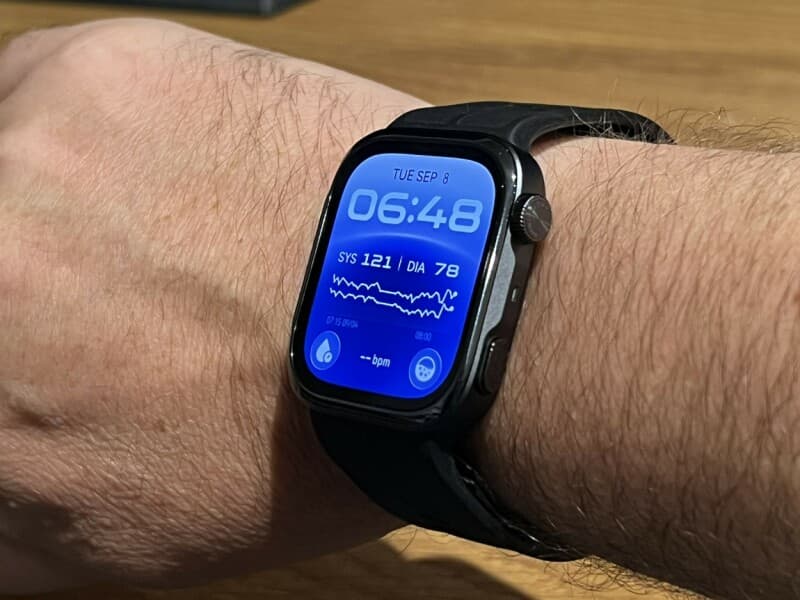
Huawei released the Watch D3, its third-generation blood-pressure-measuring wearable, doubling down on cuff-based technology that few competitors use. Where most smartwatches rely on optical sensors to estimate blood pressure, the Watch D3 employs a built-in pump and inflatable airbag inside the strap.
A Slimmer Design With a Clear Purpose
Compared to its predecessor, the Watch D3 feels less obtrusive despite still being larger than standard smartwatches. The watch body weighs 40 grams and measures 11.3mm thick. That improvement comes from refinements to the pump and airbag housed inside the removable strap. During tests, the D3 produced plausible, consistent blood pressure readings while remaining mostly silent.
Users wear the device like a regular watch until measurement begins. The strap tightens noticeably, and Huawei recommends sitting still without talking or moving. The process takes about a minute. For those who want continuous insight, the ABPM feature takes scheduled measurements day and night, signaled by a gentle vibration.
Privacy and Data Handling Concerns
All health data flows through the Huawei Health app, which may worry some users about where personal information ends up. Rico Zhang, Huawei’s president for the product line, told reporters at a launch event in Munich that the company follows all local policies on user privacy. He noted that respecting those rules is fundamental if Huawei wants to remain in the European wearables business long term. Europe remains a key market, and compliance with local regulations is central to that strategy.
Battery Life and Water Resistance Tradeoffs
Under typical smartwatch usage, the Watch D3 lasts about five to six days per charge. Enabling ABPM drops battery life to roughly one day. The screen is a bright 1.92-inch display with 3,000-nit peak brightness. Huawei rates the watch IP68 but warns against wearing it while showering or swimming. Water can interfere with blood pressure measurement accuracy, so any moisture must be wiped off before taking a reading. That limit is understandable given the mechanics inside but disappointing compared to many rivals like Apple Watch that allow full swim tracking.
Why This Matters
For millions managing hypertension, getting reliable blood pressure readings without carrying a separate bulky monitor changes daily convenience. The Huawei Watch D3 bridges the gap between consumer wearables and medical devices, potentially encouraging wider adoption of routine BP tracking. However, reliance on proprietary software and regional privacy differences create friction for international users. Whether other smartwatch makers invest in similar cuff technology will test whether the market values accuracy over slim aesthetics.
The Huawei Watch D3 launches in the UK on September 23 at £399.99 in Black, Gold, and Mocha Gold colors.