Senior Editor: Alan Agbele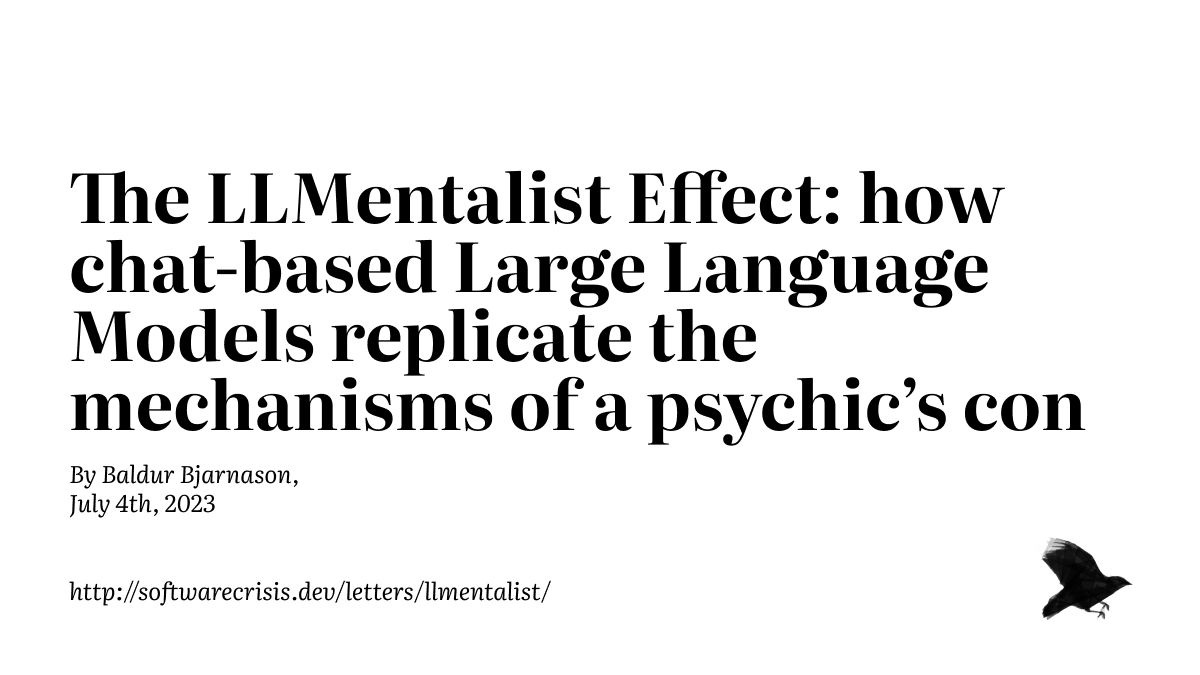
A new analysis suggests that chat-based Large Language Models employ psychological techniques nearly identical to those used by psychics to convince people of supernatural abilities. The comparison, drawn from behavioral research, points to a uncomfortable parallel: both systems rely on vague, general statements that listeners interpret as personally meaningful.
The Cold Reading Connection
Psychics often use a technique called cold reading, where they make broad, generic statements that most people will apply to themselves. For example, a psychic might say, "I sense you have experienced a loss recently," which many individuals can rationalize as true. Large Language Models operate in a similar fashion, producing fluent, context-appropriate sentences that feel personal but are actually averages of training data patterns.
Implications for Trust and Design
The parallel between LLMs and psychic cons has practical consequences. Users may ascribe intelligence, empathy or even intent to a system that is merely predicting the next word. This anthropomorphism can lead to overreliance on AI advice in sensitive areas such as mental health, finance or legal judgment. Developers, therefore, face a design challenge: how to make LLMs helpful without exploiting the same cognitive vulnerabilities that psychics have used for centuries.
Why This Matters
The comparison removes the novelty around LLM capabilities and reframes them as sophisticated tools of persuasion rather than understanding. For policymakers and tech companies, the implication is clear: transparency measures may need to go beyond disclosing that a system is AI. They must also educate users about how these models produce convincing but hollow responses. Without such safeguards, the risk is not just misinformation but a systemic erosion of critical thinking, where people accept machine-generated statements as personal truths.
What This Means for Users
Anyone interacting with a Large Language Model should approach its responses with the same skepticism they would apply to a psychic claiming to read minds. The technology is powerful, but its power comes from pattern matching, not insight. Understanding this distinction can help users maintain a healthy distance from AI predictions and suggestions, especially when the stakes are high.