Editor: Porcia Akua Holmes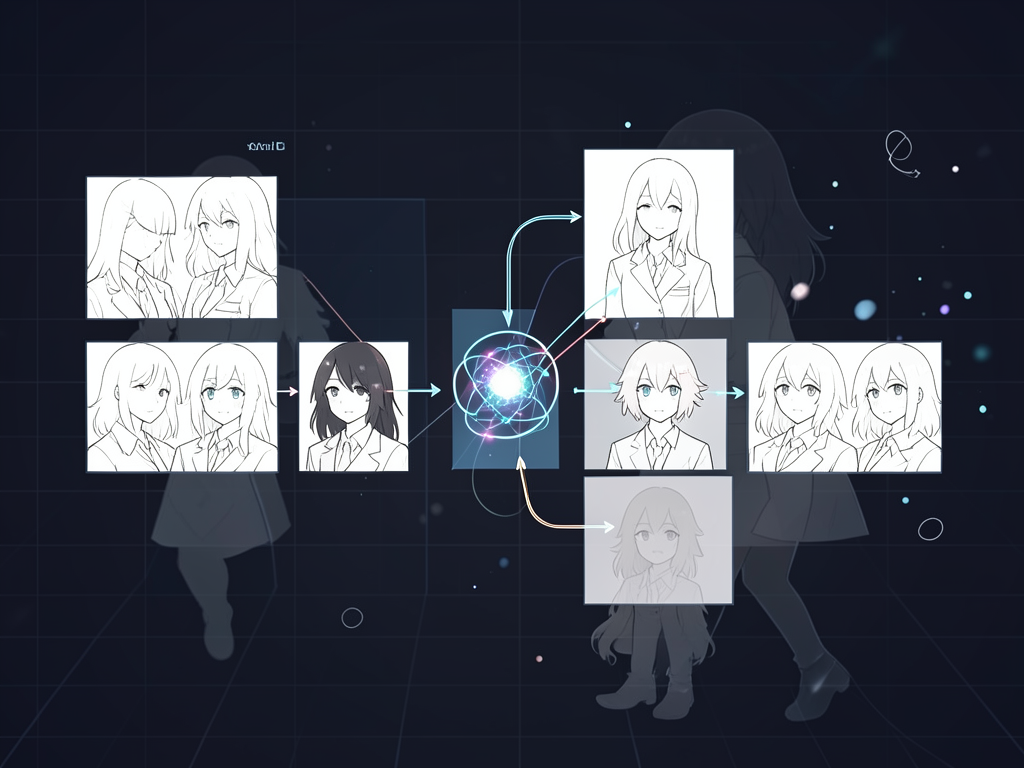
Artificial intelligence is now capable of producing anime sequences that rival traditional hand-drawn work. A recent Hacker News thread titled "AI Anime Is Created" sparked widespread discussion about how these systems work and what they mean for the animation industry.
The Technology Behind AI Anime
Modern AI anime creation typically starts with a text prompt or rough sketch. Models such as Stable Diffusion, trained on large datasets of anime illustrations, generate character designs and background art. The process then extends to animation through frame interpolation and temporal coherence algorithms.
Key steps in the pipeline include:
These systems often require human oversight to correct errors and maintain narrative flow. The Comments on the original Hacker News thread highlighted both excitement about efficiency gains and skepticism about creative control.
Challenges of Temporal Coherence
One of the hardest problems in AI animation is keeping characters recognizable from frame to frame. Without careful conditioning, models may change a character’s hair color or face shape mid-scene. Researchers are developing latent-space techniques that enforce continuity, but the solutions remain imperfect.
Another issue is motion naturalness. AI-generated motion can appear jerky or unnatural. Advanced optical flow algorithms and temporal attention layers help, but they increase computational cost. Small studios may lack the hardware to run these models in real time.
Why This Matters
AI anime creation could reshape the animation labor market. Traditional in-betweening jobs, a common entry point for animators, may decline as automation improves. At the same time, indie creators gain access to tools that previously required large teams. The economic shift will likely affect training pipelines and job definitions across the industry.
For viewers, AI-generated anime may lead to faster release schedules and lower production budgets. However, the risk of homogenized art styles and reduced artistic expression remains a concern. The industry faces a choice between efficiency and originality.
Industry Reaction and Future Outlook
Major studios are cautiously adopting AI for background art and color grading. Some, like Netflix, have invested in internal AI research. Smaller creators, such as individuals on YouTube, have already produced full short films using open-source models. The quality varies widely, but the trend is accelerating.
Regulatory frameworks are not yet in place for AI-generated animation. Copyright questions around training data and derivative works remain unresolved. The conversation started by the thread "AI Anime Is Created" reflects a broader debate about creativity and automation that will intensify in coming years.