Senior Editor: Alan Agbele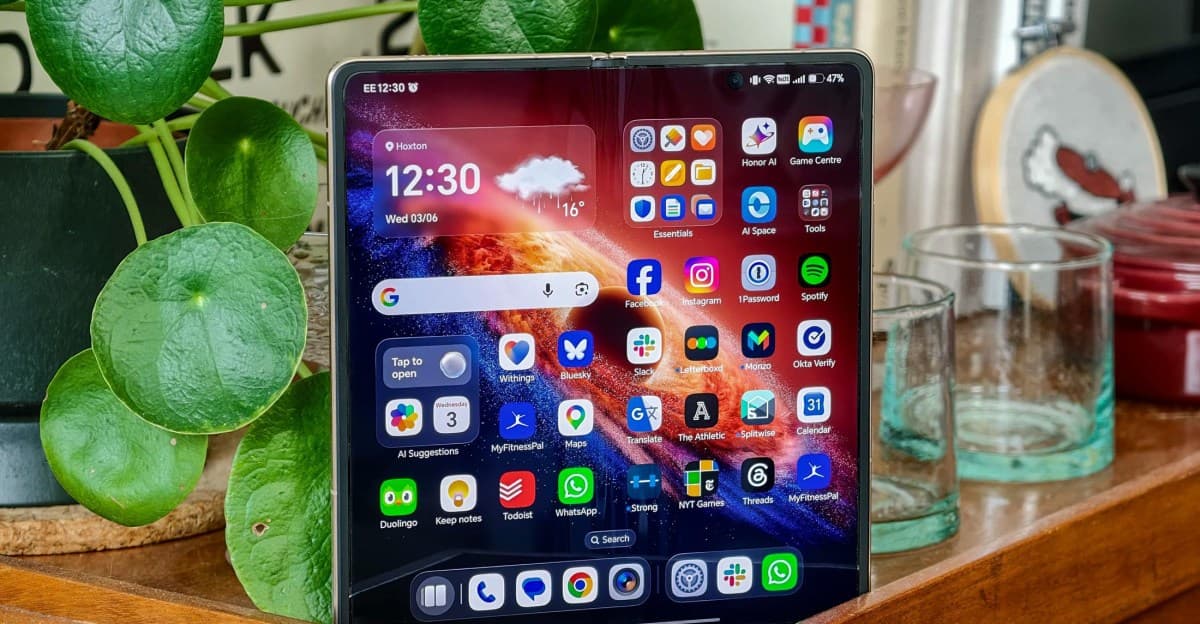
The foldable smartphone market is reaching a point where hardware firsts no longer command the same attention they once did. Honor's newest foldable phone, the Magic V6, arrives with three notable achievements: it is the thinnest foldable yet, carries the largest battery in its category and offers the best water resistance seen on such a device. Yet these advances feel incremental at best, signaling a plateau in physical innovation.
On paper the Magic V6 appears to be a leap forward. But the reality is more subdued. Last year's foldables already delivered complete flagship experiences. The challenge for companies like Honor is to offer something that truly stands out. The Magic V6's progress is measured in millimeters and milliamps rather than in transformative features.
Context of a Maturing Market
Honor is not alone in facing this hurdle. Huawei's Pura X Max attracted attention with its unusual aspect ratio, and Samsung and Apple are expected to bring similar wide-screen designs to their upcoming foldables later this year. Trifold concepts are also emerging, adding complexity to a product category that is still finding its identity. The Magic V6 enters a landscape where differentiation increasingly comes from form factor and software rather than raw specs.
Water resistance, for example, is a practical improvement that users will appreciate for peace of mind. But a few extra millimeters of thinness or an additional hour of battery life may not tip the scales for someone already satisfied with a previous generation foldable. The real competition now lies in ecosystem integration, camera performance and software optimization.
Why This Matters
For consumers the takeaway is clear: the window of dramatic hardware breakthroughs is closing. Anyone considering a foldable phone today will find that even last year's models offer a compelling experience. The Magic V6's advances are genuine but marginal. Buyers should focus on which device best fits their usage habits and software preferences rather than chasing the thinnest or most water-resistant option.
From an industry perspective, the Magic V6's arrival underscores a broader trend. Hardware specification races alone cannot sustain consumer excitement indefinitely. The next phase of foldable innovation will likely center on durability improvements, display quality, camera systems and unique software capabilities that leverage the folding form factor.
Verge of a New Phase
Honor has delivered a competent device that pushes the foldable envelope slightly further. But the era of revolutionary leaps in foldable hardware appears to be over. What remains is a steady march of refinement. The Magic V6 may not feel like a must-upgrade, but it shows that the foldable category has matured enough to compete with traditional slab phones on daily usability. The real test for Honor and its rivals will be whether they can deliver software and services that make the foldable experience feel indispensable rather than merely novel.