Editor: Porcia Akua Holmes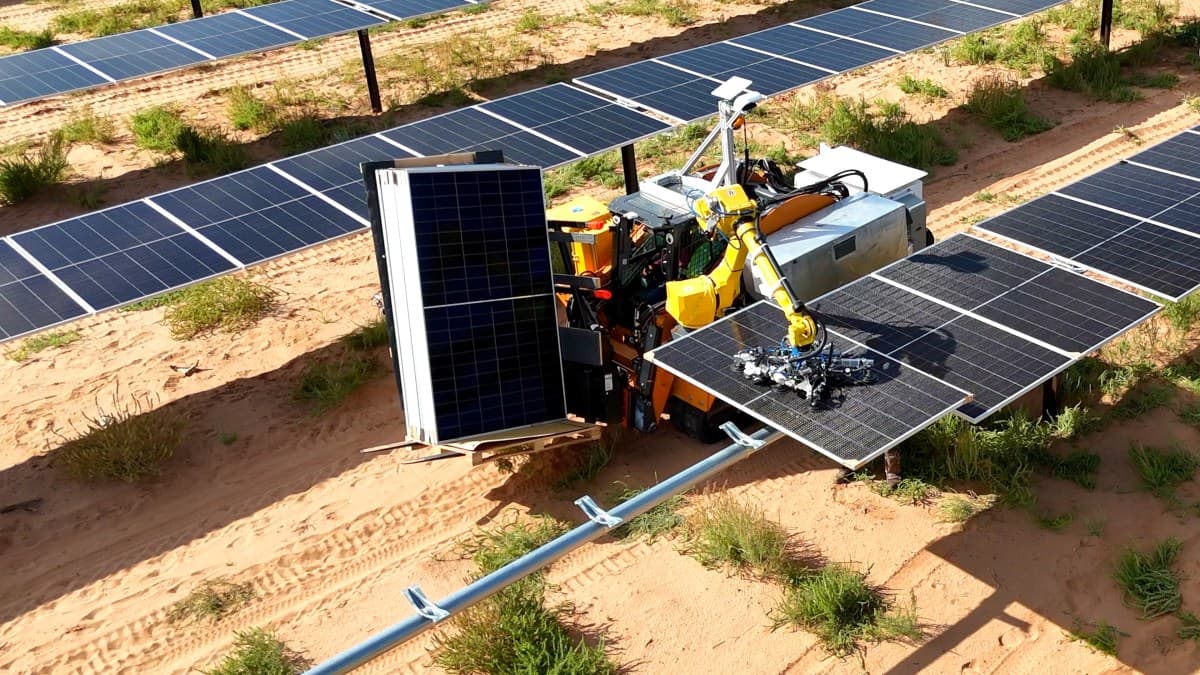
A robotics startup called Gritt has emerged from stealth with $34 million in funding, aiming to deploy autonomous machines on construction sites starting with solar power plants. The company plans to automate the hardest physical tasks, from grading land to installing panels, before expanding into other types of infrastructure projects.
The Construction Robotics Frontier
Most construction automation has focused on software tools for planning and design. Gritt is different. The company builds hardware that can physically move earth, place materials and operate alongside human crews. The goal is to reduce the time and cost of building solar plants, which are needed at record scale to meet clean energy targets.
Gritt's robots are designed to handle tasks that are difficult to staff, such as driving piles, laying foundations and installing solar panels. The company claims its machines can work faster than manual crews while maintaining consistent quality. The robots are not fully autonomous; they work in coordination with human operators who supervise and handle complex decisions.
Why Solar First
Solar construction is a high-volume, repetitive activity that suits robotic automation. The United States alone needs to deploy hundreds of gigawatts of solar capacity over the next decade, yet the construction workforce is aging and difficult to recruit. Gritt's founders believe that robotics can fill the gap without requiring a complete overhaul of existing building methods.
The company's initial machines will focus on three core tasks:
These tasks are physically demanding and often cause injuries or delays when done manually. Robots can handle them with greater consistency and fewer safety incidents.
Why This Matters
Gritt's approach addresses a critical bottleneck in the renewable energy transition. Even if solar panels become cheaper and more efficient, the industry cannot install them fast enough without more workers. Robots offer a solution that does not require immigration policy changes or massive training programs. For construction companies, the technology could reduce project timelines and labor costs. For workers, however, the arrival of robots on job sites may raise concerns about job displacement. Gritt positions its machines as tools that augment human crews rather than replace them, but the long-term impact on employment remains uncertain. The success of this startup will be a test case for whether robotics can scale in an industry known for its resistance to change.
Funding and Future Plans
The $34 million round was led by venture capital firms that specialize in industrial automation. Gritt will use the money to expand its engineering team, build more prototypes and begin pilot projects with solar developers. The company is still in stealth mode operationally, but it plans to announce its first commercial deployments later this year. If those pilots succeed, Gritt expects to move beyond solar into other construction verticals, such as highway work and utility-scale infrastructure.
Investors are betting that the same logic that drove robotics in manufacturing can now play out on construction sites. The challenges are significant: weather, mud, uneven terrain and complex coordination with human crews. But Gritt believes its robots can handle those conditions better than early robotics attempts in the industry.