Senior Editor: Alan Agbele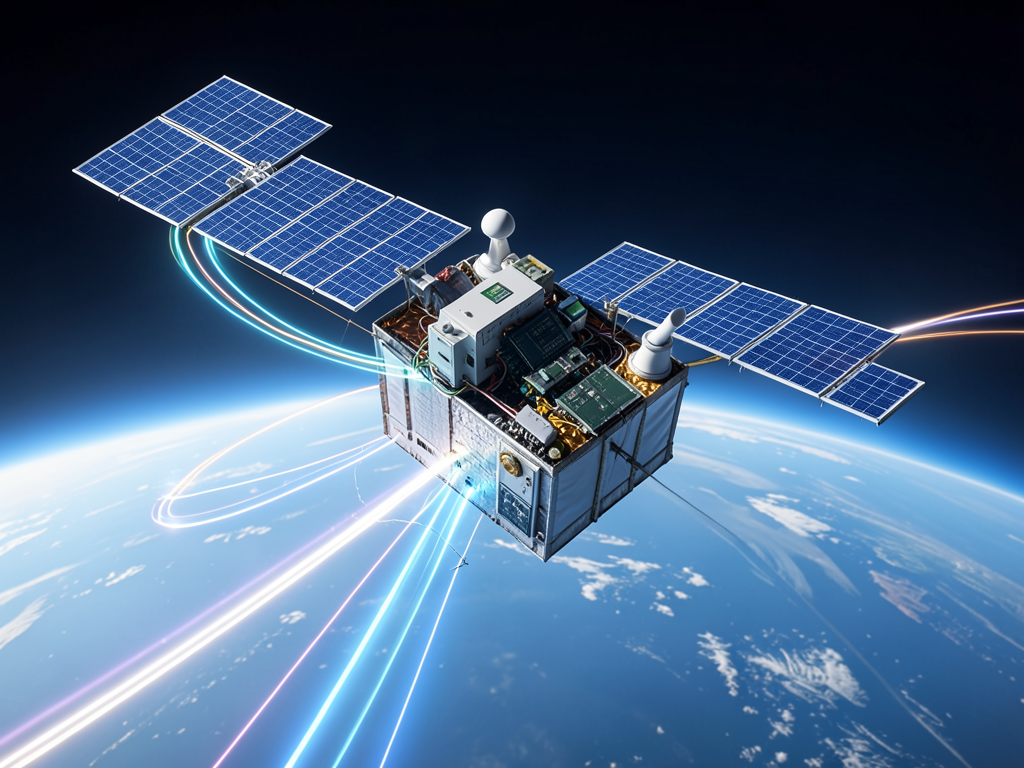
Google has revealed plans for Project Suncatcher, an initiative to put machine learning infrastructure directly into space. The project would place computing hardware in orbit to process data from satellites without beaming it back to Earth. This approach could dramatically reduce latency for applications that require real-time analysis of orbital imagery or sensor readings.
The Ambition Behind Project Suncatcher
Google has not disclosed technical specifications or a timeline, but the concept is rooted in a simple idea: process data where it is collected. Earth observation satellites generate enormous volumes of imagery and telemetry. Today most of that data must be transmitted to terrestrial servers, creating bottlenecks. By embedding ML hardware in orbit, Google could enable near-instantaneous analysis for disaster response, climate monitoring or military surveillance.
The company already operates extensive cloud infrastructure for AI. Project Suncatcher extends that model beyond the planet. It signals a belief that the next frontier for machine learning is not in bigger data centers but in distributed nodes at the network edge. Space represents the ultimate edge.
Why This Matters
Project Suncatcher could accelerate a shift already underway in the space industry. Private companies and government agencies are increasingly relying on AI to automate analysis of satellite feeds. If Google succeeds, it will prove that complex ML inference is viable off the planet. That would open the door to autonomous space systems that make decisions without waiting for human commands. Competitors such as Amazon and Microsoft are also exploring orbital computing, so the race to dominate space-based AI is heating up. The main impact falls on users of satellite data: farmers, insurers, intelligence agencies and emergency responders. They would gain faster, more accurate insights without the lag of ground processing. The project also raises questions about electronic warfare and security, as orbiting AI systems become valuable targets.
Looking Ahead
Google has not publicly detailed the hardware architecture or launch partner for Project Suncatcher. Industry observers expect a demonstration mission within the next few years, likely using a small satellite bus. If the project matures, it could lead to constellations of processing nodes that form a mesh network in low Earth orbit. The long-term vision may include on-orbit machine learning training, though that requires far more power and cooling than current technology provides. For now, the announcement signals that Google sees space as a legitimate extension of its AI infrastructure. The technical barriers remain steep, but the potential payoff for real-time data analysis is enormous.