Editor: Porcia Akua Holmes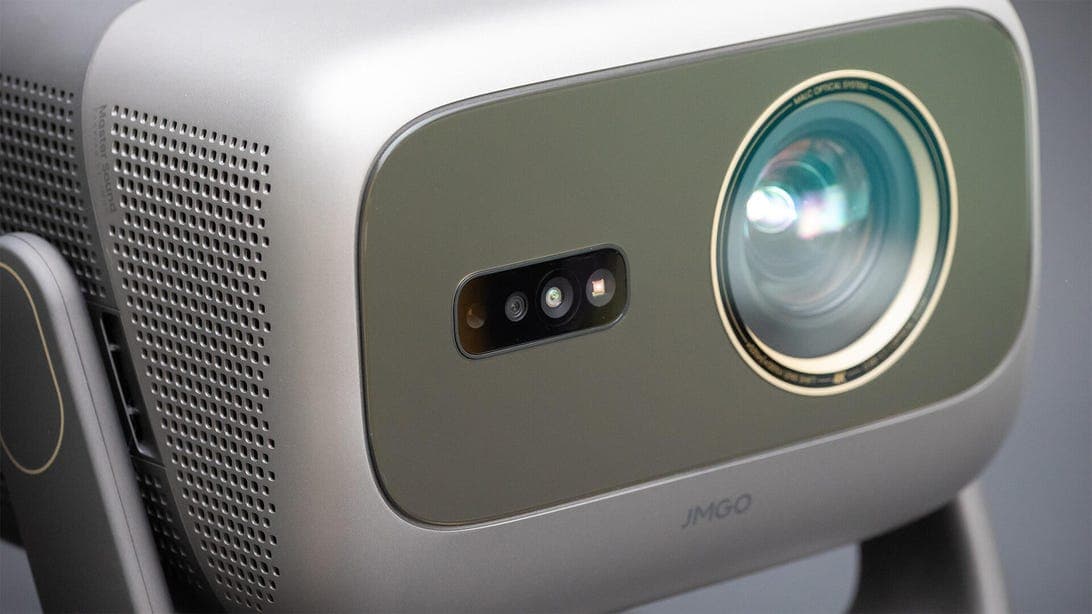
A recently published review of the JMGO N3 Ultimate has ignited discussion about the role of gimbal mechanisms in home theater projection. The review declares it the greatest gimbal projector yet, pointing to a design that blends mechanical flexibility with high-end optical performance.
The N3 Ultimate from JMGO integrates a full 360-degree gimbal mount into a compact laser projector body. This allows users to tilt, pan and rotate the projection without moving the device itself. The result is a setup experience that eliminates the need for complex keystone adjustments or precise physical alignment. For homeowners who want a large cinematic display without permanent ceiling mounts or strict furniture placement, the N3 Ultimate offers a fresh alternative.
What the N3 Ultimate Brings to the Table
Beyond its innovative mounting system, the projector delivers strong image quality. The review notes that its triple laser light source produces bright, accurate colors across a wide gamut. Combined with 4K resolution and HDR support, the N3 Ultimate matches the performance of many fixed-installation projectors while adding unprecedented placement flexibility.
The gimbal design also serves practical day-to-day use. Users can quickly adjust the screen position for different viewing scenarios, such as lowering the image for floor-level movie nights or tilting it upward for ceiling projection in bedrooms. This versatility positions the N3 Ultimate as a living room hero rather than a dedicated home theater appliance.
Why This Matters
The arrival of a high-performing gimbal projector like the N3 Ultimate has concrete implications for consumers. It reduces the barrier to entry for high-quality home projection because setup no longer demands technical expertise or permanent installation. Anyone can unpack the device and achieve a perfectly aligned image within minutes. That convenience makes projection more accessible to renters, apartment dwellers and families who want a temporary or flexible screen solution.
For the broader consumer electronics market, the N3 Ultimate signals that design innovation in home cinema is shifting toward ease of use. Competitors such as XGIMI and LG have experimented with form factors, but none have fully embraced the gimbal concept as aggressively as JMGO. If the N3 Ultimate sells well, it could push other manufacturers to adopt similar gimbal or motorized positioning systems in future models.
From a technical standpoint, the gimbal solution also avoids common artifacts. Because the projector lens itself stays aligned while the entire unit rotates, image geometry remains stable. This avoids the distortion and latency that can occur with digital keystone correction. The N3 Ultimate thus offers a best-of-both-worlds scenario: physical flexibility with optical integrity.
Market Context and Competition
JMGO has been a prominent player in the Chinese projector market, known for blending smart TV features with compact designs. The N3 Ultimate targets a global audience by combining Android TV 11.0 with robust hardware. Its release comes at a time when ultra-short-throw projectors are also gaining traction, but the gimbal approach offers a different value proposition: it works with any wall or screen at any distance, unlike UST models that require precise placement relative to the surface.
Price remains a key factor. While exact pricing details for international markets are still emerging, the N3 Ultimate is positioned as a premium device. Early indications suggest it will compete with flagship models from established brands. The review’s strong endorsement could help JMGO gain credibility among Western consumers who may be unfamiliar with the brand.
The projector market overall is growing as more people seek large-screen experiences without the cost and footprint of large televisions. The N3 Ultimate, with its gimbal innovation, may well become a reference point for how projectors adapt to modern living spaces.