Senior Editor: Alan Agbele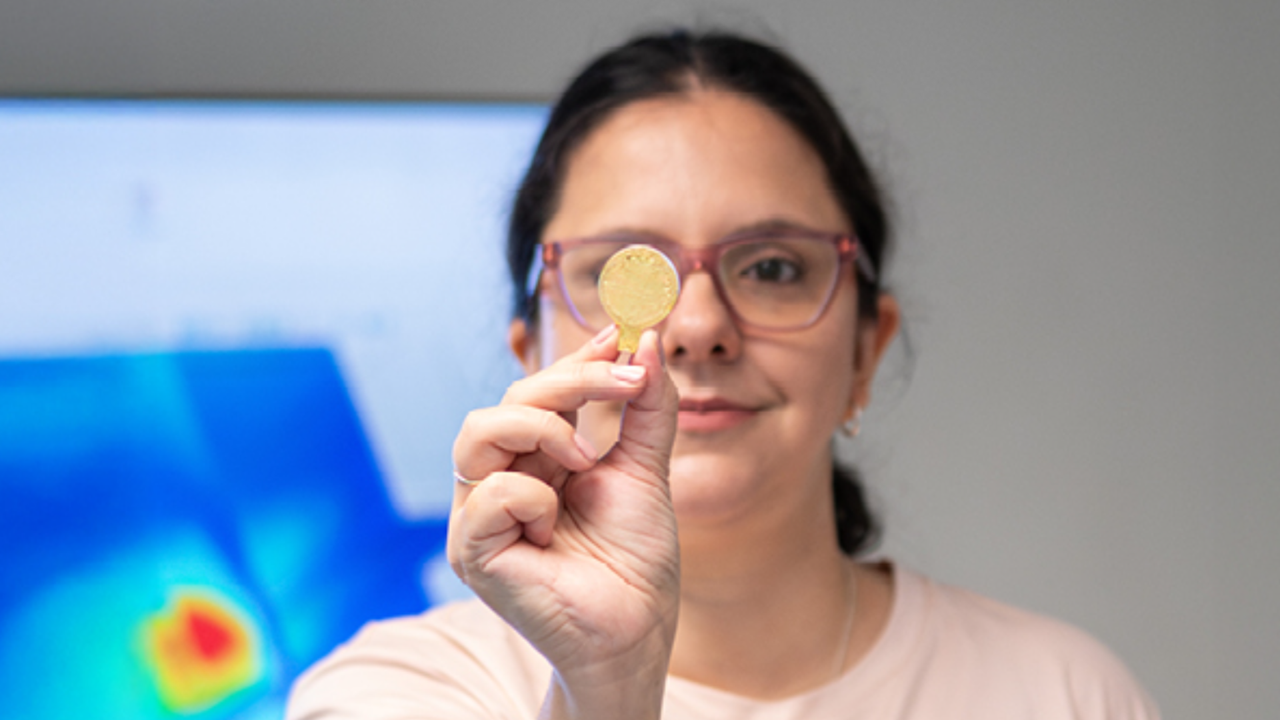
A German research team never planned to start a company. But their microscopic terahertz filters showed potential for 6G networks, satellite communications, medical imaging and quantum computing. That unexpected discovery led to Lepto, a spin-off now supplying cutting-edge hardware to researchers worldwide.
The filters are barely thicker than a virus. They operate in the terahertz band, a part of the electromagnetic spectrum that sits between microwaves and infrared light. This band is crucial for next-generation wireless systems and space-based sensors.
From Lab to Company
Lepto's origins trace back to a university laboratory in Germany. Scientists were studying how to manipulate terahertz waves for fundamental research. They had no commercial ambitions. But after several breakthroughs, industry partners and investors urged them to commercialize the technology.
We never actually planned to start a company, the founders say. The decision came after repeated requests from telecommunications and aerospace firms. Lepto now ships its filters to clients in Europe, Asia and North America.
How Terahertz Filters Work
The filters are made using advanced microfabrication techniques. They measure just a few micrometers across. Yet they can selectively block or pass specific terahertz frequencies with high precision.
This capability is vital for 6G research. Current wireless networks use lower frequency bands. 6G will likely rely on terahertz waves for ultra-fast data rates. Lepto's filters help engineers test prototypes and measure signal behavior.
Satellite operators also use them. Terahertz sensors can detect trace gases, monitor weather and map materials. The filters improve sensor sensitivity in harsh space environments.
Medical imaging is another application. Terahertz waves can see through biological tissue without harmful radiation. Lepto's filters enable sharper scanning for cancer detection and other diagnostics.
Quantum computing labs use the filters too. Terahertz pulses can control qubits in certain quantum systems. The filters allow researchers to isolate clean signals from noise.
Why This Matters
The terahertz band has long been difficult to access. Components are expensive and hard to manufacture. Lepto's filters offer a cost effective solution for a range of high tech fields.
For consumers, this means faster wireless networks and better medical scanners could arrive sooner. For startups and research institutions, the filters lower entry barriers to terahertz experimentation.
Lepto is a small company. But its tiny filters could have outsized impact. The company expects demand to grow as 6G standards solidify and more satellites launch.
The accidental spin off is now a key player in a foundational technology. Its journey shows how basic research sometimes leads directly to commercial innovation.