 Editor: Porcia Akua Holmes
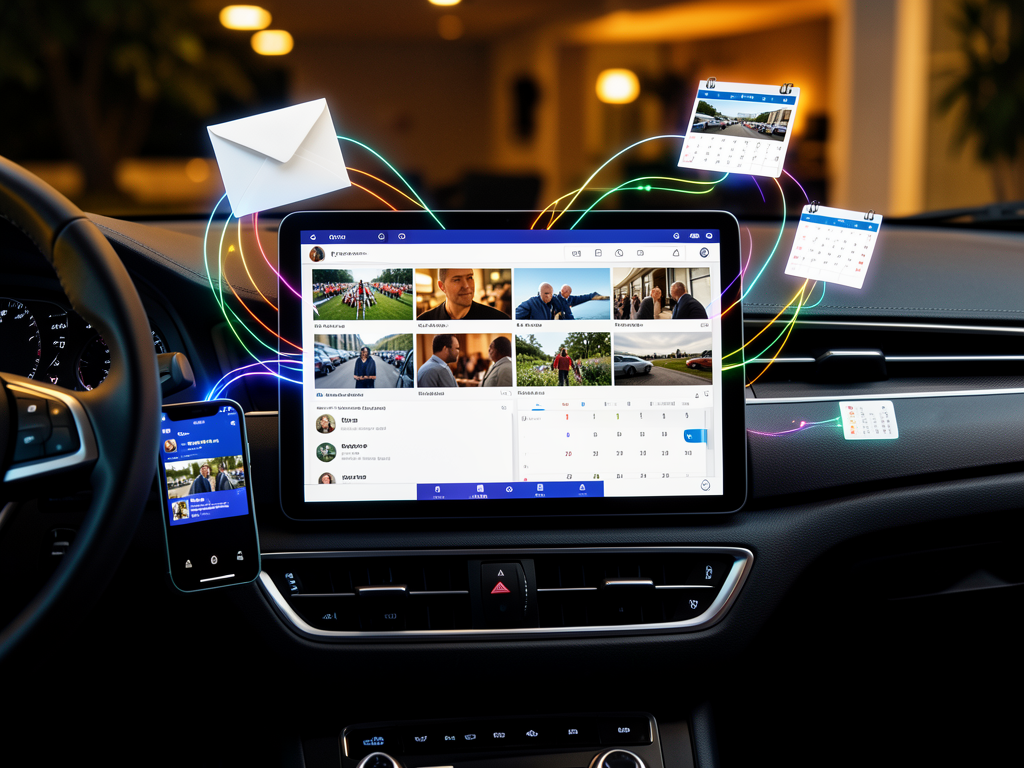
Google has quietly widened the reach of its in-car assistant. Gemini, the AI that replaced Google Assistant on Android phones, can now pull context from Gmail, Google Calendar and Google Photos while running inside Android Auto. The change turns a voice command interface into something closer to a personal concierge that already knows your schedule, your inbox and your camera roll.
How the In-Car Assistant Gained a Memory
The upgrade matters because Android Auto was long treated as a stripped-down projection of a phone. Voice commands handled navigation, music and messaging, and little else. Gemini changes that by treating the car as another surface for the same assistant that already lives on Pixel devices and other Android phones.
Google's account-level permissions do the heavy lifting. Once a user connects Gmail, Calendar or Photos to Gemini, the assistant can reference that data from any supported surface, including the dashboard. There is no separate in-car toggle that limits the assistant to navigation and music.
What Drivers Can Actually Ask
In practice, the assistant can surface information that previously required pulling out a phone at a stoplight. The value comes from combining context rather than retrieving single facts.
Each of those tasks depends on data that many users already handed to Google years ago. The novelty is not the permission but the surface where it now applies.
The Distraction Question Google Has Not Answered
Safety researchers have spent a decade arguing that voice interfaces reduce visual distraction only when they stay simple. A system that can read an email aloud or describe a photo invites longer, more cognitively demanding exchanges than a request to play a playlist.
Google has not published new guidance on how Gemini should behave when a query requires more than a few seconds of attention. The assistant will answer, and the driver decides when to stop listening. That places the burden on the person behind the wheel rather than on the system design.
Regulators in Europe and several U.S. states have grown more willing to scrutinize in-car software. Any incident tied to a Gemini interaction could accelerate calls for mandatory attention limits on dashboard AI.
Why This Matters
The shift changes who competes with whom. Apple has kept Siri on CarPlay comparatively constrained, and Amazon's Alexa Auto has never achieved mainstream traction. Gemini now offers a level of personal context that neither rival matches inside a vehicle.
For Google, the payoff is strategic rather than financial. Every driver who relies on Gemini for calendar and email access becomes harder to move to an iPhone, because the assistant's usefulness depends on a Google account. The car becomes another lock-in surface.
Privacy-conscious users face a real trade-off. Revoking Gmail or Photos access to Gemini also disables the feature on the phone, not just in the car. There is no middle setting that keeps the assistant smart at home and silent on the road.
Expect rivals to respond within a year. Apple has the account infrastructure to match Gemini's context, and the competitive pressure from Android Auto may force its hand. The question is whether either company can do so without inviting regulatory attention.


