Editor: Porcia Akua Holmes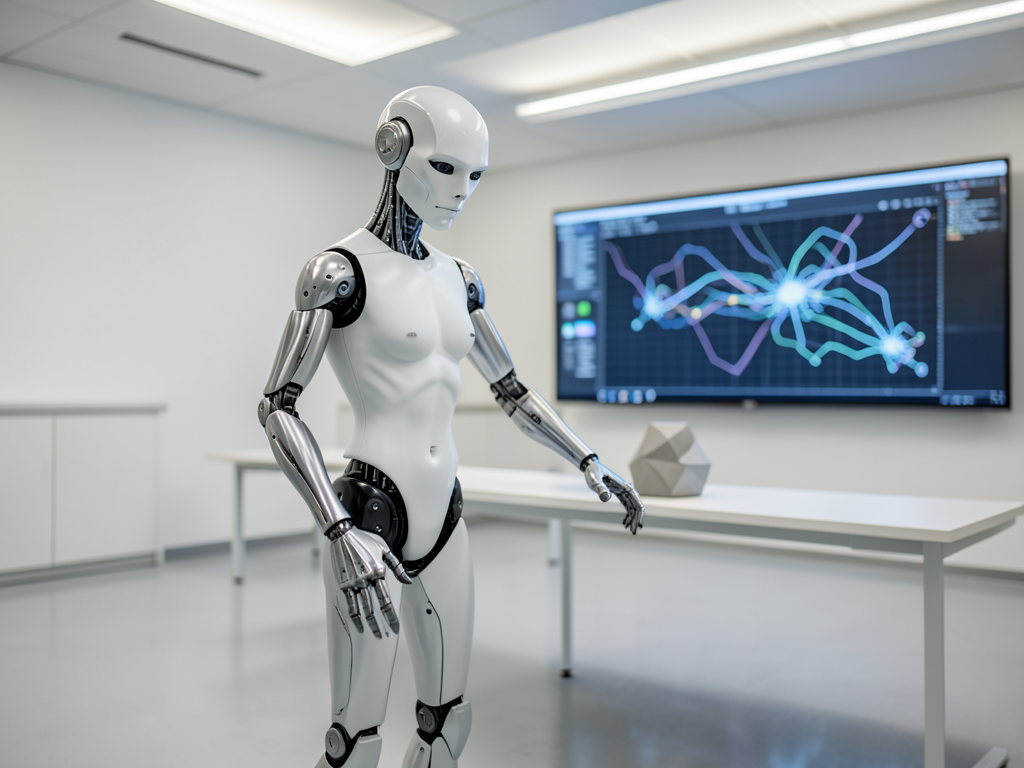
Danijar Hafner, an AI researcher who spent years at Google Brain and Google DeepMind, is shifting his focus from virtual environments to physical robots. His stealth startup aims to bring AI agents that can plan ahead for unexpected situations out of the lab and into homes and workplaces. This AI approach, known as model-based reinforcement learning, trains agents inside simulated world models rather than through trial and error in the real world. Hafner imports humanoid robots from China and programs them to handle floor plans and furniture they have never seen before.
From Atari to Humanoids
Hafner’s technique trains agents entirely inside computer simulations. The model learns the rules of physics and objects, then lets the agent experiment inside that model. That ability to imagine future outcomes means the agent can make decisions in situations it has never encountered. The progression from video games to humanoid robots marks a critical step: robots that can operate in human spaces without requiring millions of real-world trials.
His later DayDreamer project moved the Dreamer algorithm into physical robots, letting them react to novel experiences such as being pushed over without any specific training.
The Man Behind the Models
Hafner grew up in rural northeastern Germany. He learned programming from a neighbor and began studying AI in high school. After earning an undergraduate engineering degree at Hasso Plattner Institute, he became a student researcher at Google Brain in 2015. Over the next decade he held a dozen internships and positions at Google Brain and Google DeepMind in the UK, Canada and the US, working with Geoffrey Hinton and Ashish Vaswani.
Timothy Lillicrap, a former manager and coauthor at Google DeepMind, said of Hafner: “I get to interact with a lot of really smart people in research at Google, and he easily sits in the top half of 1%.” Lillicrap noted that Hafner often single-handedly built what would take entire teams of engineers.
Why This Matters
Hafner’s approach could lower a key barrier to deploying robots in homes, hospitals and warehouses. Current systems require extensive real-world training or hand-coded responses to every possible scenario. Model-based reinforcement learning lets robots generalize to new environments by imagining outcomes ahead of time. That reduces the time and cost of deployment and makes robots safer around people. His move from Google DeepMind to a startup also signals a broader shift: top AI talent is leaving big research labs to commercialize foundational technology.
The startup has not announced its name or funding, but Hafner described the goal as solving a problem “that would change the world.” If his humanoids can perform in the messy, unpredictable real world as well as his agents played video games, That vision may come sooner than many expect.