Senior Editor: Alan Agbele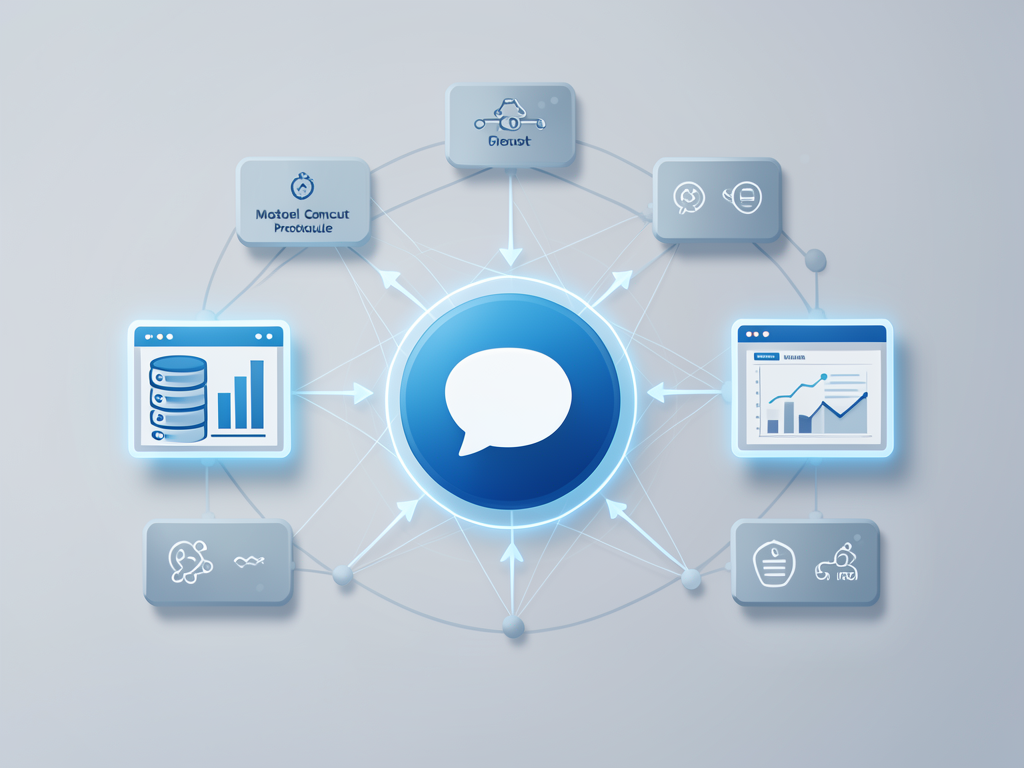
Five years and billions of dollars after Salesforce acquired Slack, the collaboration platform is delivering on the promise of a unified enterprise operating system. Slack announced this week that its Slackbot AI assistant can now access Salesforce CRM data, generate Tableau visualizations, query Data 360 profiles and trigger DocuSigns all from a single chat message. The integration uses dedicated Model Context Protocol (MCP) servers that connect Slackbot to Salesforce's Headless 360 infrastructure, turning a conversation into a full workflow.
The Technical Engine Behind the Integration
The mechanism combines two emerging enterprise architectures. Salesforce exposes its platform capabilities including CRM records, Tableau charts, Data 360 customer profiles and Agentforce agents as MCP servers. Slackbot acts as an MCP client, routing user requests to the appropriate back-end system. When a salesperson asks about a customer, Slackbot discovers relevant MCP tools, calls them and synthesizes the result.
This approach builds on the Model Context Protocol, an open standard originally developed by Anthropic that has gained rapid adoption across AI tooling. Early adopters include Claude Code, Cursor, GitHub Copilot and OpenAI. Managed MCP hosting is now available from AWS, Cloudflare and Vercel. The protocol essentially standardizes how AI models discover and invoke third-party capabilities.
The 'Multiplayer AI' Pitch to Enterprises
Slack CMO Ryan Gavin frames the integration as a bet on a concept he calls 'multiplayer AI.' Most AI assistants today function as single-user tools with private chat windows, creating a new version of the tab-switching problem that plagued pre-AI enterprise software. Gavin argues that for AI to deliver real value in organizations, agents must operate in shared channels where colleagues can see, redirect and build on each action.
'The enterprise AI conversation has been stuck in single-player mode for too long,' Gavin said in an interview. 'Work is a team sport. For AI to really take hold in the enterprise, it has to be multiplayer.'
Slackbot's new orchestration role means any agent action pulling a customer profile, flagging a deal risk or updating a Jira ticket appears in a public channel. A team member can correct the agent or add context in real time. This design directly counters the fragmentation Gavin warned about: 'It will benefit almost no one if every enterprise application spawns hundreds of agent babies, and employees end up in a worse world than before.'
Why This Matters
A major shift in enterprise AI is underway, and this integration represents a concrete bet on agent interoperability over standalone assistants. For Salesforce, it justifies the $27.7 billion Slack acquisition by finally tying the two product lines together. For users, it eliminates the friction of switching between CRM, analytics and e-signature tools. The competitive stakes are high: Microsoft Teams has 320 million monthly active users with Copilot deeply embedded, and Google is weaving Gemini into Workspace. More threateningly, some smaller firms are exploring Anthropic's Claude as a direct Salesforce replacement, reportedly saving six figures annually by building custom CRM stacks with Claude Code and Replit.
Slack's answer is to make decades of locked-in customer data the moat. 'The 25 years of customer data inside Salesforce is an asset no vibe-coded alternative can replicate,' Gavin argued. The success of this strategy hinges on whether enterprises view Slackbot as a superior orchestration layer or just another agent interface. Early internal results are promising: Slack's own IT team used the new architecture to save its more than 1,500 engineers thousands of custom coding hours annually. That kind of efficiency gain could pressure competitors to open their own platforms to similar integration standards.