Editor: Porcia Akua Holmes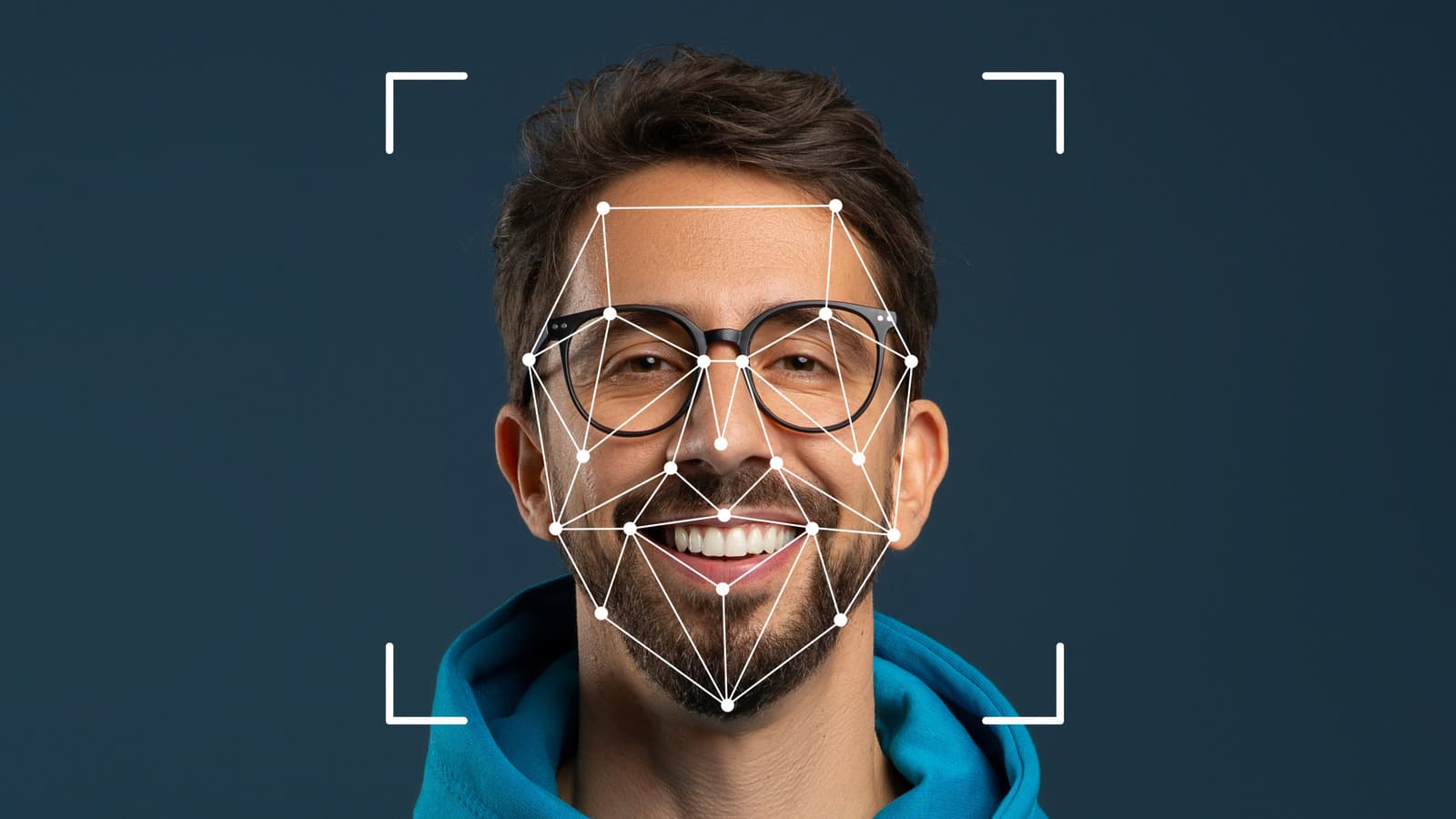
The invention of facial recognition technology traces back to the 1960s, when a small team of researchers at the Stanford Research Institute set out to solve a seemingly impossible problem: teach a computer to recognize a human face. The project, led by Woodrow Wilson Bledsoe and supported by Helen Chan Wolf and Charles Bisson, required painstaking manual measurements of facial features captured from photographs. What they built became the foundation for a technology now used billions of times every day.
The Manual Beginnings of Machine Recognition
Bledsoe's method required a human operator to identify 20 to 30 landmark points on each face photograph. These measurements were then stored and compared against a database of known individuals. The process was slow and error-prone, yet it proved that facial recognition was possible. Wolf and Bisson contributed to developing the measurement techniques and the early database structure.
The project received funding from the Central Intelligence Agency, which recognized the potential for intelligence and surveillance applications. This classified backing shaped the early direction of the technology and kept many details of the system secret for years.
From Grids to Neural Networks
The 1960s system operated without any of the tools modern engineers take for granted. There were no digital cameras, no high-resolution images and no machine learning algorithms. Instead, the team worked with black-and-white photographs, graph paper and rulers. A typical matching session could take hours.
Despite its limitations, the work established key principles still used today:
By the early 1970s, Bledsoe had moved on to other research, and the facial recognition project faded into the background. It would take another 20 years and the arrival of powerful personal computers before the field saw a revival.
Why This Matters
The 1960s origins of facial recognition technology carry direct consequences for today's $10 billion industry. The early reliance on manual measurement and human judgment created a template for data collection that still influences how training datasets are built. Modern systems inherit both the strengths and the biases of that original approach. Bledsoe's work also set the stage for government use of facial recognition, a practice now subject to intense scrutiny over privacy, accuracy and civil liberties. Understanding where this technology began helps explain why it works the way it does and why it remains controversial.
For consumers, every face unlock on a smartphone and every airport security camera that scans a face echoes the work of a small team in the 1960s. The inventors did not foresee the scale at which their ideas would be deployed, but they proved the concept that a machine could recognize a person by their face alone.
What This Means for the Future
The pace of change has accelerated dramatically. Modern facial recognition systems can identify a face in less than a second with accuracy rates above 99 percent. Yet the fundamental problem remains the same as it was in 1964: how to reliably match a face to an identity. Researchers continue to grapple with issues of lighting, angle, expression and occlusion that Bledsoe's team first encountered.
The original system could handle only a few dozen faces. Today's databases contain billions of images. The work of Woodrow Wilson Bledsoe, Helen Chan Wolf and Charles Bisson proved that facial recognition was possible, even if their hardware could not keep up with their vision. That vision now shapes everything from public safety to personal convenience.