Editor: Porcia Akua Holmes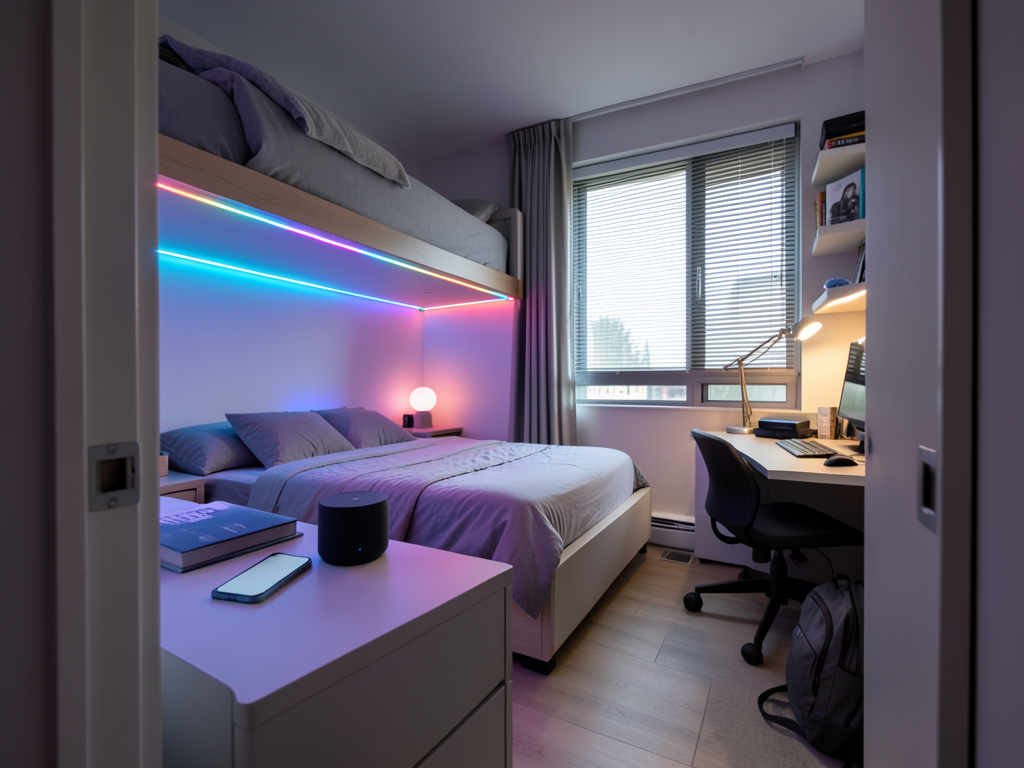
The back-to-school shopping list for college students has expanded beyond notebooks and dorm room decor. This year, a wave of smart home devices is redefining what counts as a dorm essential, from voice-controlled speakers to automated lighting systems. The shift signals a broader consumer electronics trend: young buyers are treating temporary living spaces as connected environments.
The Shift Toward Smart Dorm Rooms
Dorm rooms have traditionally been outfitted with mini-fridges, microwaves and basic electronics. Today, students are bringing devices that can be controlled from their phones and integrate with cloud platforms. The most common additions include smart speakers, Wi-Fi extenders and LED strip lights that sync with music or schedules. These purchases no longer feel like luxuries; for many students, they are tools for productivity and comfort.
Several product categories dominate the dorm tech market this season:
Why This Matters
The dorm room tech upgrade has real implications for students and the electronics industry alike. For students, the cost of outfitting a room with multiple smart devices can add up quickly, especially when many are living on loans or limited budgets. But the convenience and energy savings may offset the upfront expense over a semester. For manufacturers, the back-to-school season has become a proving ground for capturing Gen Z loyalty early. A student who buys an Amazon Echo for their dorm today may build a wider smart home ecosystem when they graduate. Campus network administrators, however, face new challenges: dozens of connected devices per room can strain infrastructure designed for laptops and phones alone. Schools may need to invest in better Wi-Fi capacity or enforce limits on personal routers.
Beyond the Gadget List
The trend signals a lasting change in how college students view their living spaces. Dorm rooms are no longer places to sleep and study; they are extensions of the digital lives students already lead. The rise of remote and hybrid learning has accelerated this shift, making a reliable network and a good set of connected tools almost as essential as textbooks. Retailers that package smart home bundles specifically for dorms are likely to see continued demand as each new cohort arrives expecting a plug-and-play environment.