Senior Editor: Alan Agbele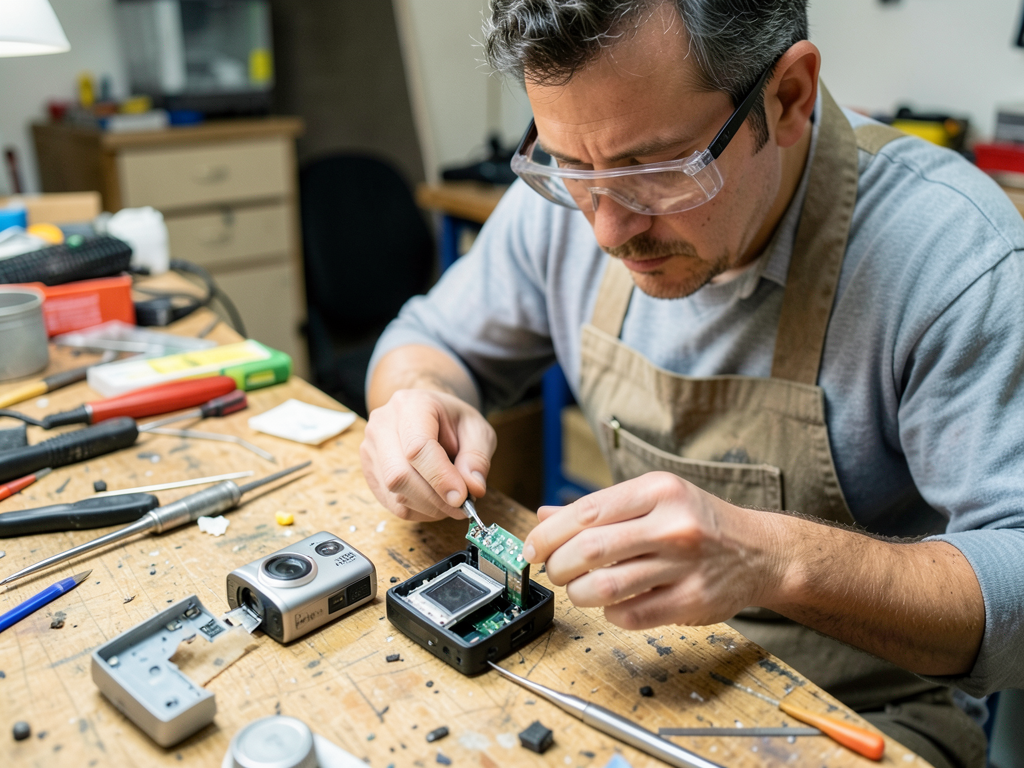
A new wave of hobbyist engineers and photographers is resurrecting the practice of modifying inexpensive digital cameras. A series of community projects known collectively as the Kmart Digicam Mod Part 2 has brought fresh attention to the genre, highlighting how everyday electronics can be repurposed for creative photography and experimental imaging.
The Rise of Cheap Camera Modding
For years, modifying high-end cameras such as the Canon EOS series dominated DIY photography forums. The shift toward bargain-bin hardware marks a significant change. The Kmart Digicam Mod Part 2 project exemplifies this approach. It takes a basic point-and-shoot camera often sold for less than 20 dollars and reworks its internal components. Modders remove the stock infrared filter, attach custom optics, and sometimes install new sensor boards to capture monochrome or multispectral images. The cost barrier is nearly zero, which attracts a larger and more diverse community.
The original Kmart Digicam Mod gained traction on hobbyist forums a few years ago. The second installment builds on that foundation by adding software hacks that give users raw access to the camera's image sensor. This allows far greater control over exposure, white balance and shutter speed than the factory firmware permits.
Why This Matters
The impact of cheap camera modding extends beyond a small group of tinkerers. It challenges the assumption that high-quality digital photography requires expensive equipment. When a 15 dollar camera can be modified to produce images with character and technical competence, the barrier to entry for creative photography drops dramatically. This trend also pressures manufacturers to reconsider locked-down firmware and replaceable components. If a growing segment of users demands openness and hackability, consumer electronics companies may need to adapt their designs. For educators and makers, these mods offer an affordable way to teach sensor physics, optics and embedded systems.
Notable Hardware Modifications
Participants in the Kmart Digicam Mod Part 2 community have documented several key upgrades. The most common modifications include:
Each of these modifications requires only basic soldering skills and free software tools. The results range from dreamlike infrared scenes to high-contrast black-and-white images that mirror antique film stocks.
Community and Future Directions
The Kmart Digicam Mod Part 2 has spawned dedicated threads on Reddit and Hacker News, where members share circuit diagrams and sample photographs. Some modders are now experimenting with dual-sensor arrays, stacking two cheap cameras to capture stereo images or simultaneous visible-and-infrared frames. Others are exploring integration with microcontroller boards such as the Raspberry Pi Pico to automate capture sequences. As components become even cheaper, the potential for low-cost scientific imaging tools grows. Environmental monitoring, art education and experimental filmmaking all stand to benefit from this repurposing of consumer hardware.
Market Implications
The maker movement has long argued that repairability and modifiability benefit consumers and reduce electronic waste. The Kmart Digicam Mod Part 2 provides a concrete case study. If the demand for hackable hardware increases, manufacturers might face pressure to release documentation and looser firmware restrictions. Camera makers like Canon and Fujifilm already offer developer kits. A thriving mod scene around ultra-cheap cameras could accelerate that openness. For now, the project remains a passion-driven effort. But its ripple effects on how we think about disposable electronics are undeniable.