Editor: Porcia Akua Holmes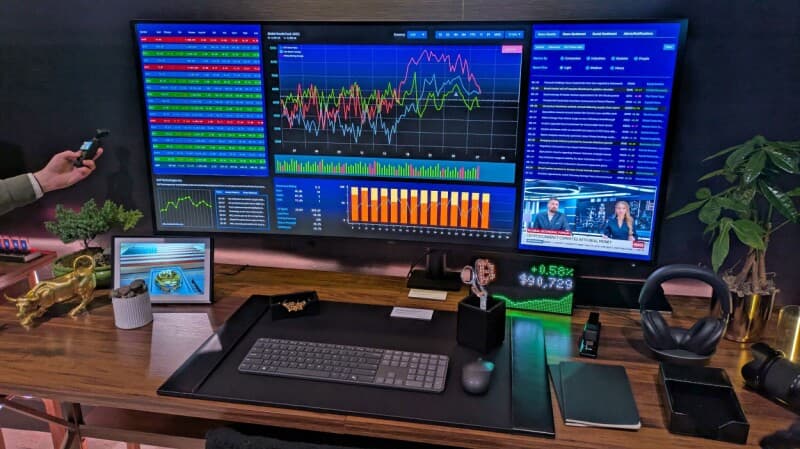
Dell's newest monitor stretches across 52 inches of desk space, but its sheer size comes with a list of compromises that potential buyers should weigh carefully. The UltraSharp display, now on sale for $3,000, delivers a 6144 x 2560 resolution at 120 Hz, yet driving it at full power demands a high-end PC that many users do not own. Even at a lower 3840 x 2160 resolution, the screen can show more than 4,400 cells in a single Excel spreadsheet, making it a head-turner for data-heavy work. However, the monitor's practical drawbacks may overshadow its ambitions.
Visual Immersion at a Cost
The monitor excels in applications that benefit from screen real estate. Using Zwift, the virtual cycling platform, felt more immersive than on smaller displays. Motion handling remained smooth during games and streaming video. Yet the size creates physical strain. Getting used to the screen took days. Users may find themselves swiveling their neck to see edges and corners, and moving the mouse across the full width requires broad arm movements. Pillarboxing, using only the central portion of the screen, can ease the transition but defeats the purpose of an ultra-wide panel.
Sound and Software Surprises
The monitor's built-in speakers proved surprisingly capable. They rendered music with clarity and depth. Listening to The Bug Club and Getdown Services revealed tight guitar tones and punchy beats. Those bands' recordings sounded crisp, with only occasional confusion about sound direction due to rear-mounted drivers. Dell's companion software, on the other hand, disappointed. It installed slowly and offered little beyond the standard Windows display controls, making it an unnecessary addition.
Why This Matters
The UltraSharp 52 represents a bridge between desktop monitors and large format TVs. As professionals demand more screen real estate for data visualization, design work and multitasking, monitors this large become viable alternatives to multi-display setups. But the physical and technical trade-offs, from stand stability to cable management, show that size alone does not guarantee a better workflow. Dell has created a niche product that best serves users with powerful hardware and ample desk space. For everyone else, the compromises may outweigh the immersive benefits.