Senior Editor: Alan Agbele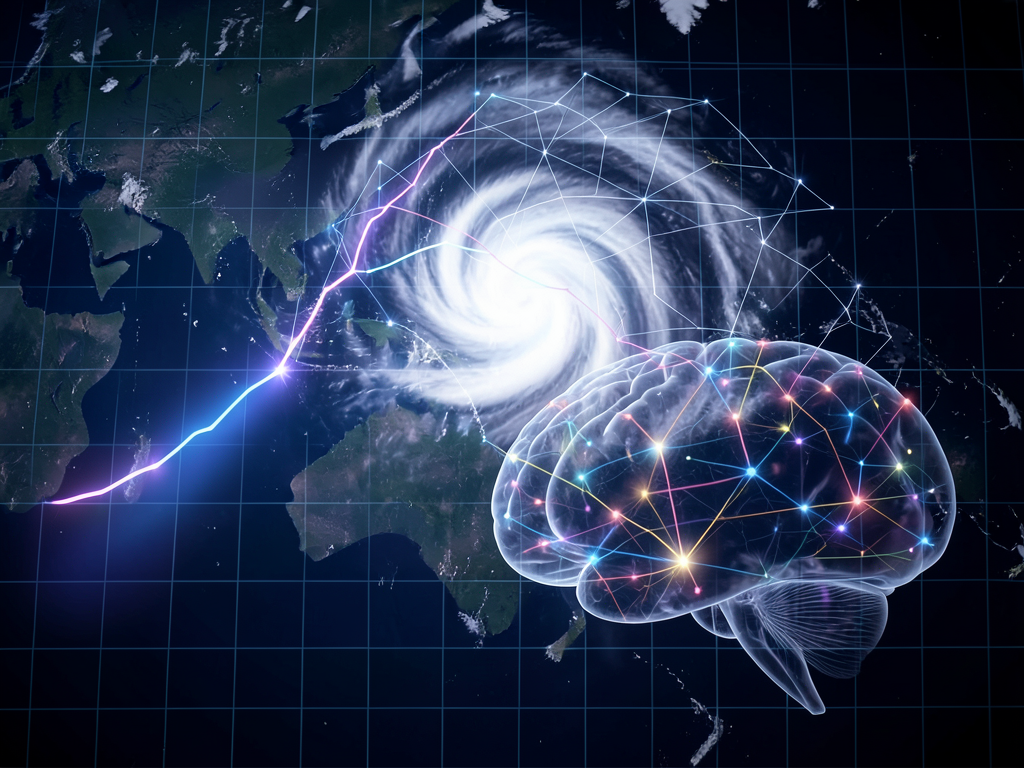
DeepMind has unveiled an AI model called WeatherNext that can predict hurricane paths and intensity earlier than existing systems, using lower-resolution weather data. The model, which the company plans to open-source, achieves this accuracy through methods that even its creators do not fully understand. The breakthrough could change how meteorologists prepare for severe storms.
How WeatherNext Achieves Early Prediction
WeatherNext processes global atmospheric data at a lower grid resolution than traditional models, yet it matches or exceeds their accuracy on storm track and intensity forecasts. The model learns directly from decades of reanalysis data rather than simulating physical equations. This statistical approach allows it to generate predictions in minutes rather than hours, giving forecasters more time to issue alerts.
The mystery lies in WeatherNext's internal logic. DeepMind researchers cannot trace exactly which patterns the AI uses to make its decisions, a common challenge with deep neural networks. This opacity creates a tension between performance and explainability that meteorologists must navigate before relying on the system for life-saving decisions.
The Open Source Advantage and Its Risks
Publishing WeatherNext as open source marks a departure from the proprietary norm in commercial AI. Researchers in developing countries with limited supercomputing access can now run advanced hurricane predictions on ordinary hardware. This democratization could improve early warning systems in regions vulnerable to tropical cyclones but historically underserved by forecasting technology.
However, open sourcing a black box model also carries risks. Users may apply the system without understanding its limitations, such as reduced performance in unusual weather patterns not represented in training data. DeepMind acknowledges the model is not yet production ready and recommends pairing it with traditional physics-based models for critical decisions.
Why This Matters
Hurricane intensity and frequency are rising with climate change, making accurate early warning more urgent than ever. WeatherNext represents a fundamental shift from modeling the atmosphere to learning from it. If validated through real-world use, this method could extend to other disaster forecasting applications such as floods, heatwaves or wildfires. The open-source nature means improvements can happen faster, but the unresolved question of interpretability may slow adoption by risk averse agencies. The outcome will influence how much trust society places in AI for public safety.