Senior Editor: Alan Agbele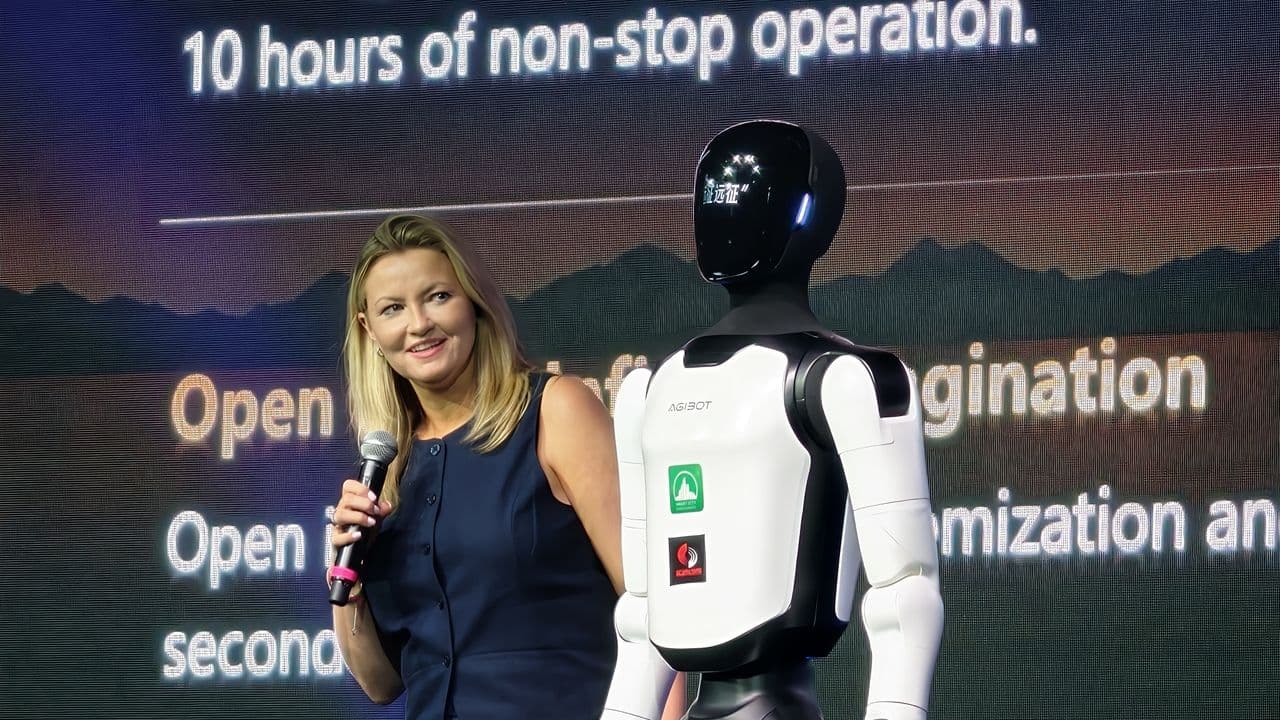
A Chinese robotics company says its humanoid robots can replace workers in dangerous and repetitive jobs and that some employees actually want to be replaced. Agibot, founded in 2023 by former Huawei engineers, has expanded into the UK business-to-business market with its line of humanoid and quadruped robots. President of AgiBot Europe and America William Shi told reporters at a London launch event that for job descriptions involving high risk and boredom, replacement is welcome.
UK Launch and Product Range
Agibot rolled its 15,000th unit off the production line before announcing its UK entry at a London event on June 30. The company showcased several models including the full-sized humanoid Agibot A3, the smaller X2 humanoid and the D1 quadruped robot. An image captured by Jamie Richards of Future plc shows the robots performing a dance routine on stage.
Workplace Sentiment and Automation
Shi emphasized that the company focuses on jobs people do not enjoy. Factory roles requiring standing for eight hours and repeatedly moving products offer no learning or satisfaction. He noted that workers at Longcheer electronics factory, where Agibot robots operate alongside humans, are expected to accept the shift. The Agibot A3 and G2 models handle tasks like sorting and packaging.
Beyond Factories: Future Roles for Humanoids
Shi outlined a broader vision for humanoid robots in nursing and education. He pointed to a global shortage of nurses from China to America and Europe. For teaching, he suggested robots could handle phonics, science, math and common conversation questions. The company sees a future where robots respond to children's queries and assist in classrooms. However, current systems are not autonomous and rely on a three-part AI model.
Why This Matters
Agibot's expansion signals a push to normalize humanoid robots in everyday workplaces, not just factories. If robots take on teaching and nursing roles, the economic impact could reshape labor markets across Europe and America. The company's stance that some workers want replacement challenges public fear of job loss. Yet questions remain about safety, job displacement and the long-term social consequences of delegating child education and patient care to machines.