Editor: Porcia Akua Holmes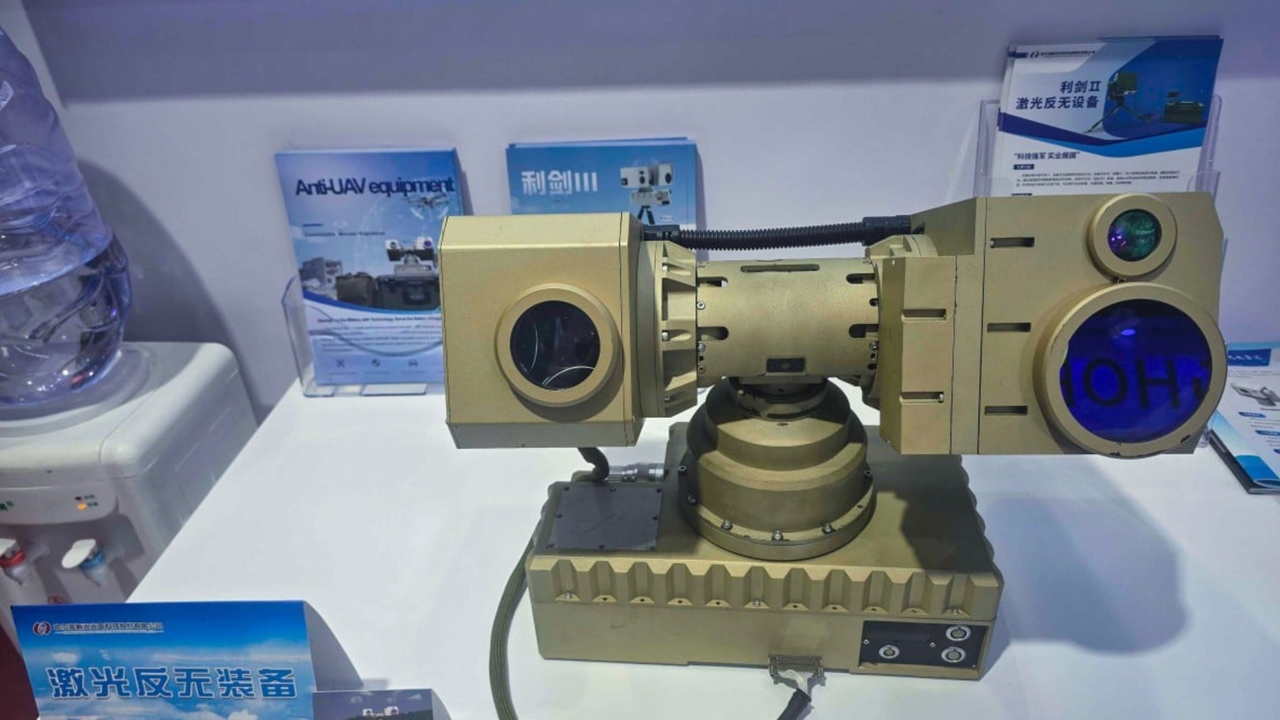
A Chinese defense contractor has displayed a backpack-sized laser weapon that can disable drones from long range using artificial intelligence for targeting. The system was shown at an arms expo in Beijing this week.
System Details
Harbin Xinguang Optic-Electronics Technology demonstrated two variants of its man-portable directed energy weapon. The 2-kilowatt laser weighs 55 pounds and can be carried by a single soldier. It destroys drones at distances up to 1,600 feet in about four seconds. The weapon includes an optical sight and a compact power supply integrated into the backpack frame.
AI Targeting and Operation
The laser relies on AI to track and lock onto fast-moving aerial targets. Machine vision algorithms identify drones in cluttered environments and compute lead angles for accurate strikes. This reduces the need for manual aiming and shortens engagement times. The system can operate autonomously once activated, allowing soldiers to focus on battlefield awareness.
Why This Matters
Portable anti-drone lasers represent a shift in ground-based countermeasures. Current anti-drone tools often require vehicle-mounted systems or crew-served weapons. A single soldier with this backpack can now engage threats that previously demanded larger teams or more expensive equipment. This changes tactical options for infantry units operating in drone-saturated environments. The use of AI for targeting also raises questions about autonomous engagement decisions. Future versions may operate with minimal human control, complicating rules of engagement.
Broader Context
Directed energy weapons have been fielded in larger forms by the United States and other nations. China’s push to miniaturize the technology into a man-portable device shows a race toward compact, cost-effective drone defense. Small drones have become a persistent threat in conflicts worldwide, creating demand for countermeasures that individual soldiers can rely on. The Harbin Xinguang system steps into that gap with a weapon that balances power, weight and intelligence. Further development could see this technology scale to higher wattages or longer ranges while remaining portable.