Senior Editor: Alan Agbele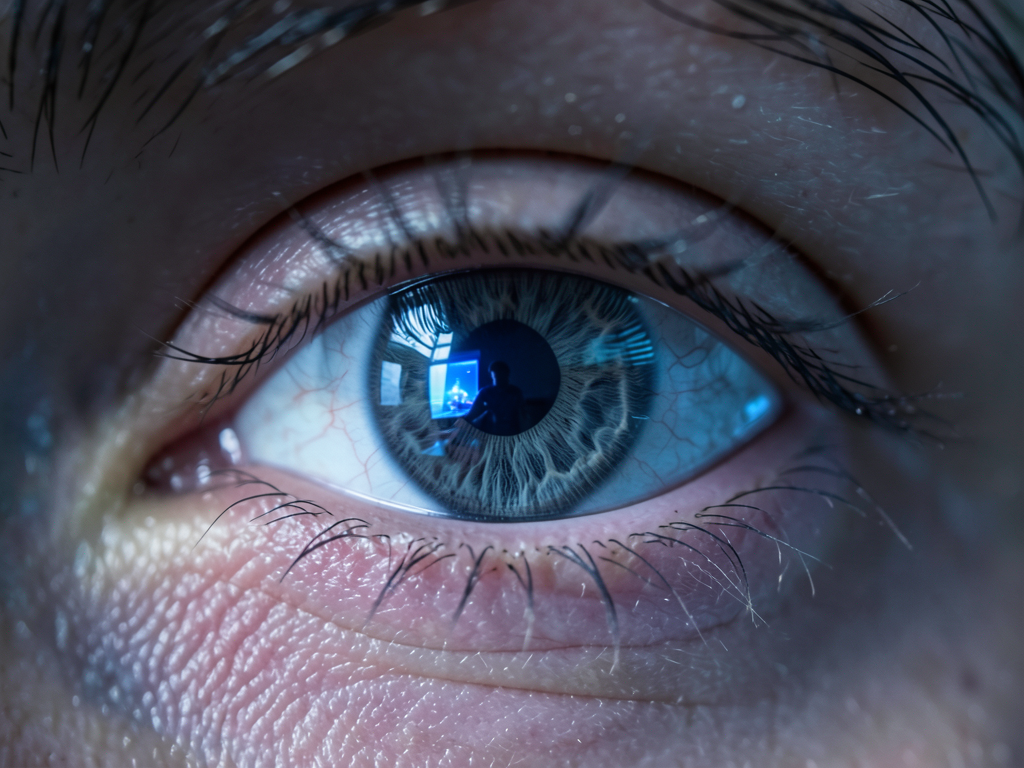
A recent study has found that exposure to blue light impairs the eye's sharpest visual function: the ability to distinguish fine detail. The findings challenge assumptions about screen safety and suggest that even short periods of blue light exposure can degrade visual performance more than other wavelengths.
How the Study Measured Visual Impact
Researchers tested participants using a standard contrast sensitivity task under controlled light conditions. They compared fine detail discrimination under blue light against red and green light at equal luminance levels. The results showed a statistically significant drop in performance only under the blue wavelength. The impairment appeared within minutes and persisted as long as the blue light was present.
The study adds to a growing body of evidence that blue light affects not just sleep cycles but also moment-to-moment visual function. Unlike previous work that focused on retinal damage over years, this research examines immediate effects on everyday visual tasks.
Who Is Most Affected
Why This Matters
The economic cost of screen-related visual discomfort is already substantial. If blue light exposure measurably reduces fine detail discrimination during work hours, productivity losses could extend beyond simple eye fatigue. Employers who supply standard monitor setups may need to reconsider lighting environments or offer blue-light filtering options. For individuals, the study strengthens the case for using blue-light blocking lenses or enabling night mode settings even during daytime tasks that demand high visual precision.
Regulations regarding workplace ergonomics currently focus on brightness and distance. This study suggests wavelength composition deserves similar attention. Without intervention, the growing reliance on LED screens could create a subtle but widespread drag on visual performance across industries.
What Users Can Do Now
Software solutions such as f.lux, Windows Night Light and Apple's True Tone dynamically reduce blue emission after sunset. But the study indicates that daytime blue light also matters. Some monitor manufacturers now offer built-in low-blue-light modes rated by the TUV certification. Users should check for these settings and activate them during precision work. Prescription glasses with blue-light filtering coatings provide another layer of protection. The simplest step: take frequent breaks using the 20-20-20 rule to give the eyes recovery time from any wavelength stress.