Senior Editor: Alan Agbele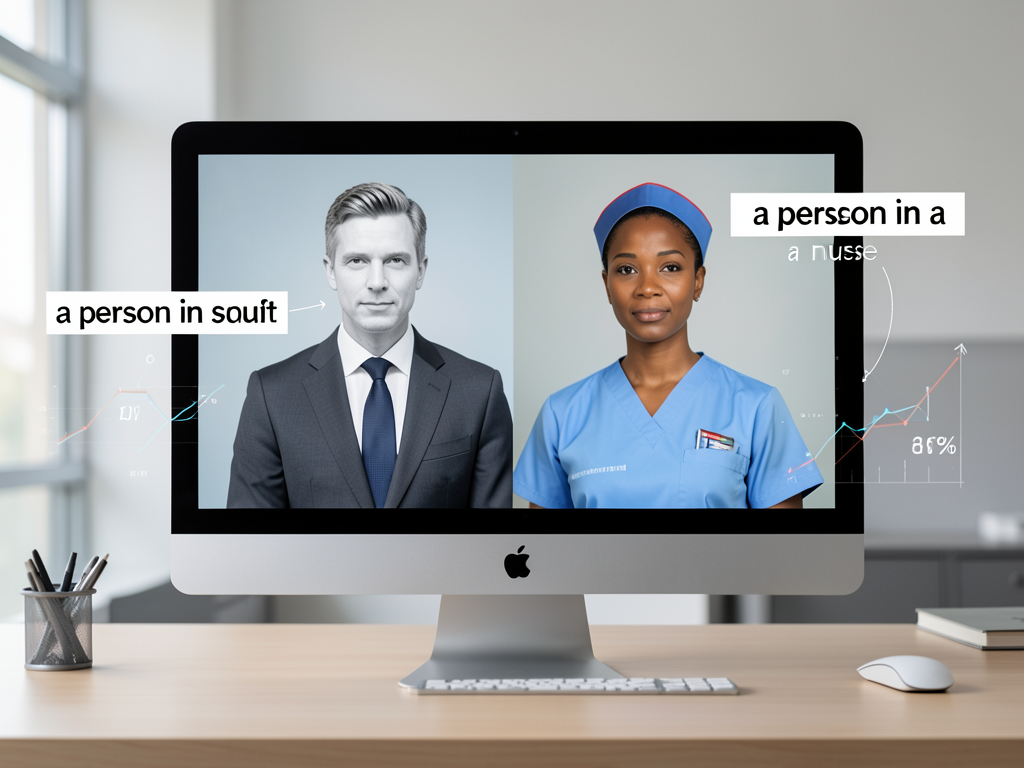
Text-to-image artificial intelligence systems, which generate pictures from written descriptions, are producing outputs that systematically reinforce harmful stereotypes, according to a recent analysis. The findings add urgency to ongoing debates about fairness and accountability in generative AI.
The Core Problem
Researchers tested several leading text-to-image models by feeding them neutral prompts such as “a person in a suit” or “a nurse.” The resulting images showed a stark pattern: suits were overwhelmingly depicted on white men, while nursing roles were almost exclusively assigned to women of color. These results mirror and amplify real-world occupational segregation and racial bias.
The study did not name specific companies but described the models as widely available commercial systems. The researchers argued that the bias is not a simple glitch but a structural issue rooted in the training data, which itself reflects historical inequalities.
Why This Matters
These models are already being used by marketers, designers and educators to create visual content at scale. If left unchecked, biased outputs could normalize skewed representations of race and gender across media, advertising and educational materials. For businesses deploying these tools, the reputational risk is significant. A company that uses an AI image generator for a global campaign could inadvertently publish imagery that alienates or offends large segments of its audience.
Regulators are also paying attention. The European Union’s AI Act classifies certain uses of generative AI as high-risk, requiring transparency and bias audits. Companies that fail to address these issues may face fines or legal challenges.
A Systemic Challenge
The problem is not limited to one model or company. It stems from how training datasets are assembled. Most large image-text datasets are scraped from the internet without careful curation. Internet content itself contains disproportionate representations of certain groups in specific roles. A model trained on such data learns those associations as if they were natural laws.
Some developers have attempted post-hoc fixes such as adding diversity prompts or filtering outputs. But researchers argue these band-aids are insufficient because they do not address the underlying statistical skews in the training data.
What Comes Next
The study calls for a fundamental shift in how training datasets are built: actively curating balanced representation rather than passively scraping web content. It also recommends mandatory bias testing before any text-to-image model is released publicly.
Several startups and academic labs are now working on debiasing techniques that modify either the training process or the model architecture itself. However, no consensus has emerged on what constitutes an acceptable standard of fairness.
The broader lesson is clear: generative AI does not invent new realities from scratch; it amplifies patterns already present in human culture. Without deliberate intervention, these tools will encode society’s worst biases into digital infrastructure at unprecedented speed and scale.