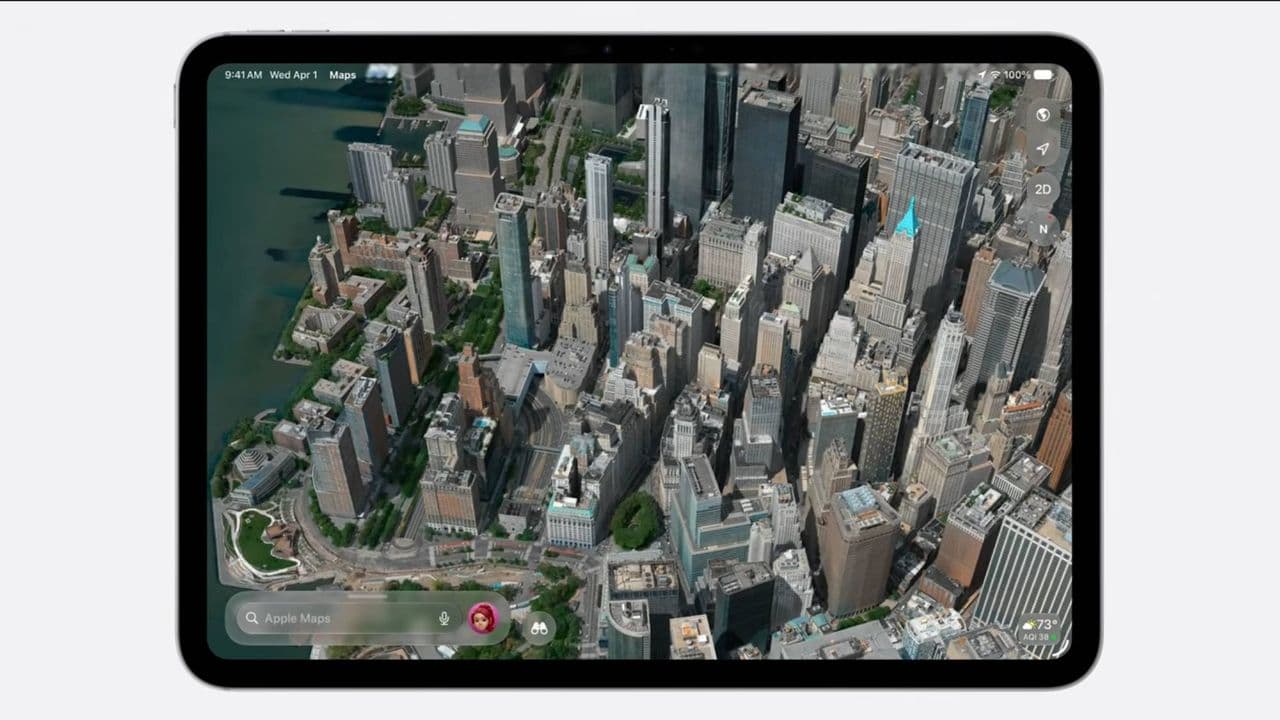
Apple is laying the groundwork for a significant leap in its Maps application. The company plans to integrate Gaussian Splatting technology into the Flyover feature. This technique, which has gained traction in the 3D photography space, promises to render cityscapes with a level of detail and realism currently unmatched by conventional mapping methods.
The Technology Behind the Upgrade
Gaussian Splatting uses a collection of 3D Gaussians to represent scenes. It allows for efficient rendering of complex geometry and lighting effects. Unlike traditional photogrammetry, which stitches thousands of flat images together, this approach creates continuous and view-dependent surfaces. Users can explore a city from any angle without the disjointed jumps common in older 3D models. The result is a smooth, lifelike visual experience that adapts dynamically to the user's perspective.
What This Means for Apple Maps
The upgrade positions Apple Maps to compete more directly with Google Maps. Google has invested heavily in immersive street-level imagery through Street View. But Apple's new rendering could offer smoother transitions and more natural perspective shifts. This could appeal to travelers who want to preview destinations in immersive detail and to local users looking for more intuitive navigation cues. The technology also opens the door to future applications, such as augmented reality overlays in real time.
Why This Matters
For users, the improvement means a more engaging way to explore cities before visiting them. It turns Flyover from a basic 3D overview into a rich visual tool. For the mapping industry, it signals that high-fidelity 3D rendering is becoming accessible to consumer platforms. This could pressure competitors to accelerate their own development efforts. The move also reinforces Apple's broader strategy of differentiating its services through proprietary technology and deep hardware integration.
Apple has not announced a specific release timeline for the Gaussian Splatting upgrade. However, the feature is expected to arrive with iOS 27, a version likely several years away from public release. Until then, users can expect iterative improvements to the current Flyover experience. The long-term roadmap suggests that Apple is betting on next-generation rendering to define the future of digital maps.