Editor: Porcia Akua Holmes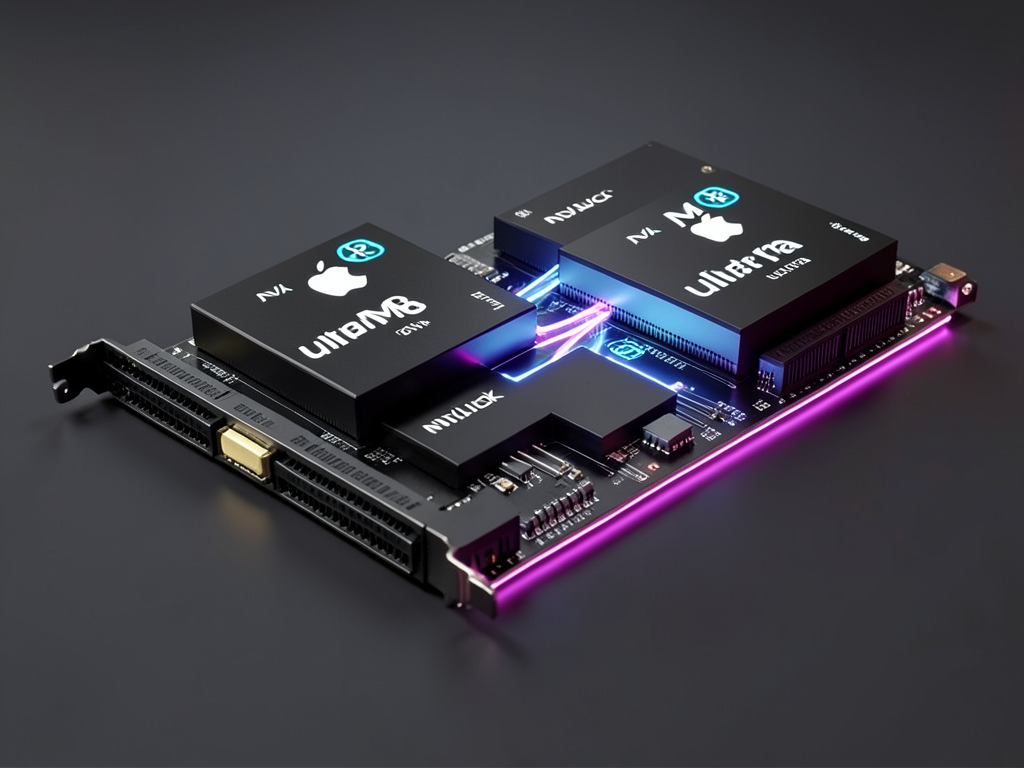
Apple may re-enter the server market after more than a decade away. The company is exploring server hardware built around its M8 Ultra chip, according to a report from The Information. Apple is considering configurations with either two or four M8 Ultra processors and is evaluating Nvidia's NVLink Fusion technology to connect them.
Apple’s Server History and AI Ambitions
Apple previously sold the Xserve line of servers but discontinued it in 2011. Since then, the company has focused on consumer devices and its own cloud services. The rapid growth of AI has created new demand for custom server chips. Apple’s in-house silicon, already used in Macs and data centers for services like Siri, gives the company a potential edge in power efficiency and integration.
The M8 Ultra represents the next step in Apple’s chip design. The processor is expected to deliver significant performance gains over current M-series chips. Combining multiple M8 Ultra chips with Nvidia’s networking technology could allow Apple to build servers that compete with those from Intel, AMD and Nvidia itself.
M8 Ultra and NVLink Fusion Details
Apple is reportedly weighing two primary configurations: one with two M8 Ultra chips and another with four. The choice depends on cost, power and performance targets. To link these chips, Apple is examining Nvidia’s NVLink Fusion interconnect.
NVLink Fusion combines hardware and software to move data between processors at high speed. This is essential for training large AI models that require massive parallel computation. Apple’s existing methods for chip-to-chip communication may not scale as well.
Key aspects of the potential design include:
Why This Matters
If Apple ships server hardware, it would disrupt the current AI infrastructure market dominated by Nvidia GPUs and Intel Xeon CPUs. Apple’s vertical integration could lead to lower operational costs for cloud providers and enterprises running AI workloads. The use of Nvidia networking, while powering competitor hardware, also signals that Nvidia’s interconnect technology may become a standard for multi-chip designs.
For the broader industry, Apple’s return could accelerate the shift toward custom silicon in data centers. Companies like Amazon and Google already design their own chips. Apple’s entry would add more competition and potentially drive down prices for AI computing. The decision to use NVLink Fusion suggests Apple is serious about performance but wants to avoid reinventing the networking stack.
For consumers, the impact may come indirectly through faster AI services from Apple, such as improved Siri or on-device intelligence. However, the primary beneficiaries will be enterprises that need scalable AI infrastructure.
What the Future Holds
The plan is still under discussion, and Apple could decide to cancel the project. The Information reports that the company has not finalized a timeline. Even so, the exploration itself shows that Apple sees AI servers as a strategic opportunity. Watch for formal announcements in late 2026 or early 2027, when the M8 Ultra is expected to debut.