Senior Editor: Alan Agbele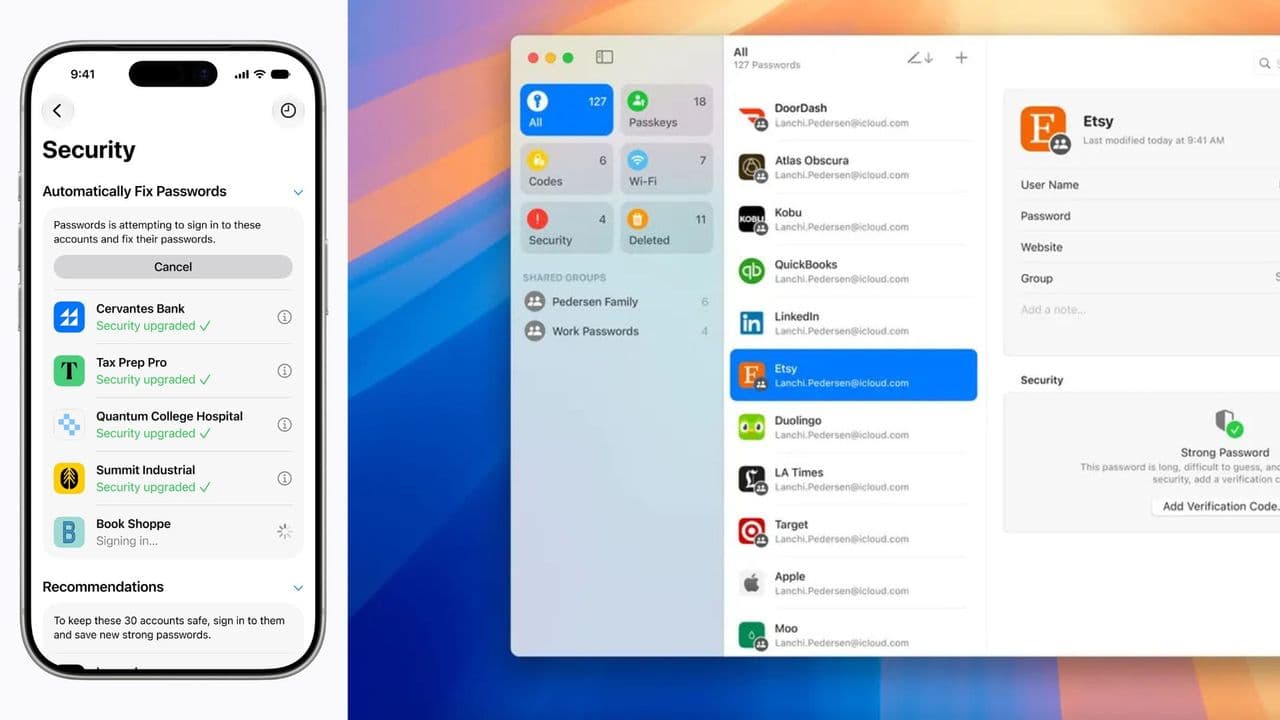
Apple is taking password management to the next level with iOS 27. The new Passwords app can now automatically change weak or compromised passwords without user intervention. This feature, powered by Apple Intelligence, represents a significant step in automated security.
How It Works
The Passwords app has long identified weak, reused or compromised credentials. With iOS 27, it goes further by initiating password changes on supported websites and services. The system generates strong, unique passwords and updates them across devices via iCloud Keychain.
Users receive a notification after the change occurs. They can review the new password and revert if needed. The process relies on Apple Intelligence to detect vulnerabilities and coordinate with participating sites.
Why This Matters
Weak and reused passwords remain a leading cause of account breaches. Many users ignore security warnings due to friction involved in manual changes. By automating the process, Apple removes that barrier.
The feature directly affects millions of iPhone and iPad users who rely on iCloud Keychain. It also pressures other platform providers to adopt similar proactive measures. For businesses managing employee accounts through MDM solutions, this could reduce help desk tickets related to password resets.
Limitations and Considerations
The automatic change feature only works with websites that support standard password update protocols. Not all services will be compatible at launch. Users may still need to manually update credentials for legacy systems or apps that require specific formatting.
Privacy remains a key concern. Apple states that all processing happens on device using Apple Intelligence models trained locally. No password data is sent to external servers during the analysis or change process.
Broader Industry Context
This move aligns with growing industry efforts to eliminate passwords entirely through passkeys and biometric authentication. However, passwords remain dominant across most online services today.
Google introduced similar functionality in Chrome last year but limited it to suggesting changes rather than executing them automatically. Apple's approach goes further by completing the full cycle from detection to replacement without user action.
What Comes Next
The automatic password changer will debut alongside iOS 27 expected later this year during Apple's annual fall release cycle. Developers can test early versions through beta programs starting this summer.
For now, users should continue enabling two-factor authentication wherever possible as an additional layer of protection beyond strong passwords alone.