Editor: Portia Akua Holmes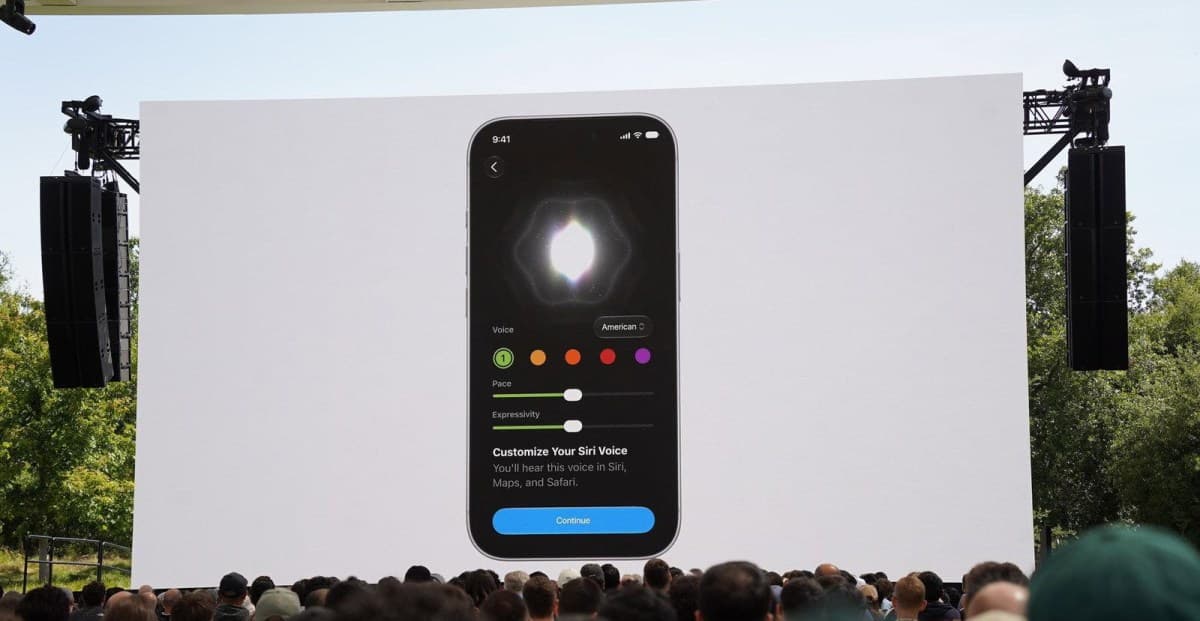
After a year of relative silence on artificial intelligence, Apple used its annual Worldwide Developers Conference to unveil a complete overhaul of Siri. The new system, branded as Siri AI, aims to position the company as a serious player in the AI assistant space.
The update arrives more than a year after Apple delayed many of its AI ambitions in 2025. Competitors like Google and OpenAI have since released major updates to their own assistants, leaving Apple in a catch-up position. But with this year's announcements, Apple is betting that a privacy-first, deeply integrated assistant can win over users.
What Siri AI Brings
Apple's new Siri AI is designed as an all-encompassing virtual assistant that ties together all Apple devices. The system includes multimodal capabilities, meaning it can process text, images and voice commands in a single interaction. A dedicated Siri app will serve as a central hub for the assistant's activities.
The company also pitched Siri as a full AI agent capable of executing complex tasks across apps. For example, users can ask Siri to create a photo album from a trip and then send it to a family member, all without manual steps. Executives emphasized that these actions happen on-device when possible, with cloud processing used only when necessary.
How Apple Competes
Apple's approach differs from rivals like Google and OpenAI, which have focused on cloud-based models and public chatbots. Apple is leveraging its tight hardware and software integration to offer an assistant that understands context across multiple apps. The privacy angle is a key differentiator. Apple's on-device processing reduces the amount of data sent to servers, a pitch that resonates with privacy-conscious users.
Still, the company faces a steep climb. Google's Gemini and OpenAI's ChatGPT have established large user bases and are integrated into a growing number of third-party services. Apple's ecosystem lock-in may help, but it limits the assistant to Apple hardware.
Why This Matters
This year's WWDC marks a turning point for Apple's AI strategy. After losing ground to competitors, the company is finally delivering on promises made years ago. For consumers, the new Siri could make everyday tasks more seamless if the integration works as advertised. However, the real test will be whether the assistant can match the versatility of rivals while preserving the privacy benefits Apple touts.
Businesses and developers should also pay attention. Apple's AI push may open new opportunities for app integrations and automation, but it also raises the bar for what users expect from virtual assistants. If Apple succeeds, it could shift the conversation around AI from raw power to contextual understanding and privacy.
Tim Cook told developers that Apple is introducing new technologies that push the limits of what is possible. The reality is that Apple is catching up. The next few months will show whether its revamped Siri can stand on its own or if the company needs even more time.