Editor: Porcia Akua Holmes
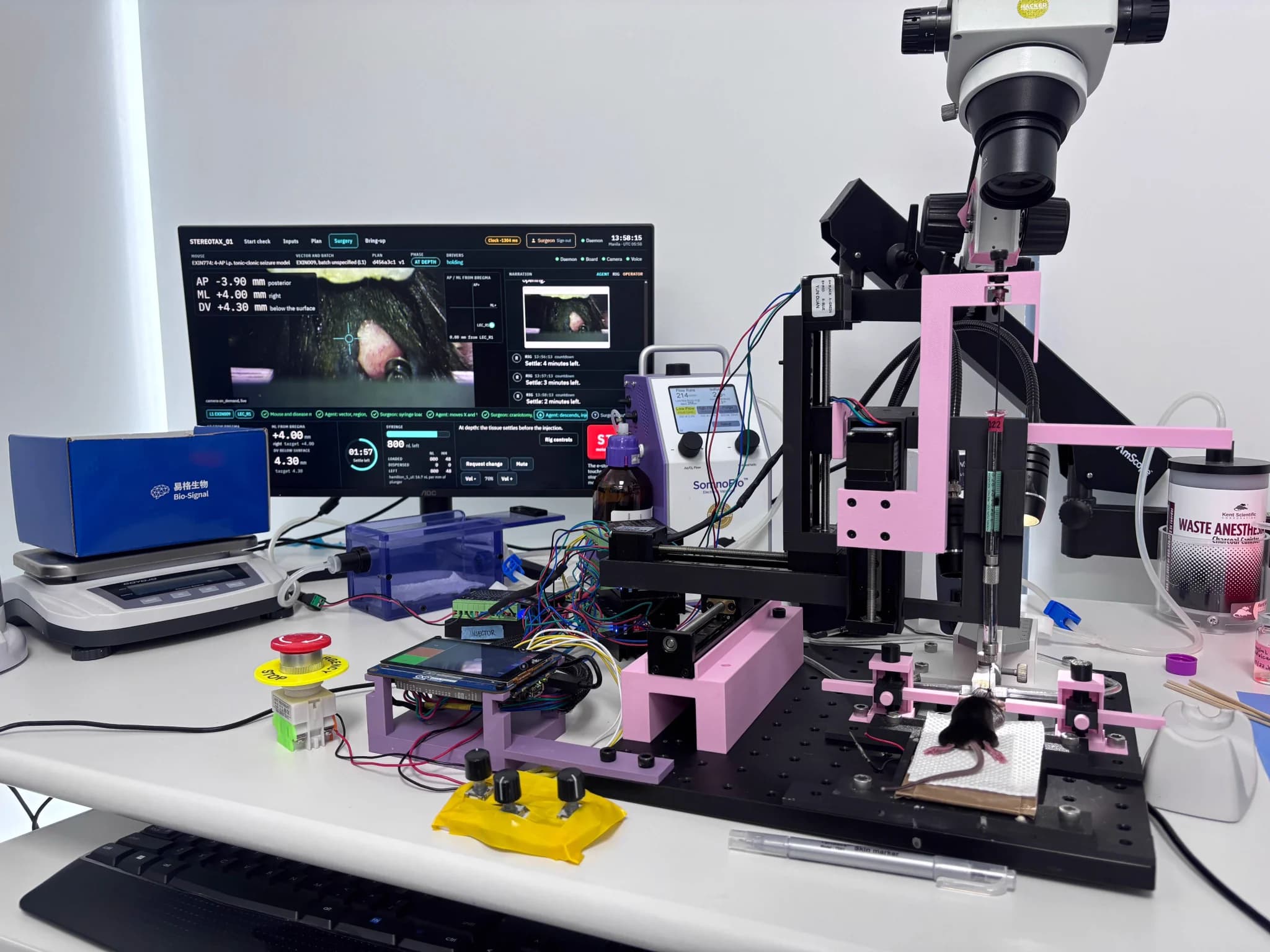
An AI agent carried out brain surgery on a mouse, a development that pushes autonomous systems from software tasks into the operating theater. The event surfaced through a Hacker News discussion thread, where commenters focused less on the procedure itself and more on what it signals about machine autonomy.
From Chat Interfaces to the Operating Table
The leap from conversational AI to physical intervention is the story here. Agents built on large language models have spent the past two years automating research, coding and customer support. Extending that capability to a surgical procedure on a living animal crosses a line that regulators and ethicists have watched closely.
The Hacker News thread, where the item was posted as Last night an AI agent performed brain surgery on a mouse, drew scrutiny of the claim itself. Commenters asked for the underlying paper, the level of human supervision and whether the agent made real-time decisions or followed a pre-scripted plan.
What Autonomy Actually Means in This Context
Autonomy in surgical robotics is not binary. Systems range from teleoperated tools, where a surgeon controls every motion, to shared-control platforms that assist with precision. A fully autonomous agent that plans, executes and adapts without human input sits at the far end of that spectrum.
The distinction matters because the word agent carries marketing weight. A system that selects a trajectory from a fixed menu is very different from one that improvises when tissue responds unexpectedly. The mouse procedure sits somewhere in that gray zone, and the reporting so far does not settle where.
The Oversight Gap Nobody Has Closed
Medical devices face rigorous clearance pathways. The U.S. Food and Drug Administration and its counterparts in Europe require evidence of safety and efficacy before a surgical tool reaches patients. Autonomous AI agents, however, do not map cleanly onto existing device categories.
An agent that learns and adapts after deployment behaves differently from a fixed device. Regulators have begun drafting frameworks for adaptive AI in medicine, but none are final. The mouse experiment lands in that gap, where innovation outpaces the rules meant to govern it.
Each of these questions has been raised before in the context of surgical robotics. The difference now is speed. Agents are improving faster than the committees that write the rules can convene.
Why This Matters
The mouse procedure is a preview of a coming collision between autonomous capability and medical accountability. If agents can perform surgery on animals, the path to human trials becomes a matter of engineering and approval, not possibility. That timeline is shorter than most institutions are prepared for.
Hospitals, device makers and insurers will need to decide who carries the risk when a machine acts alone. Clinicians will face pressure to adopt systems that promise precision and efficiency. Patients, meanwhile, will want to know whether a human is in the room and whether that human can override the machine.
The Hacker News discussion shows the technical community is already asking these questions. The broader public has not yet engaged, and that gap is where the next regulatory fight will take shape. The event is small in scale and large in implication.