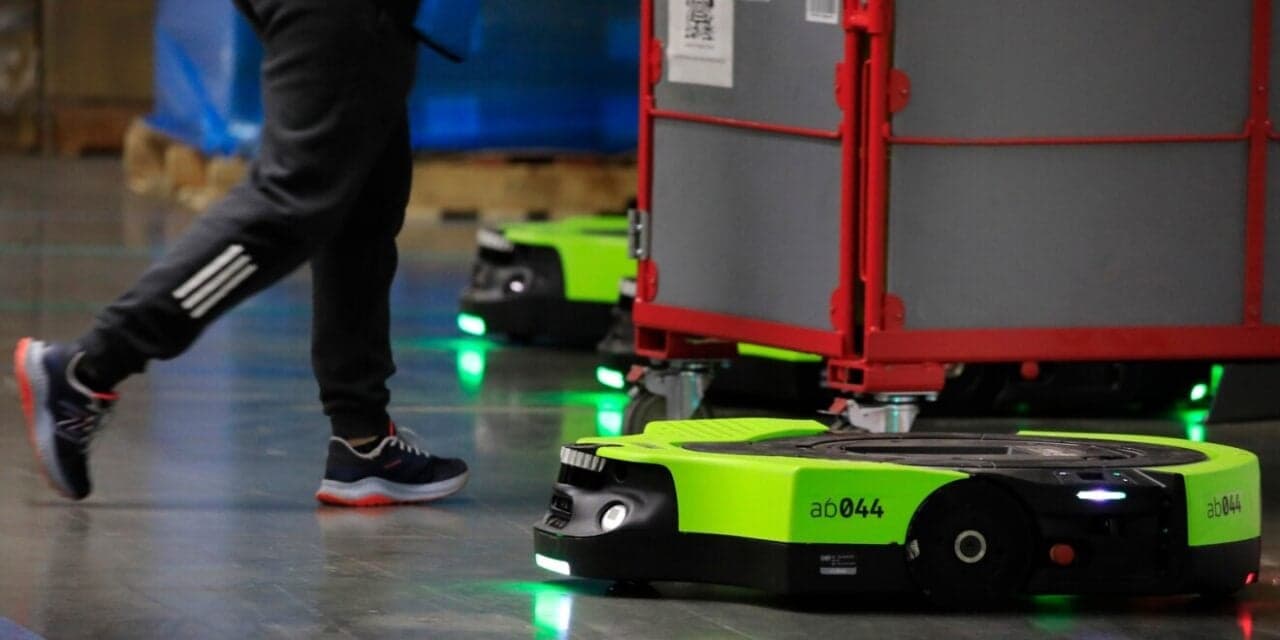
Amazon has introduced a new generation of warehouse robots that can understand and respond to spoken language, a significant leap from the traditional automated machines that follow pre-programmed paths. The robots, now operating in select fulfillment centers, use natural language processing to interpret real-time commands from human workers.
How the Robot Works
The system integrates speech recognition with Amazon's existing robotic infrastructure. Workers can tell a robot to move a pallet to a specific location, retrieve an item, or adjust its route. The robot then processes the command and executes the task without requiring manual programming or a tablet interface.
Amazon has long used robots in its warehouses to move shelves and packages, but those machines required centralized coordination or pre-scanned barcode instructions. This new capability allows for more flexible, on-the-fly collaboration between humans and machines. The technology relies on a custom language model trained on warehouse-specific vocabulary and noise conditions.
Why This Matters
Warehouse workers directly benefit from reduced time spent on manual controls and data entry. The system allows for faster problem solving when unexpected situations arise, such as a blocked aisle or a misplaced item. For Amazon, the investment signals a broader push to make automation more adaptable to human workflows, potentially increasing throughput while lowering the barrier for worker interaction with robots.
Critics, however, point to the risk of job displacement as robots become more capable of independent decision making. Amazon has stated that the technology is designed to assist workers, not replace them, but the line between assistance and substitution continues to blur as AI improves.
The deployment also reflects a growing trend across logistics: combining natural language interfaces with physical automation. Companies like DHL and Walmart are experimenting with similar voice-controlled robots. Amazon’s scale means this adoption could set a standard for the industry, accelerating the shift toward conversational AI in warehouses.
Initial reports from test sites indicate that workers adapt quickly to the voice interface, and error rates remain low. Amazon plans to expand the system to more facilities in the coming months, though it has not disclosed a specific timeline.