Senior Editor: Alan Agbele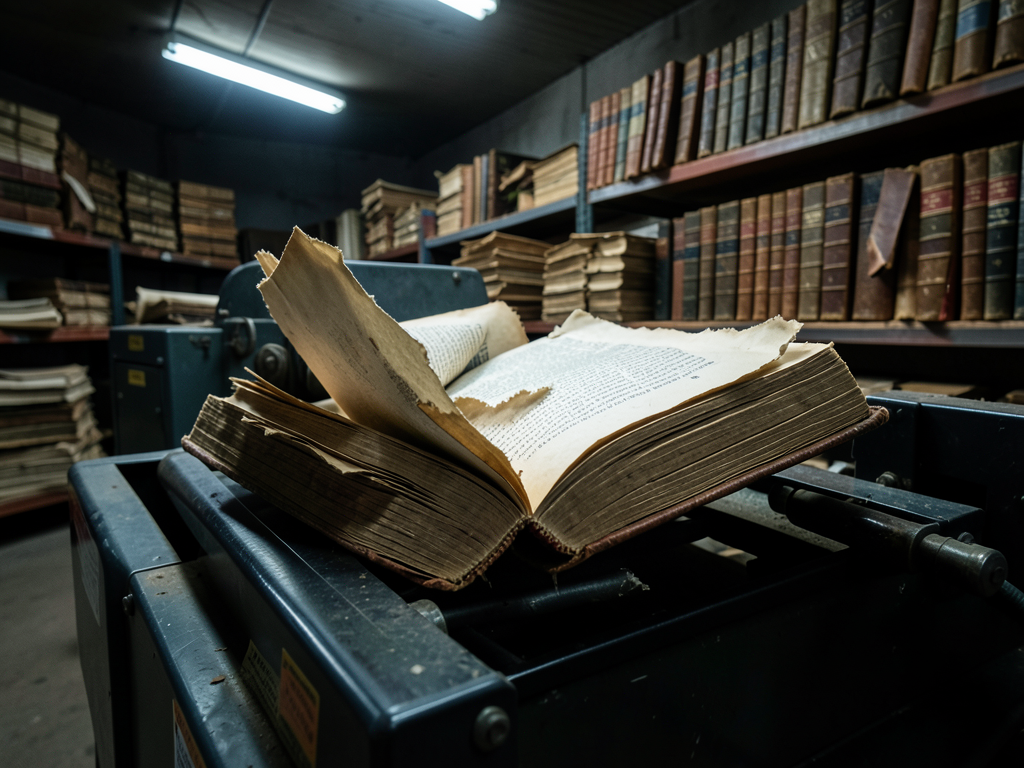
A small number of irreplaceable printed books are being destroyed each month as AI developers accelerate digitization of pre-2022 works for language model training. The data broker ISBNdb has shipped hundreds of thousands of physical volumes to undisclosed AI labs where workers cut off book spines and feed pages through high-speed scanners, a process that routinely destroys the originals.
How Pre-2022 Books Became AI Training Gold
Large language models face a growing data quality problem. Internet content increasingly contains machine-generated text, which degrades model performance through a phenomenon known as model collapse. Pre-2022 printed books offer a solution because they were written entirely by humans and contain no AI-generated content.
ISBNdb positions itself as the bridge between this vanishing resource and AI developers. The company supplies physical books in bulk to customers who want human-written material untouched by modern chatbot output. These works are dense, edited and authoritative, representing a higher-quality alternative to web content cluttered with synthetic text.
Older printed books also avoid data-poisoning techniques that some authors use to disrupt AI training through deliberately modified documents. For AI labs racing to build better models, pre-2022 books represent one of the last large reservoirs of clean, human-authored text.
The Price of High-Speed Digitization
The destruction happens by design. High-speed scanning equipment requires workers to remove each book's spine before feeding individual pages through automated imaging machines. That method dramatically reduces digitization costs compared to slower preservation techniques that keep physical copies intact.
ISBNdb openly acknowledges the reputational risk. The company's materials reportedly note that an "AI company destroys two million books" would not generate public sympathy, leading clients to describe the process as digital preservation instead. Critics argue that exceptionally scarce historical works surviving wars, fires and centuries of handling cannot simply be reproduced after their physical copies vanish.
Booksellers interviewed by the outlet Media reported that some volumes entering these scanning programs have very few surviving copies anywhere in the world. Unlike widely available modern publications, these books represent a cultural archive that cannot be replaced once destroyed.
Why This Matters
The quiet erasure of rare printed books for AI training creates a permanent cultural loss that future generations cannot undo. Each destroyed copy removes access for researchers, historians and the public, not just for AI developers. The scale of destruction described in this practice approaches levels that historians would compare to the burning of major libraries.
If AI companies continue prioritizing cost and speed over preservation, the very material they seek to learn from may disappear entirely. The cultural cost extends beyond individual books: it represents the loss of the human record itself, traded for models that may themselves become obsolete. Without broader awareness and alternative approaches such as preservation-grade scanning, this practice risks becoming the defining act of cultural erasure in the AI era.