Senior Editor: Alan Agbele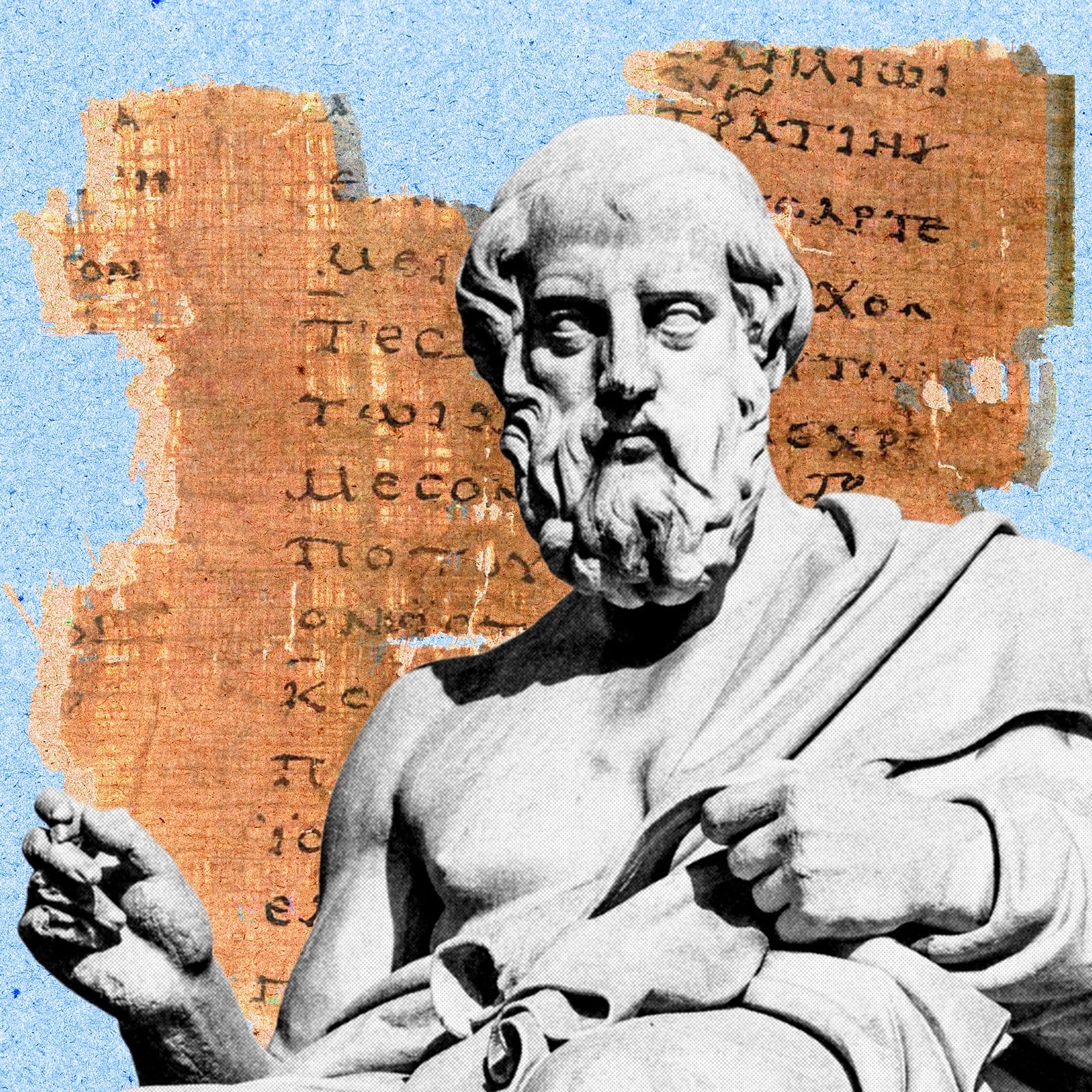
Researchers have developed a large language model that can reconstruct missing portions of tattered ancient Greek papyri, a breakthrough that could transform how historians study the classical world. The initiative, described as “A New Chatbot Wants to Unlock the Secrets in Tattered Ancient Greek Records,” pairs natural language processing with paleography to automatically generate plausible completions for lacunae, the physical gaps left by age, fire or decay.
How the Model Works
The system functions as a chatbot: a user feeds it an image or a digital trace of a papyrus fragment, and the model responds with a ranked list of likely restorations. The underlying engine is a transformer-based large language model, trained on a corpus of digitized ancient Greek literature, inscriptions and previously deciphered papyri. This allows it to learn the statistical patterns of word order, dialect and letterforms that appear in classical prose and poetry.
Why This Matters
The implications reach far beyond the convenience of automation. Papyrology has long been a slow, painstaking craft; a single fragment can take months or years to transcribe. By cutting that time to hours, the AI tool could accelerate the publication of newly discovered texts and allow historians to survey massive archives that were previously too incomplete to interpret. For the wider digital humanities, this demonstrates how generative models can serve as specialized research assistants rather than generic content generators.
The technology also raises important questions about epistemic authority. When a model fills a gap, its suggestion is probabilistic, not certain. If adopted uncritically, errors could propagate into journal editions and scholarly databases. Historians, however, view the system as a complement to traditional methods, not a replacement. The model’s real value lies in flagging the most promising restorations for expert verification.
Context and Comparisons
The project builds on a wave of interest in machine-assisted reading. The Vesuvius Challenge, a global competition to decipher carbonized scrolls from Herculaneum, produced deep-learning pipelines that identify faint ink traces buried in CT scans. That contest, along with academic efforts from institutions such as the University of Oxford and the Center for Hellenic Studies, has pushed the boundaries of what AI can do with damaged historical materials.
What This Means for Scholarship
For classicists, the practical benefit is a shorter path from excavation to publication. For archivists, it means new tools to triage large collections of unreadable scraps. And for the broader public, it offers the possibility of rediscovering literary works and administrative records that have been silent for millennia. The chatbot adopts a conversational interface, which makes the technology accessible even to researchers who are not fluent in programming.
Still, the approach is not without limits. The quality of predictions depends heavily on the training corpus, which is skewed toward well-represented genres like philosophy and drama. Regional dialects and non-literary texts, such as tax rolls or private letters, may pose greater challenges. Future versions will need to incorporate specialized datasets and continuous feedback from scholars to remain reliable.
The project is a reminder that artificial intelligence is not just about predicting text; it is about reconstructing contexts. Every completed lacuna is a window into a society that left behind only fragments of its written record. With chatbots like this one, those fragments are slowly being stitched back together.