Editor: Porcia Akua Holmes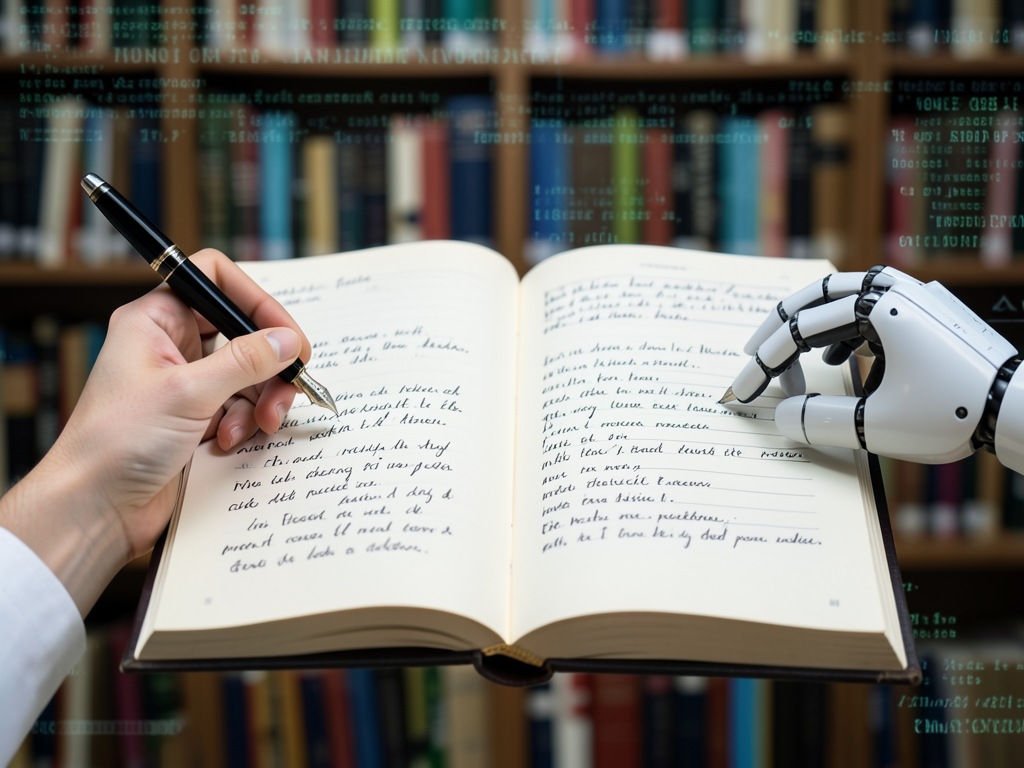
A recent test involving three hotel reviews has underscored a growing challenge for the literary and media worlds: Identifying whether text originates from a human or an AI system. Linguists are now studying the subtle patterns that distinguish machine writing from human prose, even as novelists such as Jennifer Egan and Jeanette Winterson reflect on what this means for the future of fiction.
The Linguistic Signature of AI Writing
Linguists analyzing the hotel review test identified several markers common in AI-generated text. Machine writing tends to rely on predictable sentence structures, avoids minor errors and lacks personal or idiosyncratic details. Human writers, in contrast, often include subtle inconsistencies, colloquial phrasing and specific sensory descriptions.
The linguistic signature, however, is not foolproof. As models improve, the distinctions blur, making detection harder even for trained experts.
Novelists Weigh In on Authenticity
Jennifer Egan and Jeanette Winterson have both spoken publicly about the threat and promise of AI in fiction. Egan has argued that the craft of storytelling depends on lived experience, something machines cannot replicate. Winterson, however, sees potential for AI to expand creative boundaries if used as a tool rather than a replacement. The divergence among authors highlights a broader uncertainty in the publishing industry.
The literary community remains divided. Some publishers have begun requiring authors to disclose AI assistance, while others see machine-generated drafts as a legitimate part of the writing process. The debate touches on copyright, originality and the economic value of human labor in creative fields.
Why This Matters
The ability to pass off AI text as human threatens the trust that readers place in authors, critics and journalists. If readers cannot tell whether a review or a novel was written by a person, the value of human authorship diminishes. For publishers and media outlets, the economic consequences are significant: paying human writers becomes harder to justify if AI can produce acceptable content at lower cost. On a cultural level, the rise of AI writing forces a redefinition of creativity and what it means to be an author. The outcome of this debate will shape the creative industries for decades.
What the Test Reveals
The three hotel reviews used in the experiment demonstrate the difficulty of the task. One review reads: “The hotel is in a great location for everything. Lots of places to eat and drink. The hotel itself is always abuzz. The tavern located on the ground floor is definitely a must. Food, service, prices and atmosphere were great.” Linguists note that the phrase “definitely a must” and the lack of any negative detail are hallmarks of AI generation. Human reviews typically include at least one minor complaint or a specific anecdote.
As AI systems continue to evolve, the line between human and machine writing will only grow thinner. The linguists and novelists engaged in this conversation are not just evaluating text; they are asking what we value in language itself.