Senior Editor: Alan Agbele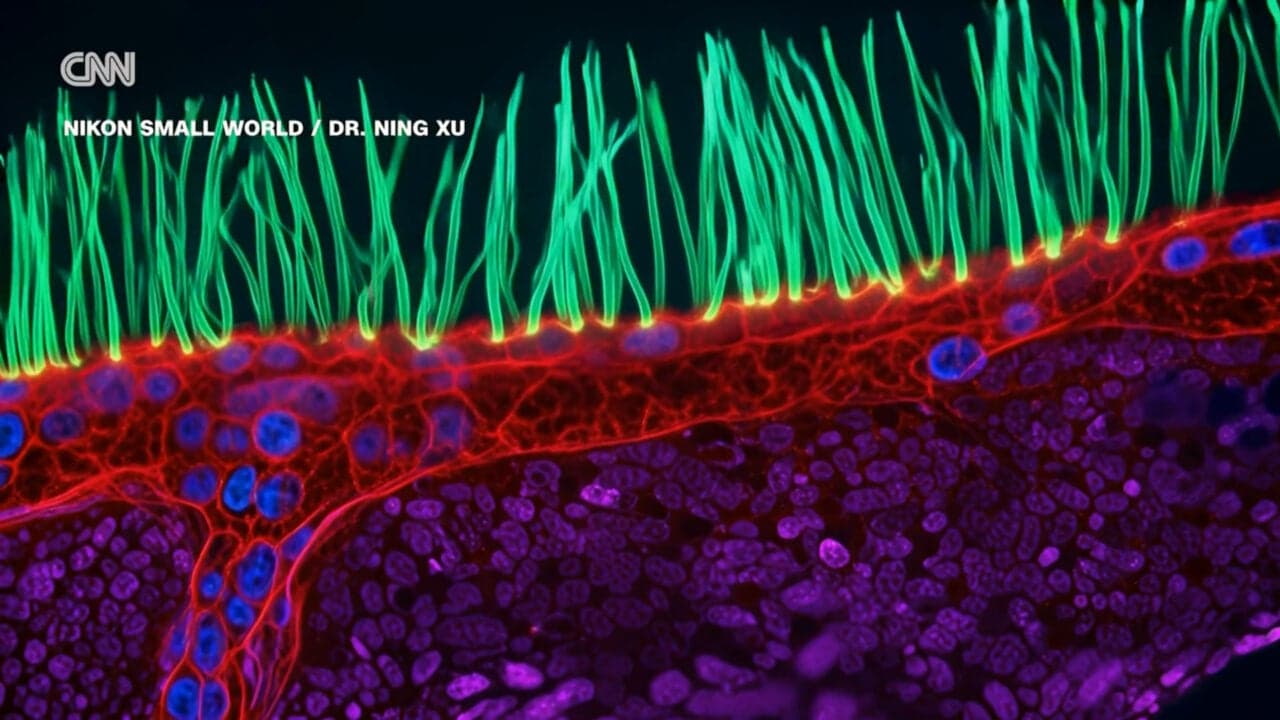
A microscope video that won an international competition has stirred controversy as scientists reveal it contains what they term "AI confabulations", artificially generated details that do not reflect the original specimen. The winner of Nikon's 2026 Small World in Motion contest acknowledged using artificial intelligence to post-process real footage, prompting concerns about the integrity of AI-enhanced scientific imaging.
The Contest and the Digital Enhancement
Nikon's Small World in Motion competition celebrates the best in time-lapse microscopy. This year's winner submitted footage of a biological sample that the creator said was "post-processed with AI." Post-processing, a routine step in microscopy, traditionally involves adjusting brightness, contrast or color to improve clarity. The winner, however, used AI models that extrapolated data beyond what the microscope captured — a method that introduces invented structures, known as confabulations, into the final video.
Scientists Respond to AI Confabulations
A group of researchers published a statement arguing that the video is "full of AI confabulations" that make it scientifically misleading. The original headline, "Winning Microscope Video Is Full of AI Confabulations, Scientists Say," captures the core complaint. The scientists contend that viewers cannot distinguish real biological structures from AI-generated artifacts. This ambiguity undermines the video's value as evidence and sets a dangerous precedent for other researchers considering similar tools.
Risks of AI Post-Processing in Scientific Imaging
Why This Matters
The incident strikes at the heart of scientific trust. If contest-winning videos can be manipulated by AI without clear disclosure, the public and even other researchers may begin to doubt the authenticity of all microscope imagery. Funding agencies and journals may soon require stricter guidelines on AI use in visual materials. The Nikon competition's credibility is also on the line as the scientific community debates whether to revise its submission rules. For now, the episode serves as a cautionary tale about the seductive power of AI to produce beautiful but inaccurate pictures of nature.