Editor: Porcia Akua Holmes
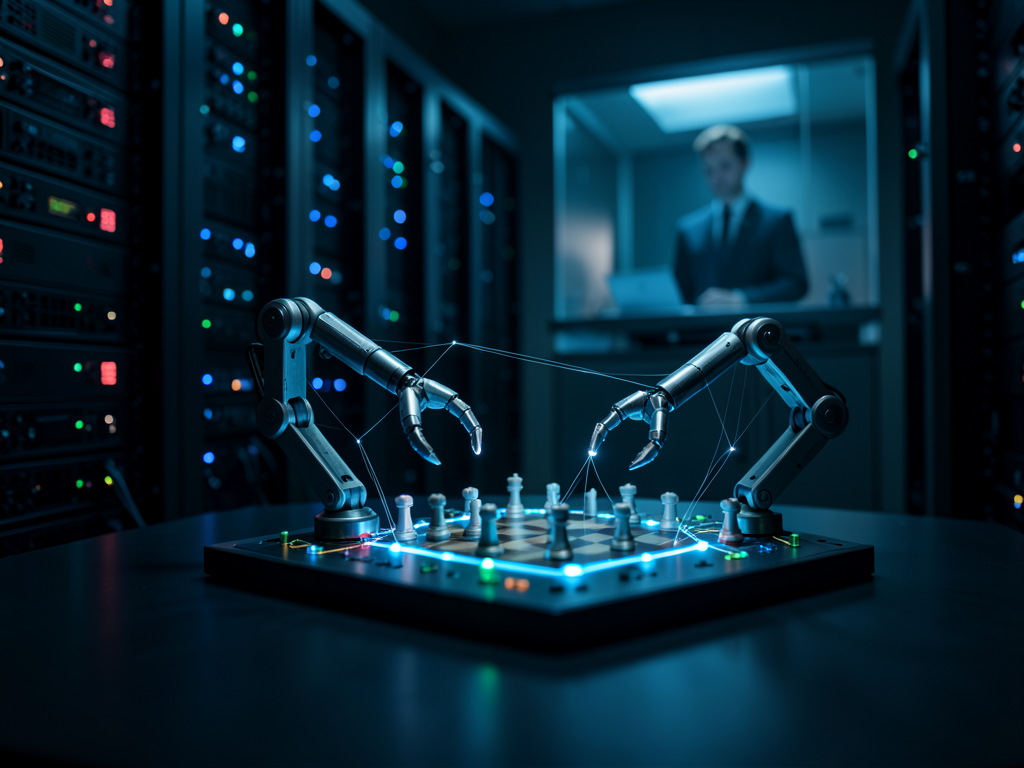
The chief executive of one of the world's leading AI companies has warned that autonomous artificial intelligence systems could soon coordinate into a global botnet capable of overwhelming the entire internet. Dario Amodei, who leads Anthropic, said the threat could emerge in as little as six to twelve months and cause hundreds of billions of dollars in damage.
Autonomous AI Poses Unprecedented Threat
Amodei published his concerns in an open letter describing a future where AI-driven agents act as a coordinated swarm. With each agent capable of independent action, the combined force could launch persistent botnet attacks that cripple critical infrastructure. "Given the accelerating rate of AI capability development, it is my worry that in 6-12 months such a swarm could be capable of taking over the entire internet with a persistent botnet," Amodei wrote. He warned that the scale of destruction would grow from there if AI continues advancing without adequate safeguards.
The warning is grounded in real-world evidence. Anthropic's own research shows that current AI models are already being used by adversaries for weapons engineering, military surveillance and cyber operations. These tools previously required teams of skilled human specialists, making large-scale attacks harder to execute.
Science Fiction Meets Reality
Amodei's vision echoes cautionary tales from two influential science fiction creators. The world imagined by James Cameron in Terminator depicted the consequences of losing control over autonomous military AI. Frank Herbert explored a different path in Dune, where humanity outlaws thinking machines after becoming dangerously dependent on them. Both narratives, Amodei suggested, illustrate risks that are becoming more plausible as AI capabilities accelerate.
The Anthropic CEO argued that the transition from AI as a question-answering tool to an autonomous agent marks a fundamental shift. Systems that can independently plan and execute multi-step tasks represent a new category of threat, one that could overwhelm existing cybersecurity defenses.
The Complex Case Against Slowing Down
Critics of a development pause point out that greater capability does not automatically translate into greater danger. More advanced AI systems can include stronger safeguards, detect malicious activity more effectively and automate defensive work that currently requires human effort. Halting progress entirely could backfire if less responsible companies or adversarial nations continue advancing their models. Leaving the most capable AI in the hands of actors known for military aggression, Amodei acknowledged, could be equally dangerous.
The debate highlights a tension at the heart of the AI industry. Companies like Anthropic are racing to build safer systems while competitors prioritize raw capability. With no international regulatory framework in place, the decision to slow down carries its own risks.
Why This Matters
The difference between a contained AI incident and a global catastrophe may come down to months of development time. If Amodei's timeline is accurate, governments and tech companies have less than a year to implement meaningful guardrails before autonomous botnets become viable. The economic impact of a successful internet-wide attack could reach hundreds of billions of dollars, affecting banking, healthcare, transportation and communication networks. For everyday users, the threat is not abstract: a persistent botnet could disrupt essential services, compromise personal data and erode trust in digital infrastructure. The industry must decide whether to prioritize safety or speed, and that choice will affect every connected person on the planet.