Editor: Porcia Akua Holmes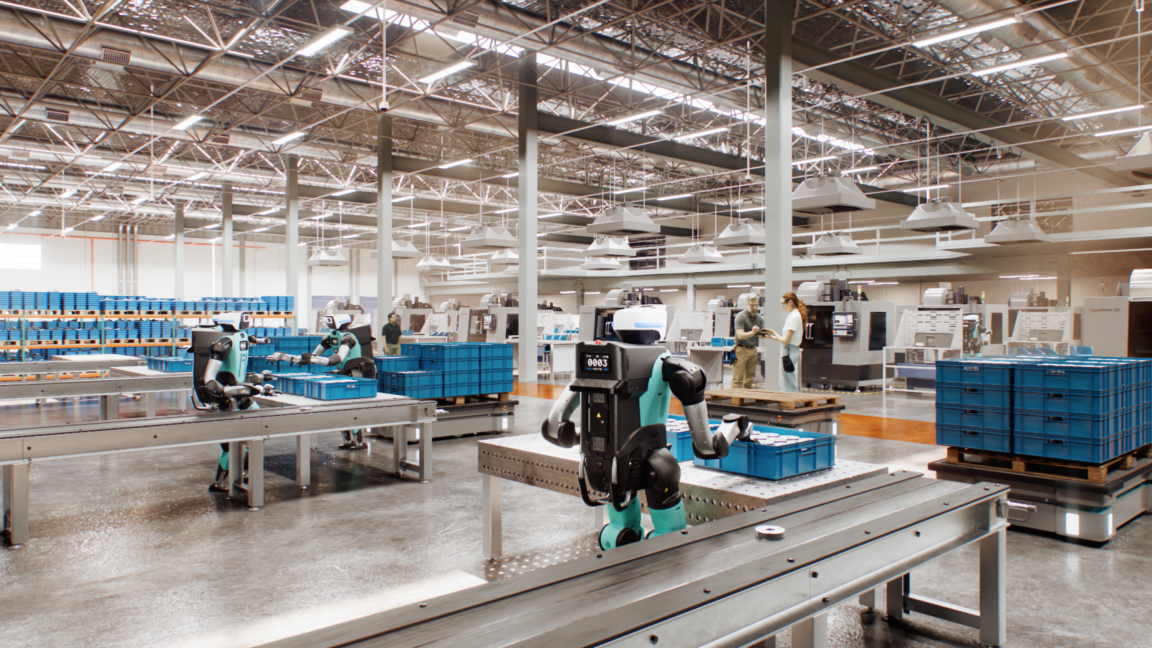
Agility Robotics has introduced a safety update for its Digit humanoid robot that allows the machine to autonomously squat or stop moving when a person approaches. The feature eliminates the need for physical barriers in warehouses and automotive factories, enabling Digit to work directly alongside human employees without risk.
Sensor-Driven Safety Protocols
When Digit detects a person at a distance, it can autonomously take precautions such as moving to avoid the person or standing still so the person can pass without getting closer. If a person gets into close proximity, the robot can even choose to squat and assume a seated position.
The system relies on a combination of depth cameras and lidar sensors that feed data into a decision-making algorithm. Pras Velagapudi, chief technology officer at Agility Robotics, noted that the robot was designed with a complex safe motion system capable of a variety of mitigations depending on the exact type of human presence detected.
Response Options and Operational Impact
Digit's safety behaviors fall into three categories based on proximity and movement patterns:
These actions allow facilities to deploy Digit without safety cages or separation barriers, potentially lowering installation costs and improving floor space utilization. Agility Robotics designed the system to handle dynamic environments where humans and robots share pathways.
Why This Matters
The ability for a humanoid robot to safely operate in close proximity to humans removes one of the biggest hurdles to widespread automation in factories and warehouses. Traditional industrial robots require dedicated zones, which limits flexibility and increases real estate costs. Digit's autonomous safety responses could accelerate adoption across logistics centers and assembly lines, shifting the economics of robotic labor. For workers, the robot's predictable behavior may foster trust and reduce the anxiety often associated with large, fast-moving machines. However, the technology also raises questions about job displacement and the need for updated safety standards as autonomous systems become more integrated into human workspaces.
Agility Robotics continues to refine Digit's perception algorithms and response logic. Future updates may include adaptive speed control and gesture recognition to further smooth human-robot collaboration.