Senior Editor: Alan Agbele
A literary agency stands accused of stealing a bestselling author's book and using artificial intelligence to republish it under a new name. The case, which surfaced this week on social media and developer forums, highlights a growing threat: AI tools enabling systematic plagiarism by trusted industry insiders.
How the Alleged Theft Unfolded
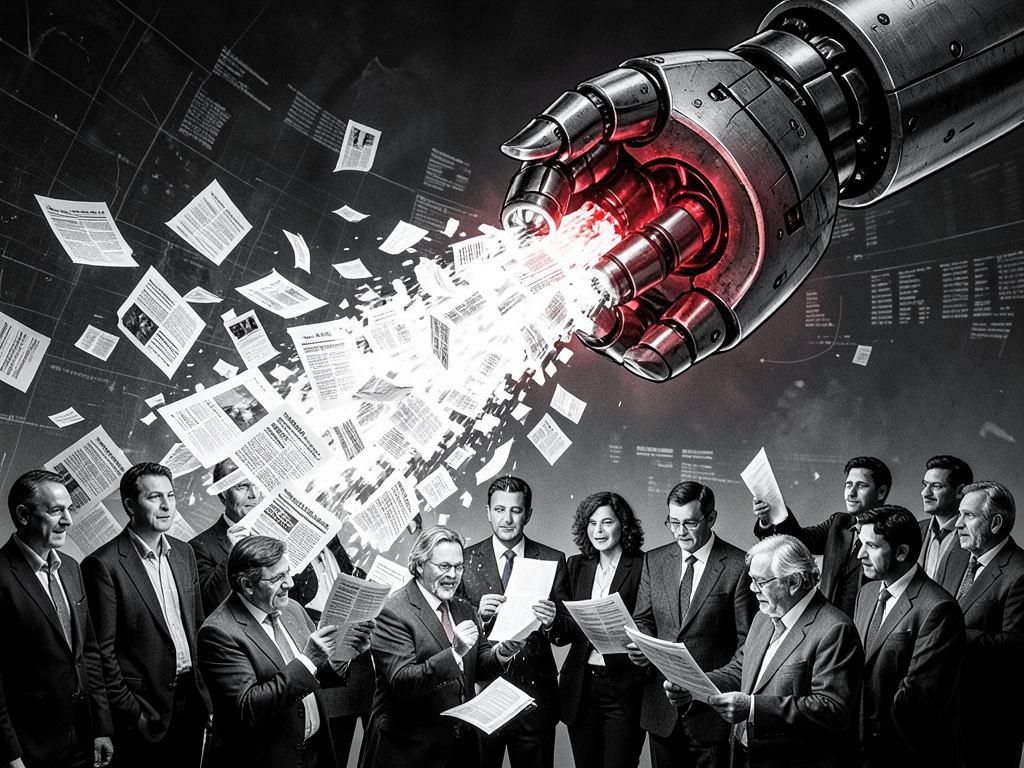
According to reports, the agency obtained a copy of the author's original manuscript. Instead of representing it for traditional publication, the agency used an AI model to rewrite the text, producing a derivative work that closely mirrored the plot, characters and structure. The agency then published this AI-generated version under its own imprint, effectively competing with the author's legitimate edition.
The author discovered the fraudulent copy after readers flagged similarities and odd writing patterns consistent with AI output. The agency has not publicly commented on the allegations.
AI as a New Tool for Old Crimes
Copyright infringement is not new, but generative AI introduces a powerful mechanization of theft. In this case, the agency likely used a large language model to paraphrase the original work, making direct copying harder to prove under current copyright law. The technology allows bad actors to mass-produce knockoffs with minimal effort and at low cost.
This incident follows a string of high-profile disputes, including lawsuits from The New York Times against OpenAI and Getty Images against Stability AI. However, those cases involve tech companies using copyrighted data for training. Here, an established publishing intermediary is accused of using AI to commit fraud against a client.
Why This Matters
For authors, the case signals a new vulnerability. Even after securing a publishing deal, their work can be repurposed by the very agencies meant to protect it. For readers, AI-generated books may flood storefronts, making it harder to distinguish authentic works from fakes. The economic impact is severe: the author loses royalties, brand reputation suffers and the market becomes saturated with low-quality imitations.
The legal system faces a test. Current copyright law requires substantial similarity for infringement, but AI paraphrasing may evade that threshold. Courts must decide whether derivative AI versions constitute infringement or are protected as fair use. The outcome could shape how publishing contracts are written and how agencies are held liable.
Regulators have yet to address AI-aided plagiarism explicitly. The Federal Trade Commission and the U.S. Copyright Office are still examining AI's effect on creative industries. Cases like this one may accelerate calls for new rules requiring disclosure of AI-generated content and stricter penalties for theft.
Meanwhile, authors may need to add clauses to contracts that prohibit agencies from using their work for AI training or derivative generation. Technology also offers partial solutions: watermarking original texts and using AI detection tools to scan for similar works.
The alleged theft is a warning. As AI becomes more accessible, the line between inspiration and theft will blur. Without clear legal protections, every creator's work could feed the very systems that compete against them.