Editor: Porcia Akua Holmes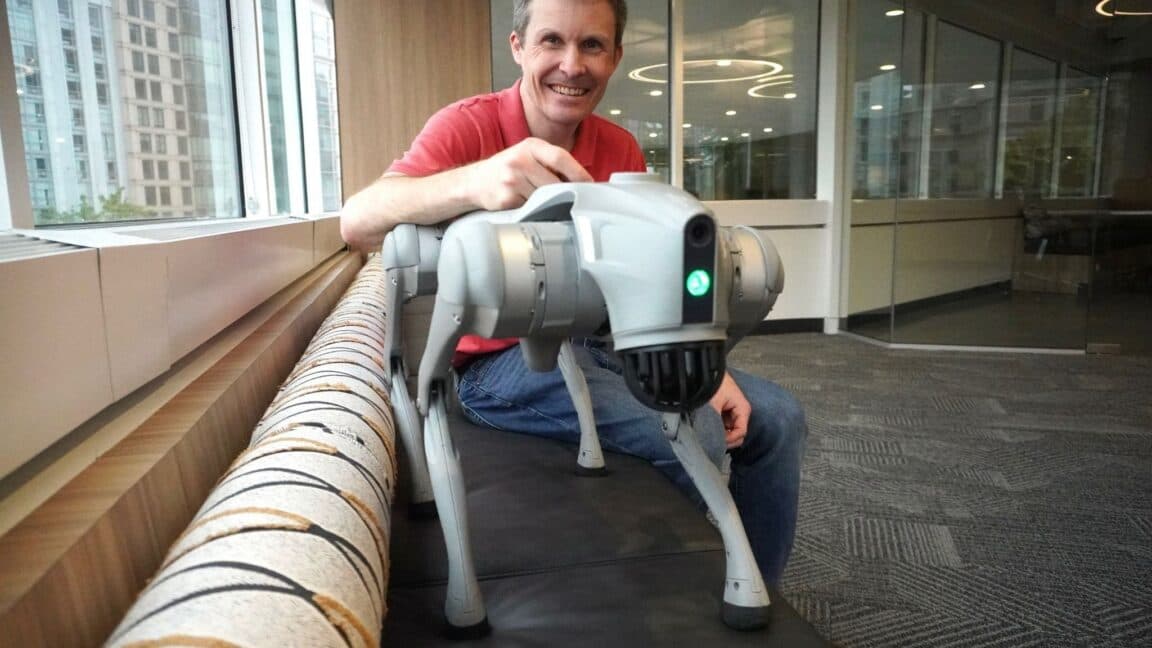
A consumer purchased a $4,000 quadruped robot from China and took it on a morning walk through the city. The robot dog drew immediate attention from passersby who snapped photos, asked questions and kept their pets at a distance. The scene highlights a shifting landscape in consumer robotics as Chinese manufacturers make humanoid and animal-like machines available at prices far below earlier market leaders.
The Rise of Consumer Robotics
For years, robotic quadrupeds remained in research labs or industrial sites due to high costs and complex control systems. That barrier is breaking down. Manufacturers in China have refined motor design, battery technology and software to deliver capable machines at mass-market price points. The $4,000 purchase price in this case puts the technology within reach of hobbyists, startups and even curious individuals.
The robot dog used in this instance was not custom built. It came as a finished product, ready to walk out of the box. That ease of entry signals a shift from specialized equipment to mainstream consumer electronics.
Key Capabilities
Public Reaction and Privacy Concerns
The owner reported that strangers took pictures and asked whether the robot dog was under surveillance. That skepticism was a reaction that biological dogs did not provoke. Several bystanders expressed concern about hidden recording equipment or autonomous decision making. These reactions mirror broader unease about cameras on wheels and legs entering everyday spaces.
City regulations have not kept pace with the rapid deployment of such devices. A robot dog on a leash occupies a legal gray area between pet, vehicle and surveillance tool. Until lawmakers provide clear guidance, early adopters like this one will navigate a patchwork of rules and public opinion.
Why This Matters
The arrival of affordable robot dogs from China accelerates the timeline for consumer robotics integration into daily life. As prices drop below psychological thresholds like $5,000, adoption will likely spread beyond tech enthusiasts to small businesses, schools and homeowners. That expansion brings practical benefits such as low cost inspection or entertainment. But it also forces society to confront questions about privacy, public safety and liability that were not urgent when these machines cost ten times as much. The debate over how to regulate personal robotics has moved from theoretical to immediate.
Incumbent robotics companies in the United States and Europe face pressure to innovate quickly or lose the consumer market to Chinese rivals. The cost advantage from Chinese supply chains and manufacturing scale is unlikely to narrow soon, meaning Western firms may need to focus on specialized industrial or military applications where price sensitivity is lower.