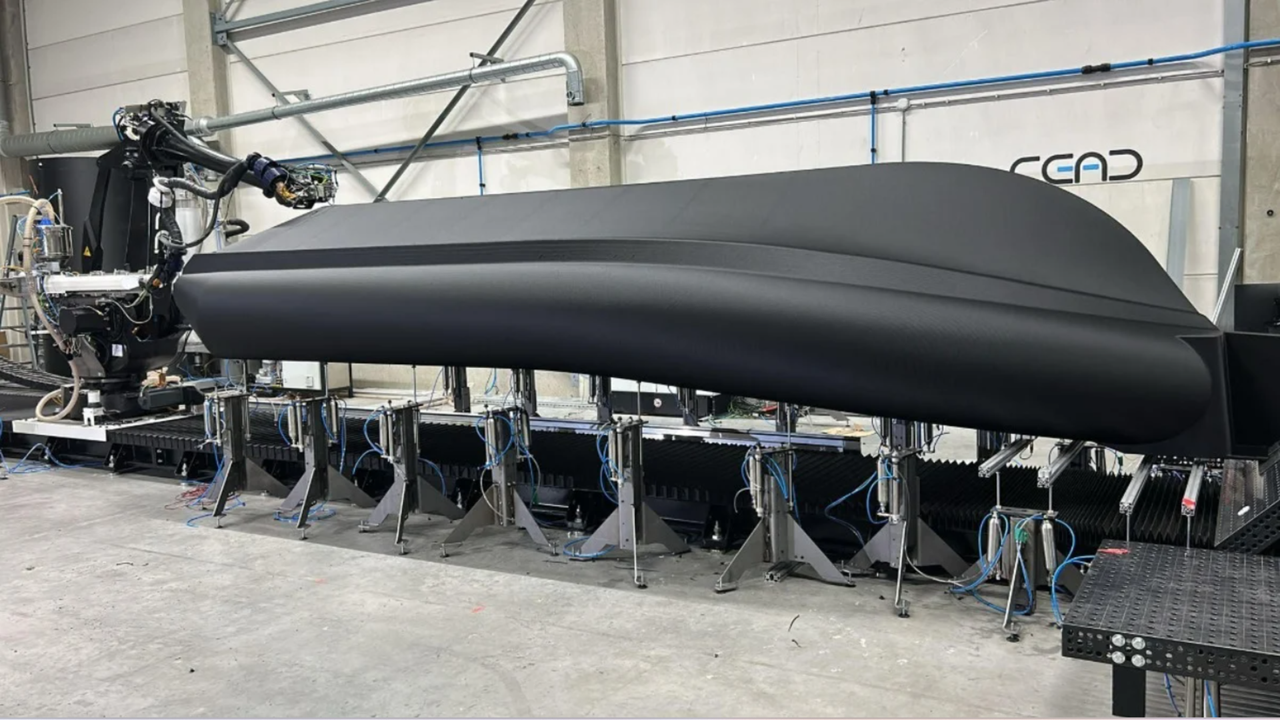
A small startup in Hawaii is challenging centuries of naval tradition. It uses 3D printers and basalt, a volcanic rock, to build ships. The company claims its vessels are strong, lightweight and 100% recyclable.
How It Works
The startup pulls basalt from volcanic rock and processes it into fibers. Those fibers are then combined with recyclable polymers to create a composite material. A large-scale 3D printer lays down this material layer by layer to form the hull and other components. The process eliminates many steps in conventional shipbuilding, such as cutting steel and welding.
The result is a ship that can be printed in days, not years. The material resists saltwater corrosion better than steel. And when a vessel reaches the end of its life, the entire structure can be ground down and reprinted into something new.
Why This Matters
Traditional naval shipbuilding relies on massive shipyards, expensive steel supply chains and long construction timelines. This startup offers an alternative: distributed manufacturing. A 3D printer and basalt feedstock could be shipped to any coastal region, allowing local production of military or commercial vessels.
For the U.S. Navy and allied forces, this could mean faster fleet expansion and reduced dependence on traditional shipyards. For island nations like Hawaii, it offers a path to self-sufficient marine manufacturing. The environmental impact is also significant. Mining and processing basalt produces far less carbon than steel production. The closed-loop recyclability eliminates the problem of shipbreaking and waste.
Challenges and Next Steps
The technology is still early. The startup has only tested small prototypes. Scaling up to full naval vessels requires larger printers, more robust materials and regulatory approvals. The company also needs to prove its ships can withstand combat conditions and long ocean voyages.
But the potential is clear. A military that can print its own ships on demand, anywhere in the world, changes logistics fundamentally. The startup is now seeking additional funding and partnerships with defense agencies. It is also exploring commercial applications like fishing boats and ferries.