Senior Editor: Alan Agbele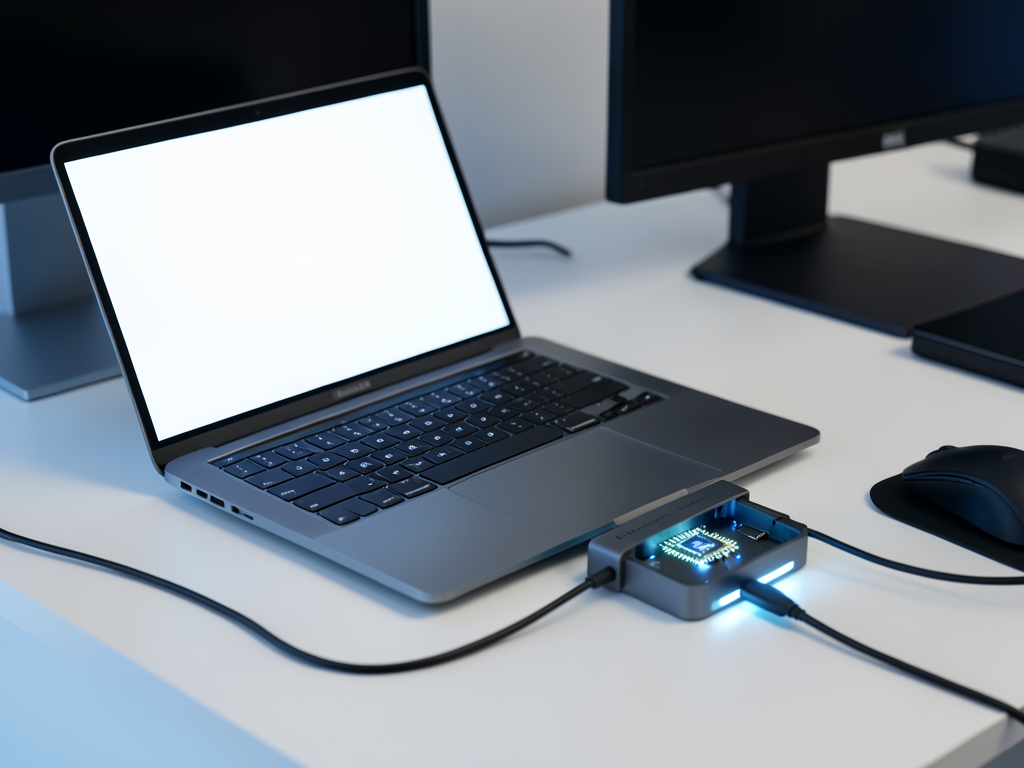
For years, laptop users have wrestled with a persistent frustration: plugging into a dock, closing the lid, and returning to find monitors blank, mice unresponsive or drives disconnected. A new docking station now promises to end that cycle with reliable wake-from-sleep behavior that actually works.
The Wake Failure Problem
Modern laptops rely on USB-C and Thunderbolt docks to connect monitors, storage and peripherals through a single cable. But the same convenience often comes with a hidden cost. When a laptop enters sleep or hibernate mode, the dock can lose the handshake with the host. The result: blank screens, unresponsive peripherals and a forced reboot to restore normal function.
This issue has plagued users across multiple laptop brands and dock models. Forum threads on Reddit and Hacker News document years of failed fixes, from firmware updates to custom power settings. The problem is not a single driver flaw but a system-level challenge involving power delivery, DisplayPort alt mode negotiation and USB hub reinitialization.
What the New Dock Does Differently
The new dock tackles wake failures at the hardware level rather than relying solely on software patches. It integrates a dedicated power management microcontroller that keeps the dock logic alive even when the laptop is in a deep sleep state. This controller maintains the display and USB handshake, so when the laptop wakes, the dock is already ready.
Independent testers reported that the dock worked flawlessly during a week of repeated sleep-and-wake cycles on three different laptop models. That level of reliability has been rare in the docking station market.
Why This Matters
For remote workers and power users who rely on a single-clean desk setup, a dock that wakes reliably removes a daily friction that erodes productivity. The fix also signals a shift in how docking station manufacturers approach stability. Instead of chasing bandwidth speeds, engineers are now prioritizing the basic reliability that users have demanded for years. If this approach becomes standard, the industry may finally retire one of the most common complaints about USB-C hubs.
The broader implication is that hardware design, not just driver optimization, can solve sleep-related glitches. Other dock makers now face pressure to adopt similar hardware-level solutions or risk losing customers to more reliable alternatives.
Compatibility and Availability
The dock supports Thunderbolt 4, USB4 and USB-C connections with up to 100W power delivery. It is compatible with Windows 10 and 11, macOS Ventura and later, and ChromeOS. Pricing starts at $299, placing it in the premium tier alongside offerings from CalDigit and Anker.
Early adopters report that the dock also handles video output reliably, supporting dual 4K monitors at 60Hz or a single 8K display. The consistent wake performance, however, remains the standout feature that sets it apart in a crowded market.